
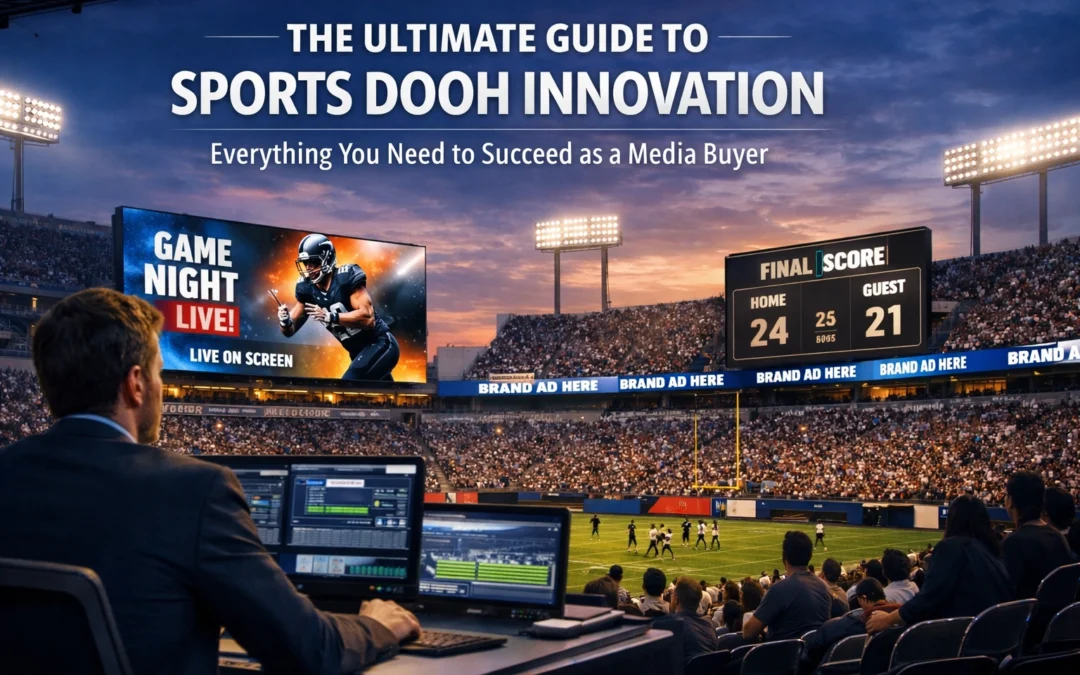
Digital Out-of-Home (DOOH) advertising has transitioned from a supplementary media buy to a central pillar of sports marketing strategy. For media buyers and brand managers, the challenge is no longer just finding a billboard near a stadium. It is about finding the fan wherever they are. This guide explores the innovations driving the industry forward and provides a roadmap for executing high impact campaigns that resonate with sports enthusiasts.
The Evolution of Sports Marketing
The landscape of sports marketing is undergoing a significant transformation. Traditional television spots remain valuable, but the way fans consume content has become fragmented. Fans are streaming games on mobile devices, checking scores on social media, and gathering in "third spaces" like sports bars and community hubs.
DOOH serves as the connective tissue in this fragmented environment. It moves advertising from a location-based strategy to a routine-based strategy. By placing digital screens in areas where fans live, work, and play, brands can maintain a consistent presence throughout the fan's daily life. This constant visibility strengthens the memory structure of a campaign, making other digital or broadcast investments work harder.

The Strategic Advantage of Sports DOOH
The primary goal of any sports marketing campaign is to tap into the emotional energy of the game. DOOH allows brands to do this at scale. Unlike static billboards, digital screens offer flexibility and real-time relevance.
Media buyers are increasingly looking at DOOH as an omnichannel reinforcement tool. When a fan sees a high energy ad on a digital urban panel during their morning commute, they are "primed" to respond more favorably to a social media ad or a TV commercial later that evening. This priming effect is a key driver of modern media efficiency.
For those interested in how these networks are expanding, the OOH Sports Network provides extensive reach across thousands of screens, ensuring that brand messages are delivered where it matters most.
Key Fan Touchpoints and Activation Strategies
To succeed in sports DOOH, one must understand the fan journey. A fan does not just exist inside the stadium for three hours. Their journey starts days before the game and continues long after the final whistle.
Watch Spaces: Bars and Restaurants
Sports bars and restaurants are the closest proxy to the stadium experience. These environments offer high dwell times and intense emotional engagement. Fans in these locations are not just glancing at screens. They are actively watching, reacting, and consuming.
Strategic activations in these spaces often include:
- Dynamic creative that reacts to live scores.
- Halftime prompts for beverage refills or food specials.
- Live betting odds for sports gambling partners.

The Daily Commute
Transit hubs and digital billboards along major highways are ideal for building anticipation. Countdown clocks for major championships or announcements of "Draft Day" events create a sense of urgency. These placements ensure that the sport remains top of mind even during the mundane parts of a fan's day.
Retail and Grocery Environments
The hours leading up to a game are often spent at grocery or convenience stores as fans stock up on supplies for tailgates or home viewing parties. This is a critical window for beverage and snack brands. Using weather-triggered ads can be particularly effective here. For example, if the forecast predicts rain for the game, a brand can pivot to promoting indoor party supplies or branded rain gear.
Dynamic Creative Optimization (DCO)
One of the most significant innovations in the industry is Dynamic Creative Optimization. DCO allows brands to deploy personalized, contextually relevant messaging at scale without manual intervention for every update.
For a media buyer, this means the creative can change based on:
- Live Scores: Celebrating a home team win or acknowledging a close game.
- Weather Conditions: Promoting cold drinks on hot days or hoodies when the temperature drops.
- Event Schedules: Shifting messaging from "Game Tomorrow" to "Game Now" automatically.
This level of relevance ensures that the ad feels like part of the sports experience rather than an interruption. It transforms advertising into utility content that fans actually appreciate.

Measuring Impact and ROI
Measurement has historically been a challenge for out-of-home advertising, but the shift to digital and programmatic buying has changed that. Media buyers can now access sophisticated data to prove the value of their spend.
Attribution Tracking
By using anonymized mobile location data, brands can track "exposed" audiences. This allows them to see if someone who passed a digital billboard later visited a retail store or downloaded an app. This direct link between exposure and action is vital for calculating ROI.
Brand Lift Studies
Digital campaigns allow for rigorous brand lift studies. These studies measure incremental increases in brand awareness, purchase consideration, and brand favorability. For example, Mike’s Hard Iced Tea saw a 119% lift in positive brand image through a targeted programmatic DOOH campaign. You can read more about that specific case study here.
Similarly, White Claw utilized programmatic DOOH to drive a 74% lift in purchase consideration for a product launch. Detailed logistics of that execution are available in this case study.
The Media Buyer’s Checklist for Success
Executing a successful sports DOOH campaign requires a structured approach. Use the following checklist to ensure all strategic bases are covered:
- Map the Fan Journey: Identify where the target audience spends time outside the stadium. Focus on routines, not just locations.
- Integrate Data Feeds: Ensure the campaign is connected to live scoring APIs or weather data to take advantage of DCO.
- Coordinate with Other Channels: Align DOOH timing with broadcast schedules to maximize the priming effect.
- Use Programmatic Platforms: Leverage programmatic buying for flexibility in budget allocation and real-time optimizations.
- Set Clear KPIs: Determine if the goal is brand awareness, foot traffic, or online conversion before the campaign launches.
- Review the Network: Choose a partner with a wide variety of screen types, such as Sportrons, to ensure visibility in diverse environments.

The Future of Sports Innovation
As technology continues to evolve, the line between the physical and digital worlds will continue to blur. Augmented reality (AR) integrations where fans can interact with a digital billboard using their smartphones are becoming more common. Furthermore, the use of AI to predict fan movement and optimize ad delivery in real-time is the next frontier for media buyers.
Innovation in this space is not just about the screens themselves, but how the data behind the screens is used to create a seamless experience for the fan. Brands that move from being simple sponsors to becoming a helpful, relevant part of the fan's daily routine will be the ones that win.
For more information on the latest trends and strategies in this sector, visit the OOH Sports Blog or check out the ultimate guide to sports DOOH trends.
Conclusion
Sports DOOH innovation is about more than just technology. It is about understanding human behavior and the emotional connection people have with their favorite teams. By utilizing dynamic creative, strategic placements, and robust measurement tools, media buyers can create campaigns that are as impactful as a last second game winning shot.
For brands looking to get started or those seeking to optimize their current strategy, the resources at OOH Sports provide the infrastructure and expertise needed to succeed in the competitive world of sports advertising. Whether it is through massive national networks or hyper-local community activations, the opportunity to connect with fans has never been greater.
To learn more about how to get involved or to see more examples of successful executions, visit the about page or reach out via the contact page. Success in sports marketing requires staying ahead of the curve, and DOOH is the vehicle that will take you there.