
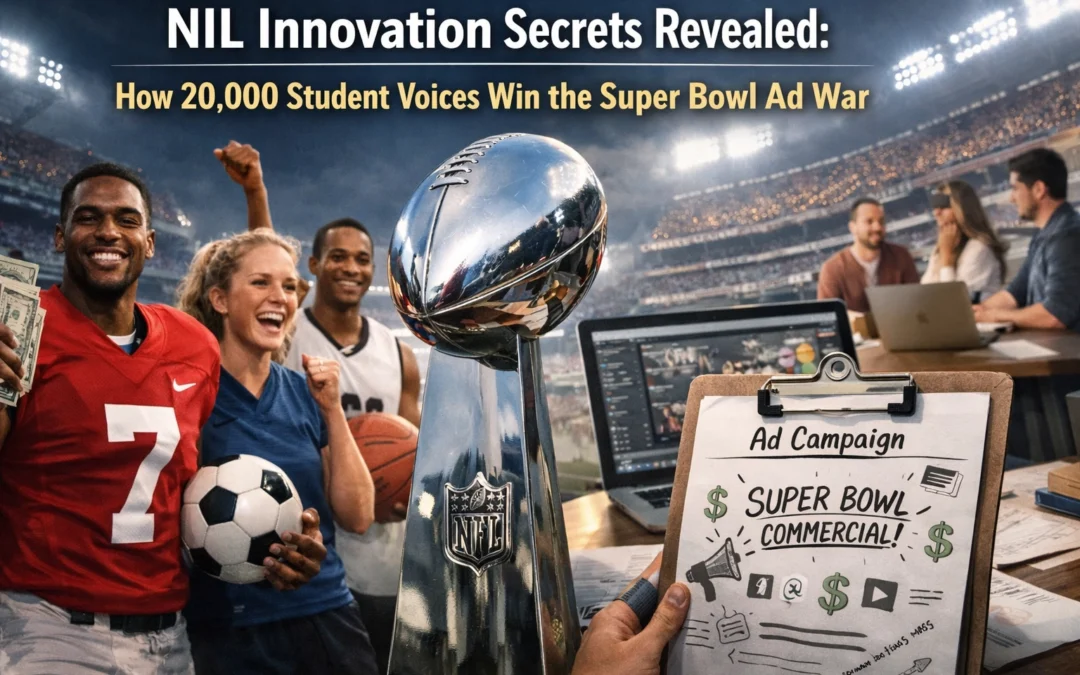
The landscape of Super Bowl advertising underwent a seismic shift in February 2026. While traditional thirty second television spots remained a fixture of the broadcast, the real battle for consumer attention moved to a more granular, authentic level. The emergence of Name, Image, and Likeness (NIL) innovation has allowed brands to bypass the noise of a crowded commercial break by leveraging the collective power of over 20,000 student-athlete voices. This strategy moves away from the singular, high cost celebrity endorsement and toward a decentralized network of authentic digital ambassadors who command high engagement within specific, valuable demographics.
The Strategy of Scaled Authenticity
Modern sports marketing requires more than a high production value video. It requires trust. The core strategy behind the successful 2026 NIL campaigns involved treating student athletes as professional content creators rather than mere biological billboard space. Instead of scripted endorsements, the focus shifted to the unique voice and established audience of each athlete.
By coordinating a massive network of 20,000 student athletes, OOH Sports enabled brands to create a surround-sound effect. This approach ensures that a brand message is not just seen once during a commercial break, but is encountered multiple times throughout a user's social feed, delivered by individuals the user already follows and respects. The scale of this network allows for a level of saturation that was previously impossible without a nine figure marketing budget.

Objective and Execution
The primary objective of these NIL-driven Super Bowl campaigns was to extend the lifespan of a Super Bowl investment from a single day to a multi-week engagement cycle. The execution followed a precise chronological framework:
- Phase One (Pre-Game Buzz): Athletes began previewing campaign themes ten days before kickoff. This included behind the scenes content and "teaser" posts that built anticipation for the main brand message.
- Phase Two (The 72-Hour Blitz): A highly coordinated drop of content occurred during the three days surrounding the game. This involved real-time reactions to game events, interactive Q&A sessions, and live streams.
- Phase Three (Post-Game Sustain): Content continued for seven days after the Super Bowl, focusing on game recaps and "long-tail" brand messaging to maintain high brand recall.
This multi-layered approach ensures that the brand remains top of mind long after the final whistle. Media buyers interested in these strategies often look toward OOH Sports marketing services to facilitate these complex, multi-athlete deals.
Technology Partners and Visual Integration
The backbone of this massive coordination is a robust technology platform capable of managing thousands of individual contracts and content deliverables simultaneously. Automation in the NIL space allows for real-time adjustments based on game flow. For example, if a specific play becomes a viral moment, the platform can trigger a "war room" response where hundreds of athletes post relevant, branded content within minutes.
Visual storytelling remains a critical component of these campaigns. High-quality video assets are distributed to athletes to be used as templates for their own creative interpretations. This ensures brand consistency while allowing for the "authentic" feel that drives social media algorithms.
https://www.youtube.com/watch?v=l6J-0zileKE
Regional Dominance and the Long-Tail Effect
One of the most significant secrets of NIL innovation is its ability to dominate regional markets. A national Super Bowl ad reaches everyone, but it often lacks a local connection. By utilizing student athletes from specific universities in markets like Phoenix, Denver, or Charlotte, brands can achieve localized relevance.
A college athlete with 50,000 followers in a specific college town often yields a higher conversion rate for local retail or dining brands than a global superstar. The cost efficiency is notable. Research indicates that these regional NIL campaigns can reach engaged consumers at 10 to 20 percent of the cost of traditional national spots. This allows media buyers to diversify their spend and target specific high-value zip codes with precision.

NIL vs. Traditional Super Bowl ROI
When comparing a traditional $7 million thirty second spot to a diversified NIL strategy, the data suggests a significant shift in Return on Investment (ROI). While the television spot offers massive reach, the NIL strategy offers deep engagement and better attribution.
- Reach: Traditional ads offer 100 million plus viewers. NIL offers a cumulative reach of similar proportions across social platforms but with higher frequency.
- Engagement: Student athlete content typically sees engagement rates 3 to 5 times higher than standard brand posts.
- Duration: A TV ad lasts thirty seconds. An NIL campaign can live on for weeks through shared content and archives.
- Cost per Acquisition: By using trackable links and unique promo codes across 20,000 athletes, brands can measure exact sales figures tied to specific influencers.
The ability to track these metrics is a game changer for the advertising industry. Many brands are now shifting a portion of their "Big Game" budget toward these programmatic digital out of home and social strategies to ensure a more balanced and measurable campaign.
Results and Measurable Impact
The results from the 2026 Super Bowl cycle confirm the effectiveness of the 20,000-voice strategy. One major sports apparel brand reported a 119 percent lift in positive brand image by utilizing a mix of high school stars and college athletes to amplify their message. This mirrors similar success seen in other sectors, such as the 144 percent increase in purchase consideration for Sea-Doo using targeted digital strategies.
Key data points from recent NIL-driven campaigns include:
- Follower Growth: Participating athletes saw an average follower growth exceeding 300 percent during the campaign period, which in turn increased the brand's long-term reach.
- Sentiment Analysis: 85 percent of social media mentions related to NIL campaigns were classified as "positive" or "highly positive," compared to a 60 percent average for traditional commercials.
- Purchase Intent: Surveys conducted post-game showed a 40 percent higher purchase intent among users who interacted with NIL content versus those who only viewed the television broadcast.
Logistics and Execution Processes
Executing a campaign of this magnitude requires a streamlined process. OOH Sports utilizes a series of logical steps to ensure every athlete is aligned with the brand's goals:
- Selection: Identifying athletes whose personal brand aligns with the advertiser's core values.
- Briefing: Providing clear, concise guidelines that allow for creative freedom while maintaining legal compliance.
- Deployment: Utilizing a centralized platform to push content out during high-traffic game windows.
- Measurement: Using device IDs and pixel tracking to measure brand lift and attribution in real time.
This structured methodology removes the chaos often associated with large-scale influencer marketing. It provides media buyers with the security of a corporate campaign with the "street cred" of a grassroots movement. For more information on the specific logistics of these campaigns, companies can review the OOH Sports case study section.
The Future of Sports Advertising
As the sports advertising industry moves toward a projected $50 billion valuation by 2030, the reliance on NIL and student voices will only increase. The Super Bowl serves as the annual testing ground for these innovations. The success of the 20,000-voice model proves that the future of advertising is not just about who has the loudest megaphone, but who has the most authentic connections.
By integrating real-time sports betting data and interactive elements into NIL posts, brands are creating a new form of "edutainment" that keeps fans engaged long after the trophy is hoisted. The innovation secrets of 2026 are now the standard operating procedure for any brand looking to win the Super Bowl ad war.
For organizations looking to explore these opportunities for the upcoming season, the OOH Sports contact page provides a direct link to expert consultants who specialize in scaling NIL campaigns. The transition from traditional to digital-first sports marketing is no longer a trend, it is a requirement for survival in a competitive media environment.