
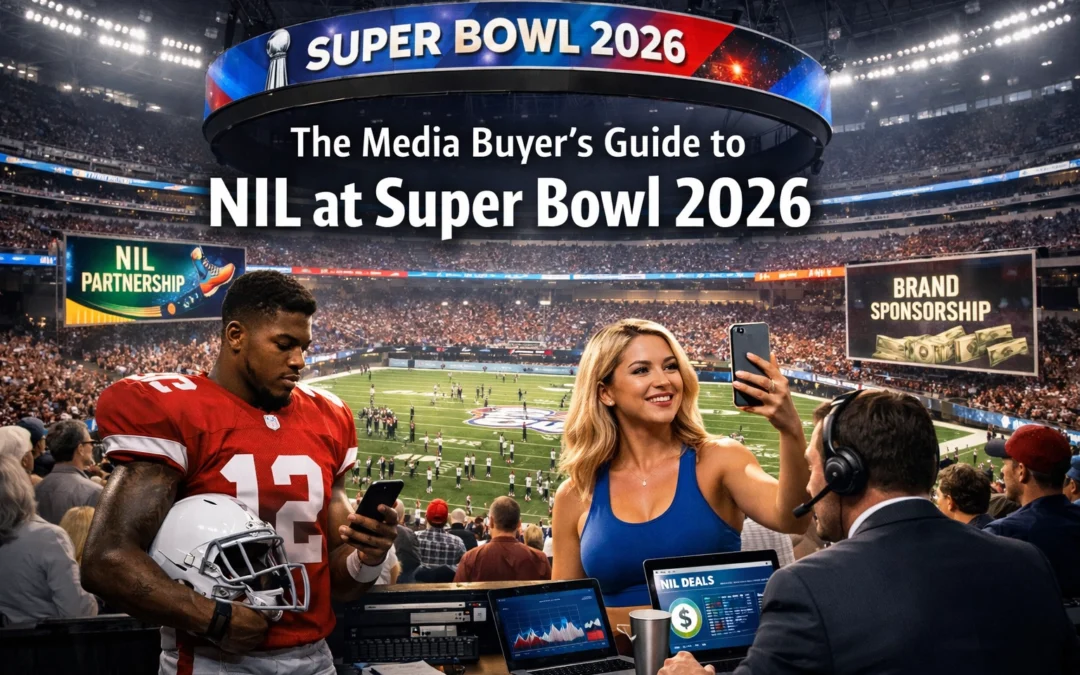
Super Bowl 2026 represents a turning point in sports marketing. While the traditional 30 second television commercial remains a staple of the event, media buyers are increasingly looking toward decentralized strategies to capture the attention of Gen Z and millennial audiences. The rise of Name, Image, and Likeness (NIL) partnerships has created a new landscape where authenticity and hyper-local engagement drive more value than broad-reach broadcasts alone.
This guide explores how media buyers can leverage the OOH Sports NIL platform to connect with over 20,000 student-athlete voices. By moving away from a single-channel approach and adopting a diversified athlete portfolio, brands can achieve significant impact during the most competitive advertising window of the year.
The Strategic Shift in Sports Advertising
The advertising environment surrounding the Super Bowl has evolved. High costs for national television spots often exclude emerging brands or require established brands to commit the majority of their annual budget to a single moment. NIL partnerships offer a strategic alternative. These partnerships allow media buyers to engage with audiences through voices they already trust.
Data suggests that college athletes command a deeper level of loyalty within specific geographic markets compared to national celebrities. For a media buyer, this means the ability to target specific demographics in collegiate hubs or alumni networks across the country. The financial efficiency is clear. Securing a network of NIL partners typically costs a small fraction of a national television buy while delivering superior return on investment across the full campaign lifecycle.
The Power of 20,000 Authentic Voices
The scale of the NIL marketplace is its greatest strength. OOH Sports provides access to over 20,000 student-athlete voices, allowing for a level of reach that was previously impossible to manage manually. This scale enables a "Super Bowl Blitz" strategy where thousands of athletes share brand messaging simultaneously.

Using a large network of athletes creates a "surround sound" effect. When thousands of athletes post about a brand during game week, it creates a sense of cultural ubiquity. This strategy relies on the collective power of micro-influencers and mid-tier athletes who have highly engaged followers. Research indicates that these athletes often see 40 to 60 percent higher interaction rates than traditional professional athletes because their content feels more personal and less like a scripted advertisement.
To see how these platforms integrate with modern marketing strategies, watch the following overview:
https://www.youtube.com/watch?v=l6J-0zileKE
Strategy: The Portfolio Approach
Smart media buying in the NIL space requires a diversified portfolio. Rather than placing the entire budget on one high-profile star, a balanced approach is recommended:
- Tier 1: The Anchor. Select one or two high-profile athletes with national recognition to serve as the face of the campaign.
- Tier 2: The Regionals. Partner with 10 to 20 athletes who have massive followings in key markets like Los Angeles, Chicago, or New York.
- Tier 3: The Groundswell. Utilize hundreds of student-athletes to create a consistent stream of authentic content across social platforms.
This portfolio approach provides strategic redundancy. If one athlete is unable to deliver content due to unforeseen circumstances, the overall campaign impact remains intact. Furthermore, this distribution ensures that the brand is visible across various social circles and interests, from football fans to those following track and field or basketball.
Objective and Execution: A Three Phase Timeline
A successful Super Bowl NIL campaign is not limited to the day of the game. Media buyers should plan for a three phase execution to maximize the lifespan of the creative assets.
Phase 1: Pre-Game Hype (January 15 – February 7)
During this window, NIL partners create behind the scenes content. This phase is about building anticipation. Athletes can "leak" messaging or preview national campaigns, creating an organic buzz. This tactic is particularly effective for brands that have a larger television presence, as the NIL content acts as a digital primer for the TV spot. Information on building these types of campaigns can be found on the OOH Sports marketing page.
Phase 2: Game Day Integration
On the day of the Super Bowl, the focus shifts to real-time engagement. Student-athletes provide commentary, social media reactions, and interactive content. This keeps the brand at the center of the second-screen experience. As fans scroll through their feeds during commercial breaks, they encounter familiar faces endorsing the brand in a casual, relatable way.
Phase 3: Post-Game Extension
Unlike traditional ads that lose relevance once the game ends, NIL content can sustain momentum. Post-game analysis, "get ready with me" videos for post-game celebrations, and continuing brand conversations keep the campaign active. This extension ensures that the brand remains top-of-mind as the conversation shifts to the next season.

Technology Partners and the Performance Model
Executing a campaign with 20,000 athletes requires robust technology. The OOH Sports platform simplifies the logistics of contracting, content approval, and payment. For media buyers, the most effective framework is treating athletes as content partners rather than just endorsers.
In a traditional endorsement deal, a brand pays for the rights to use an athlete's image. In a content partnership, the athlete is involved in the creative process. This leads to content that feels natural to the athlete's feed. Furthermore, implementing performance-based incentives can further drive results. When athletes have a stake in the campaign's success, they are more likely to produce content at higher frequencies and with greater creative effort.
This model aligns with the growing trend of programmatic advertising. Much like how programmatic DOOH drives lift in purchase consideration, programmatic NIL allows for data-driven decisions on which athletes and which content types are performing best in real-time.
Measuring Results and ROI
Measuring the success of a Super Bowl NIL campaign involves looking at both quantitative and qualitative data. Media buyers should focus on:
- Engagement Rates: Comparing the interaction levels of NIL posts versus traditional brand posts.
- Brand Sentiment: Analyzing the comments and mentions to see if the athlete's voice improved brand perception.
- Conversion Tracking: Using unique discount codes or landing pages to track direct sales or sign-ups.
Reports from previous campaigns show that integrating authentic voices can lead to a significant lift in positive brand image. For example, similar programmatic approaches in other sectors have seen up to a 119 percent lift in brand image. In the context of the Super Bowl, where competition for positive sentiment is fierce, these metrics are vital.

Market Context: The $50 Billion Future
The move toward NIL is part of a larger trend in the advertising industry. Experts predict that sports-related advertising, particularly through digital and out-of-home channels, will hit 50 billion dollars by 2030. Brands that establish relationships with student-athletes now are positioning themselves for long-term success as this market matures.
For media buyers, the 2026 Super Bowl is an opportunity to test and scale these strategies. By utilizing a platform that manages the complexities of thousands of partnerships, brands can achieve a level of hyper-local relevance that national television simply cannot match.
Final Considerations for Media Buyers
When planning an NIL strategy for the Super Bowl, remember that authenticity is the primary currency. Gen Z audiences respond to partnerships that feel genuine. This means giving athletes the creative freedom to talk to their fans in their own voice.
Key takeaways for your 2026 planning:
- Start early to secure the best athlete partners.
- Focus on a high volume of voices to create a "buzz" effect.
- Use data-driven platforms to manage the logistics and measure the results.
- Integrate digital out-of-home (DOOH) assets to complement social media activity.
The landscape of advertising is changing, and the Super Bowl is no longer a single-channel event. By connecting with over 20,000 student-athletes, media buyers can ensure their brand is not just seen, but heard and trusted. For more information on how to get started, visit the OOH Sports contact page to connect with a specialist.