
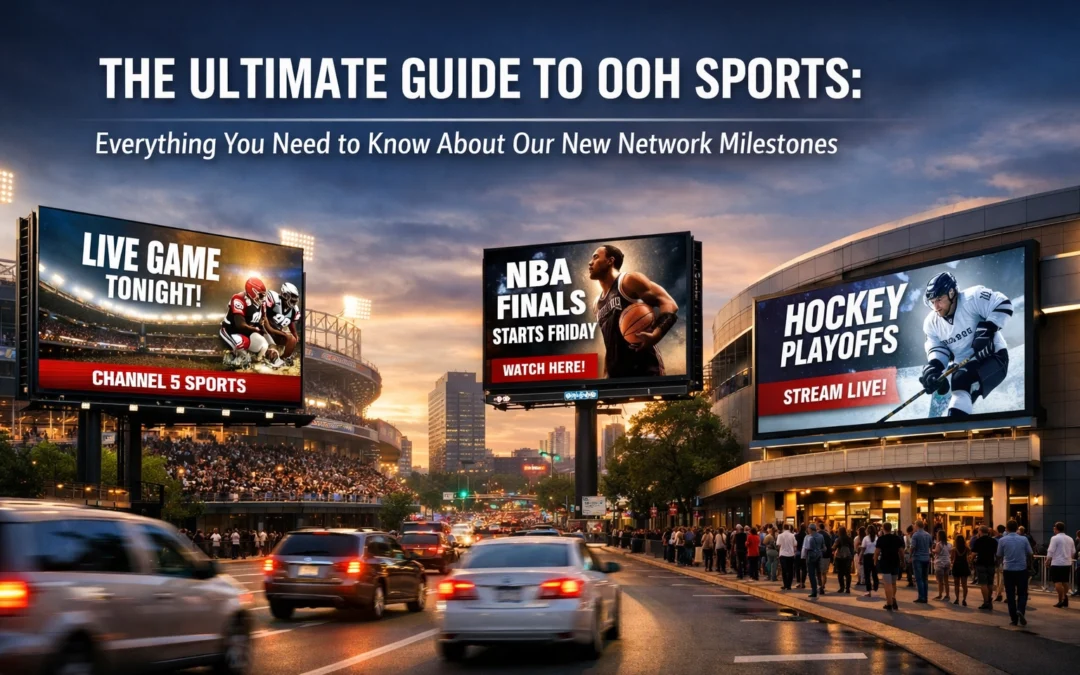
The landscape of sports advertising is undergoing a significant transformation. As traditional media continues to fragment, out-of-home (OOH) sports advertising has emerged as a powerhouse for brands seeking high impact, unskippable engagement. OOH Sports has achieved a series of network milestones that redefine how media buyers and brands interact with athletic audiences. This guide provides a comprehensive overview of the network expansion, technological integration, and the strategic milestones that position OOH Sports at the forefront of the industry.
The Evolution of the OOH Sports Network
The growth of OOH Sports is centered on the intersection of physical sports environments and digital innovation. The network has successfully expanded its footprint into key metropolitan areas and high-traffic sports venues, creating a seamless bridge between fans and brands. This expansion is not merely about more screens, but about smarter placement and better data.
By focusing on the sports vertical, the network provides a unique environment where audience sentiment is high and engagement is naturally high. Unlike home-based viewing where distractions are prevalent, the sports venue offers a captive audience. OOH Sports has capitalized on this by deploying state-of-the-art hardware and software solutions that ensure brand messages are delivered with clarity and precision.

Strategic Network Expansion and Infrastructure
The latest milestones for OOH Sports include a significant increase in inventory across professional and collegiate sports environments. This expansion ensures that media buyers have access to a diverse range of demographics, from the high-net-worth individual in luxury suites to the passionate grassroots fan.
The infrastructure behind the network is built on the Sportrons platform. These units are designed to withstand the rigors of stadium environments while delivering high-definition visual content. The deployment of Sportrons across new territories marks a pivotal moment for the company, allowing for a standardized delivery of programmatic digital out-of-home (pDOOH) content across the country.
Strategic growth has also seen the network integrate more deeply with existing stadium architecture. This approach minimizes visual clutter while maximizing viewability. By aligning screen placement with fan traffic patterns, the network ensures that every impression is a quality impression.
Technology Integration and Programmatic Capabilities
One of the most significant milestones in the OOH Sports journey is the full integration of programmatic capabilities. Through partnerships with leading demand-side platforms (DSPs) such as StackAdapt, the network has streamlined the buying process for agencies and media buyers. This integration allows for real-time bidding, advanced targeting, and flexible campaign management.
The move toward programmatic DOOH has corrected many of the inefficiencies associated with traditional stadium advertising. Instead of long-lead production times and static placements, brands can now launch real-time sports betting campaigns or time-sensitive promotions in under 24 hours.

Key Benefits of the Programmatic Approach:
- Precision Targeting: Utilizing mobile location data to target specific fan demographics.
- Flexibility: The ability to pause, adjust, or pivot creative based on live game outcomes or weather conditions.
- Efficiency: Automated workflows that reduce the administrative burden on media buyers.
- Transparency: Real-time reporting on impressions and delivery metrics.
For more information on the technical advantages of this approach, the StackAdapt spotlight provides a deeper look into how these partnerships drive adoption.
Strategy: Capturing the Sports Audience
The strategy employed by OOH Sports revolves around the "Fan Journey." This journey begins long before the opening whistle and continues after the final score. By placing digital assets at entrance gates, concourses, and near concession areas, the network maintains a consistent brand presence throughout the event.
The objective is to move beyond simple brand awareness and toward purchase consideration. This is achieved through contextual relevance. For instance, a beverage brand might trigger specific creative during a halftime break or when temperatures exceed a certain threshold. This level of synchronization between the environment and the message is what separates OOH Sports from broader OOH networks.
Measurable Outcomes and Case Study Analysis
The success of the OOH Sports network is best illustrated through the performance data of major brand campaigns. The implementation of pDOOH within the network has consistently outperformed traditional benchmarks.
White Claw: Driving Purchase Consideration
A prominent campaign for White Claw’s vodka launch utilized the OOH Sports network to target specific lifestyle and sports segments. By leveraging programmatic triggers and high-impact digital placements, the campaign achieved a 74% lift in purchase consideration. This result highlights the network's ability to influence consumer behavior in a crowded market. Detailed results can be found in the White Claw case study.
Mike’s Hard Iced Tea: Brand Image Enhancement
For Mike’s Hard Iced Tea, the goal was to improve positive brand image through a pDOOH campaign. By saturating high-engagement sports environments, the campaign saw a 119% lift in positive brand image. This demonstrates that the environment in which an ad is seen significantly impacts the perception of the brand. The full analysis is available in the Mike's Hard case study.
Sea-Doo: Increasing Consideration
Sea-Doo utilized the network to reach outdoor enthusiasts and sports fans. Their first digital OOH campaign resulted in a 144% increase in purchase consideration. This massive lift was attributed to the strategic alignment between the brand’s core audience and the venues selected within the OOH Sports network. Further details are outlined in the Sea-Doo performance report.

Logistics and Execution Processes
Executing a campaign within the OOH Sports network follows a standardized and efficient process. This ensures that media buyers can move from planning to execution with minimal friction.
- Audience Identification: Leveraging the marketing team’s data to identify the optimal sports venues and timeframes.
- Inventory Selection: Choosing from a range of Sportrons and concourse digital displays.
- Creative Upload: Utilizing programmatic platforms to distribute assets across the network instantly.
- Monitoring and Optimization: Tracking performance in real-time and adjusting parameters to ensure maximum ROI.
- Attribution Modeling: Using device ID exposure and brand lift studies to quantify the impact of the campaign.
This logical progression allows for a more analytical approach to sports marketing, moving away from the "spray and pray" tactics of the past.
Avoiding Common Pitfalls in Sports DOOH
While the opportunities within the network are vast, success requires a strategic approach. Industry analysis has identified several common mistakes that can hinder campaign performance. These include failing to optimize creative for the specific viewing distance of stadium screens and neglecting the use of real-time data triggers.
OOH Sports provides resources to help brands navigate these challenges, such as the guide on common sports DOOH mistakes. By utilizing perimeter targeting and dynamic creative optimization, brands can avoid these pitfalls and capitalize on the unique stadium environment.
Industry Trends and Future Outlook
The trajectory of sports advertising suggests a move toward even greater digitization. Research indicates that DOOH sports advertising will hit $50 billion by 2030. OOH Sports is positioned to capture a significant share of this growth by continuing to expand its hardware footprint and refining its programmatic technology.
The shift from traditional stadium signage to digital assets is driven by the demand for better ROI and measurable outcomes. When comparing pDOOH vs. traditional stadium ads, the data consistently favors the flexibility and data-rich environment of the digital network.

Commitment to Professional Standards
As OOH Sports continues to reach new milestones, the commitment to transparency and professional standards remains a priority. The organization maintains clear company policies and terms of service to ensure that all partnerships are built on a foundation of clarity and legal compliance. This includes rigorous privacy policies regarding the use of audience data and copyright policies for creative assets.
Summary of Impact
The milestones achieved by OOH Sports represent a significant leap forward for the advertising industry. By combining high-impact physical assets with the precision of programmatic technology, the network offers a unique value proposition for media buyers. The ability to drive triple-digit lifts in brand consideration and reach millions of engaged fans across the country makes OOH Sports an essential component of any modern omnichannel campaign.
For those interested in exploring how the network can support specific brand objectives, the OOH Sports blog provides ongoing insights into the latest developments and success stories from across the network. Interested parties are encouraged to reach out through the contact page to begin the strategic planning process.