
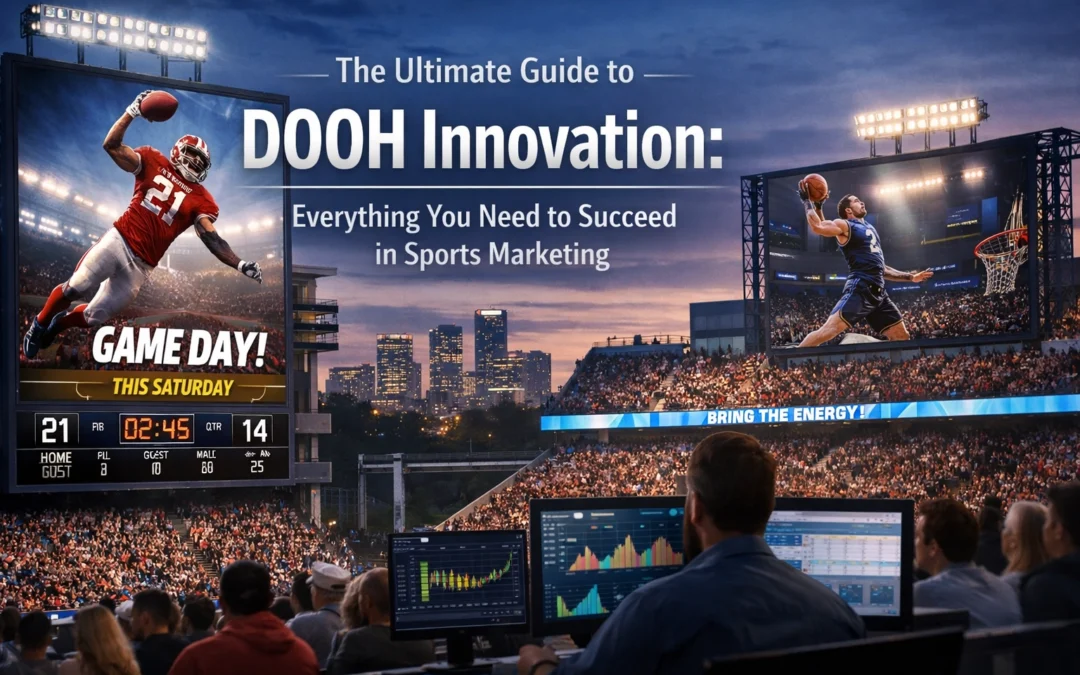
Digital Out-of-Home (DOOH) advertising has transitioned into a critical connective tissue within the sports marketing sector. It functions as a primary link between brands and fans throughout their daily journeys, covering everything from morning commutes and stadium arrivals to post-game social gatherings. Rather than relying on static, traditional billboards, modern sports marketers utilize DOOH as a vital component of integrated omnichannel campaigns designed to drive measurable fan engagement and conversion rates.
The current landscape of sports marketing is defined by three significant shifts: the rise of direct-to-fan streaming, hyper-personalization driven by artificial intelligence, and year-round community engagement. The industry has moved beyond simple location-based buys. The focus is now on routine-based strategies that follow fans throughout their entire day and across various seasons. This represents a fundamental change in how advertising is executed, prioritizing digital immersion and real-time personalization to meet fans where they are most active.
The Strategic Evolution of Sports DOOH
The shift toward digital immersion has turned sports marketing into a year-round endeavor. While the physical game lasts only a few hours, the digital conversation persists indefinitely. Brands that succeed in this environment are those that move away from seasonal bursts and toward a consistent presence in the fan’s life.
This evolution is supported by the adoption of sophisticated data analytics and audience mapping. By understanding where fans live, work, and socialize, advertisers can deploy messaging that feels relevant rather than intrusive. The goal is to create a seamless experience where the advertisement feels like a natural part of the sports ecosystem. This approach requires a deep understanding of fan behavior and the technical capabilities of modern digital displays.

The Priming Effect and Omnichannel Reinforcement
The most effective sports marketing campaigns integrate DOOH with multiple digital platforms to create a priming effect. This phenomenon occurs when a fan encounters a brand message across different formats in a specific sequence. For instance, seeing a 30-second video spot on a mobile device followed by a 6-second digital panel ad during a commute significantly strengthens the memory structure of the campaign.
By pairing the wide reach of traditional media or streaming with the targeted precision of DOOH, brands can extend their reach to more than 90 percent of audiences. An integrated omnichannel approach typically involves several coordinated steps:
- Brand Awareness: Utilizing connected TV (CTV) and social media to build brand recognition in the weeks leading up to a major sporting event.
- Impactful Placement: Deploying high-impact DOOH placements near stadiums, transit hubs, and fan-heavy entertainment districts during peak excitement hours.
- Retargeting: Re-engaging audiences post-game across CTV, digital audio, and display ads to maintain momentum and move fans toward a purchase.
This multi-touchpoint strategy ensures that the message remains top-of-mind long after the final whistle.
Mapping the Comprehensive Fan Journey
DOOH enables brands to reach fans at every stage of their game-day journey. This journey is not limited to the stadium. It begins the moment a fan leaves their home and continues until they return. Strategic location targeting is essential for capitalizing on these various touchpoints.
Pre-Game Activation
The pre-game phase is about building anticipation. Digital billboards along major transit routes, welcome displays at airports or train stations, and screens in nearby shopping districts serve to prime the audience. These placements capture the attention of fans as they move toward the venue, establishing a brand presence early in the day.
During-Game Engagement
While the action happens inside the stadium, a significant portion of the audience is located in sports bars, restaurants, and public viewing areas. DOOH screens in these locations allow brands to reach passionate fan communities where they gather. Integrating messaging into these high-energy environments ensures that the brand is associated with the positive emotions of the game.
Post-Game Continuation
The post-game phase is characterized by heightened emotions, whether from a win or a loss. Location-based messaging near exits and in transportation hubs capitalizes on this concentrated crowd. Advertisers can use this time to offer celebratory discounts or provide helpful information, such as traffic updates or transit schedules, adding utility to the brand message.

Real-Time Innovation via Programmatic DOOH
Programmatic Digital Out-of-Home (pDOOH) has revolutionized how content is delivered. It allows brands to sync their creative assets with live game updates, countdowns, and real-time statistics. This level of technical integration makes every audience member feel like they are part of the action, regardless of their physical location.
The benefits of programmatic execution include:
- Dynamic Content Updates: Highlighting product availability in nearby retail stores based on real-time inventory data.
- Contextual Relevance: Triggering specific ads based on game events, such as a goal, a home run, or a victory.
- Agile Inventory Access: Accessing valuable DOOH displays as opportunities emerge, even if the primary inventory was sold out months in advance.
By bridging physical and digital spaces through QR codes and social media integrations, pDOOH creates a feedback loop that allows for immediate fan interaction. For more information on the technical deployment of these assets, visiting the marketing section provides deeper insights into execution strategies.
Strategic Integration with Streaming Platforms
The shift in sports consumption toward streaming platforms like Amazon Prime Video, Peacock, and YouTube TV has created new opportunities for DOOH alignment. Modern strategies must account for the fact that many fans are watching games on mobile devices or smart TVs.
Coordinating DOOH placements with streaming platform buys ensures geographic and demographic precision. For example, a brand can run a campaign on a streaming service that targets a specific city and simultaneously activate DOOH screens in that city's busiest pedestrian areas. This creates a unified brand experience that transitions seamlessly from the private viewing environment to the public sphere.

Case Study Analysis: Measurable Impacts
The success of a DOOH campaign is measured through data-driven performance metrics. Moving beyond simple impressions, the industry now focuses on brand lift studies, purchase consideration, and attribution. Several recent campaigns demonstrate the power of well-executed DOOH in the sports and beverage sectors.
For instance, a programmatic digital out-of-home campaign for a major beverage brand resulted in a 74 percent lift in purchase consideration for a new product launch. This was achieved by targeting high-traffic areas where the target demographic was known to congregate during major social events.
Similarly, a campaign for an iced tea brand saw a 119 percent lift in positive brand image. By utilizing pDOOH to deliver contextually relevant messaging during peak summer social hours, the brand was able to significantly alter consumer perception.
In the recreational vehicle sector, a first-time DOOH campaign increased purchase consideration by 144 percent. These results underscore the effectiveness of using location-based data to reach consumers when they are most receptive to specific lifestyle messaging.
For brands looking to understand the full scope of these results, the case study archive offers comprehensive breakdowns of methodology and outcomes.
Technical Execution and Hardware
The physical hardware used in sports environments is just as important as the software driving the ads. Specialized displays, such as Sportrons, are designed to handle the high-brightness and high-durability requirements of stadium and outdoor environments. These screens ensure that the creative content is visible even in direct sunlight and can withstand the rigors of high-traffic public spaces.
When planning a campaign, it is essential to consider the technical specifications of the inventory. This includes aspect ratios, refresh rates, and the ability to handle dynamic data feeds. Working with specialized partners ensures that the creative intent is maintained across all screen types and locations.

Data-Driven Performance Measurement
The final stage of any successful DOOH strategy is measurement. Modern tools allow for a detailed analysis of how a campaign performed against its original objectives. This involves several layers of data:
- Device ID Exposure: Tracking how many unique mobile devices were in proximity to a DOOH screen when an ad was displayed.
- Retargeting Success: Measuring the conversion rate of audiences who were first exposed to a DOOH ad and later interacted with a digital display ad or website.
- Brand Lift Studies: Conducting surveys to determine the impact on brand awareness, favorability, and intent to purchase.
By integrating programmatic ads across broadcast, streaming, and OOH channels, marketers can track the entire funnel. This full-funnel experience mirrors how audiences actually engage with sports, moving between various screens and physical locations throughout the day.
The result of these innovations is a marketing ecosystem that is more responsive, more measurable, and ultimately more effective at building lasting connections between brands and sports fans. For those interested in exploring the broader implications of these trends, the OOH Sports blog provides ongoing updates and industry news. For direct inquiries regarding campaign planning and execution, the contact page serves as the primary gateway for partnership discussions.