
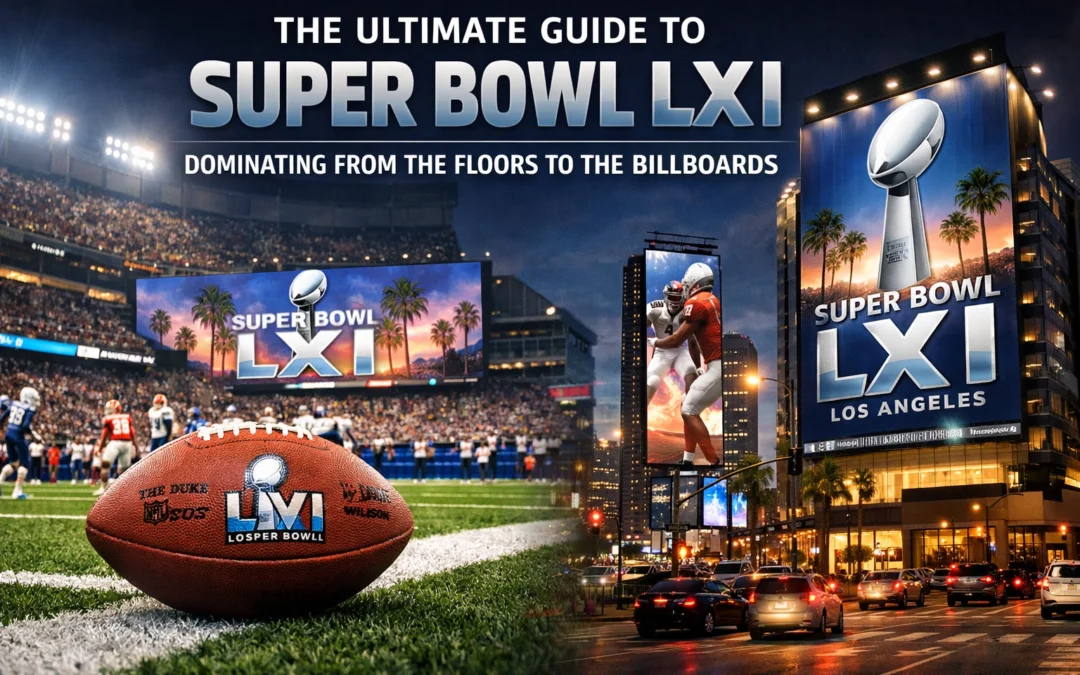
The Super Bowl represents the peak of American sports culture and the highest stakes in the advertising industry. As preparations begin for Super Bowl LXI in 2027, the landscape of out of home advertising continues to evolve. With a history spanning 40 years of advertising leadership, OOH Sports provides the blueprint for brands to dominate the visual environment surrounding the big game. This guide examines the strategy behind venue-wide coverage, from the physical floors to the massive digital billboards that define the city skyline.
Four Decades of Advertising Leadership
Advertising during the Super Bowl has transitioned from simple static placements to a complex ecosystem of digital and physical touchpoints. Over the last 40 years, the industry has shifted toward high-impact, data-driven placements that capture attention both inside and outside the stadium. OOH Sports has remained at the forefront of this evolution by integrating traditional media with cutting-edge technology.
In the early days, a billboard was a standalone asset. Today, it is part of an omnichannel strategy. The focus has shifted toward creating a seamless brand experience that follows the consumer from the airport to the hotel, and eventually into the stadium itself. This multi-layered approach ensures that a brand is not just seen, but remembered long after the final whistle.

The Strategy of Venue-Wide Coverage
Dominating the Super Bowl requires more than just one high-profile ad. It requires a strategy that covers every possible angle of the consumer journey. This is known as venue-wide coverage. By placing advertisements on floors, walls, windows, and massive outdoor screens, a brand creates an immersive environment.
The objective is simple: total visibility. When a fan enters the host city, the brand should be the first thing they see. When they walk through the stadium gates, the brand should be under their feet and above their heads. This level of saturation is achieved through a combination of static graphics and dynamic digital displays.
Floors and Transit Hubs
Floor graphics are often overlooked but highly effective. They occupy a space where people are naturally looking as they navigate crowded transit hubs and stadium concourses. These placements serve a dual purpose of wayfinding and brand reinforcement. When combined with traditional signage, they create a 360-degree brand experience.
Billboards and Sky-High Visibility
The massive digital billboards surrounding the Super Bowl venue are the crown jewels of any campaign. These assets provide the scale necessary to stand out in a crowded market. Programmatic digital out of home (DOOH) technology allows these screens to be updated in real time, reacting to game events or local weather conditions to maintain relevance.

Programmatic DOOH: The Game Changer
The rise of programmatic technology has revolutionized how brands buy and execute OOH campaigns. Instead of committing to a single static board months in advance, advertisers can now use data to trigger ads based on specific audience behaviors. This technology was instrumental in recent successful campaigns.
For instance, the programmatic DOOH campaign for White Claw saw a 74 percent lift in purchase consideration. You can read more about that specific execution in the White Claw case study. Similarly, AB Inbev Mike's Hard Iced Tea achieved a 119 percent lift in positive brand image by utilizing these same programmatic strategies. Detailed results can be found in the AB Inbev campaign summary.
By using Sportrons, brands can access high-definition displays that are specifically positioned to capture the attention of sports fans. These screens are placed in high-traffic areas where the energy of the game is most intense, ensuring maximum impact for every dollar spent.
Integrating Video Content
A successful Super Bowl campaign often includes a mix of static and video assets. Video content on large-scale digital displays adds a level of dynamism that static images cannot match. It captures the movement and excitement of the sport, drawing the eye and holding attention for longer periods.
https://www.youtube.com/watch?v=l6J-0zileKE
The video above illustrates the power of high-impact visuals in a sports environment. By mirroring the energy of the athletes on the screen, the advertisement becomes a part of the entertainment rather than an interruption to it.
Logistics and Execution Processes
Executing a campaign of this magnitude involves detailed logistics. The process begins months before the game with site visits and technical assessments of the host city. OOH Sports coordinates with local authorities and venue managers to ensure all placements are compliant with local regulations and safety standards.
- Site Selection: Identifying the high-traffic "heat maps" where fans will congregate.
- Creative Optimization: Tailoring visual assets to fit the specific dimensions and lighting conditions of each location.
- Technical Integration: Setting up programmatic triggers and ensuring all digital feeds are secure and functional.
- Monitoring: Real-time tracking of ad playouts and audience impressions.

Quantifying Results and Brand Lift
The success of a Super Bowl OOH campaign is measured through rigorous data analysis. Brand lift studies are used to quantify how the exposure affected consumer perception and behavior. These studies typically look at awareness, favorability, and purchase intent.
In a recent campaign for Sea-Doo, the use of digital out of home media led to a 144 percent increase in purchase consideration. The details of this strategy are outlined in the Sea-Doo case study. These results demonstrate that when OOH is executed with precision, it delivers a massive return on investment.
Measurement partners use device ID tracking to determine how many people were exposed to the ads and whether those individuals later visited a retail location or a website. This level of attribution is what makes modern OOH advertising so powerful for high-stakes events like the Super Bowl.
Planning for Super Bowl LXI
As the industry looks toward Super Bowl LXI, the focus remains on innovation. The host city will serve as a playground for new technologies, including augmented reality integrations and interactive displays. Brands that start their planning early will be the ones that secure the most valuable inventory.
For brands looking to understand the broader context of holiday and event-based marketing, the guide on New York City holiday shopping offers additional insights into managing large-scale outdoor campaigns.

Strategy and Mechanics
The mechanics of a venue-wide campaign rely on a tiered approach to visibility.
- Tier 1: Global Reach. Large-format billboards on major highways leading to the stadium. These reach the widest possible audience, including those who are in the city but not attending the game.
- Tier 2: Targeted Engagement. Digital screens in entertainment districts and fan zones. These placements reach the most engaged fans during their peak hours of activity.
- Tier 3: Point-of-Action. Stadium concourse ads and floor graphics. These reach fans at the moment they are most likely to make a purchase, such as at a concession stand or team shop.
By layering these tiers, OOH Sports ensures that the brand message is inescapable. This comprehensive coverage is the hallmark of 40 years of leadership in the advertising space.
Conclusion of Strategy
The Ultimate Guide to Super Bowl LXI highlights that success is found in the details. It is not enough to simply have a presence. The presence must be strategic, data-driven, and venue-wide. From the moment a fan steps off a plane to the moment they take their seat in the stadium, the visual environment should tell a consistent and compelling story.
For more information on how to implement these strategies for your brand, visit the marketing section or reach out via the contact page. To explore the full range of previous successes, the case study library provides a wealth of data and tactical examples.
OOH Sports continues to lead the way in transforming how brands connect with fans during the world's biggest sporting events. With the right strategy, any brand can dominate from the floors to the billboards.