
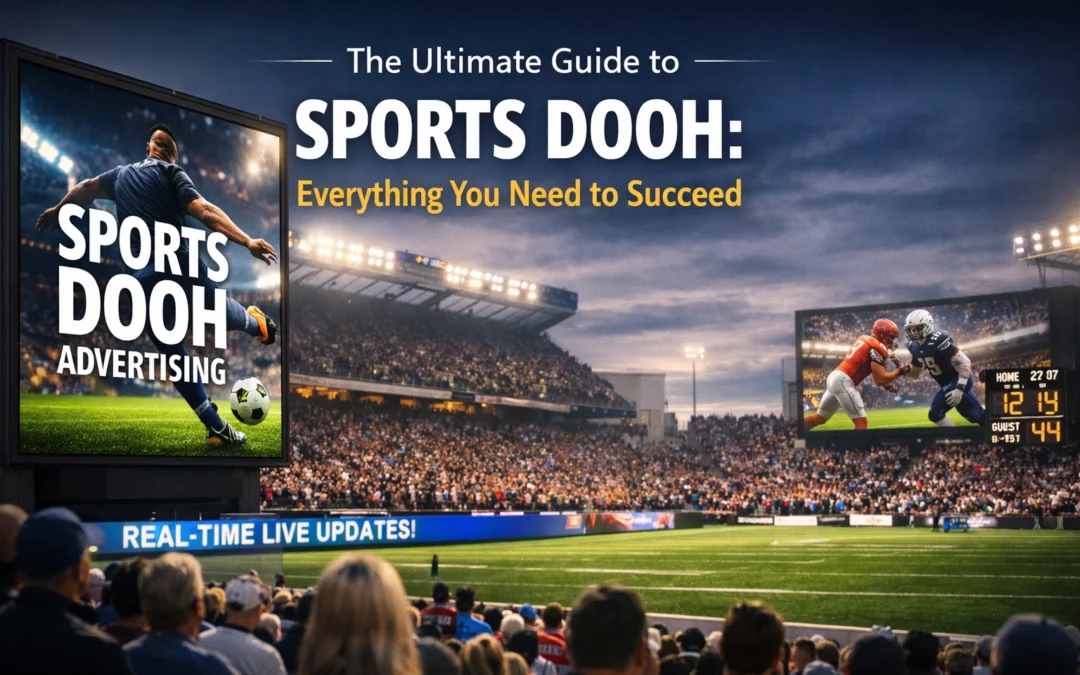
Digital Out-of-Home (DOOH) advertising has transformed from a supplementary media buy into a cornerstone of modern sports marketing. As fans move through physical spaces on their way to stadiums, bars, and community viewing areas, DOOH provides a high-impact medium to capture attention. This guide examines the strategic implementation of sports-focused DOOH, highlighting how media buyers and brand managers can leverage real-time technology to drive measurable results.
The Strategic Shift to Routine-Based Marketing
Traditional sports advertising often focused solely on the broadcast or the interior of the stadium. However, sports marketing has evolved into a routine-based strategy. This approach targets fans not just during the three hours of a game, but throughout their entire journey.
Research indicates that 81 percent of sports fans feel more positive toward brands that sponsor sports. This positive sentiment creates a unique opportunity for advertisers to build brand equity. By placing digital displays in high-traffic locations like transit hubs, major highways, and entertainment districts, brands can reinforce their presence when fans are at their most receptive.

Mapping the Fan Journey
A successful DOOH campaign for sports follows a logical progression that mirrors the fan's experience. This journey is typically divided into three distinct phases.
Phase 1: Pre-Game Anticipation
Before the event starts, fans are in a state of high anticipation. Digital billboards along commute routes and urban panels near stadium entry points are ideal for building awareness. During this phase, the goal is to prime the audience. High-impact visuals that build excitement for the upcoming matchup ensure the brand is top-of-mind before the first whistle.
Phase 2: Game-Time Engagement
During the game, the focus shifts to the immediate vicinity of the venue and surrounding fan zones. Digital screens in sports bars and public viewing areas capitalize on peak engagement. This is where programmatic DOOH (pDOOH) becomes particularly effective, allowing for creative that reflects live action or current scores.
Phase 3: Post-Game Reinforcement
The experience does not end when the game finishes. Fans often visit restaurants or use public transportation to return home. Displays in these locations reinforce the message, allowing brands to capitalize on the emotional high of a win or the shared experience of the crowd. Sustaining visibility after the event helps create lasting impressions that extend beyond the stadium walls.
The Power of Programmatic DOOH (pDOOH)
The introduction of programmatic technology has fundamentally changed how outdoor advertising is bought and executed. Programmatic DOOH allows for automated, data-driven ad placements that can be optimized in real time.
For sports marketers, the benefits of pDOOH include:
- Dynamic Creative: Campaigns can automatically update to show live scores, countdowns to kickoff, or player statistics.
- Triggered Activations: Ads can be set to trigger based on specific events, such as a home team win, a change in weather, or specific traffic patterns around the stadium.
- Inventory Flexibility: Media buyers can tap into valuable inventory in real time, allowing for agility if a team makes a surprise playoff run or an event gains unexpected traction.
One notable example of the effectiveness of this technology is seen in how brands like White Claw have utilized programmatic DOOH to drive significant results. In a campaign for a new product launch, the use of targeted digital displays resulted in a 74 percent lift in purchase consideration. You can read the full breakdown of that strategy here: White Claw Programmatic DOOH Campaign.
Omnichannel Integration and the Priming Effect
DOOH is most effective when it functions as part of a full-funnel omnichannel strategy. The "priming effect" occurs when a consumer is exposed to a campaign on one medium, such as social media or Connected TV (CTV), and then encounters it again in a physical environment via DOOH.
The strategic layering of media works as follows:
- Upper-Funnel Awareness: Build initial recognition through digital audio, CTV, or social media platforms before a major sporting event.
- Physical Reinforcement: Deploy high-impact DOOH placements at the height of foot traffic and excitement to solidify the message.
- Bottom-Funnel Conversion: Reconnect with audiences who were exposed to the DOOH ads by retargeting them on their mobile devices or through display ads as they check highlights and standings later.
This multi-touchpoint approach significantly amplifies memory retention. When a fan sees a consistent message across different platforms, the impact of each individual ad is increased.

Strategic Placements Beyond the Stadium
While the stadium is the heart of the action, the surrounding ecosystem offers vast opportunities for targeted advertising. OOH Sports focuses on an extensive network of over 25,000 digital screens that reach fans where they live, work, and play.
Key geo-specific venues include:
- FIFA Fan Festivals and Public Squares: High-density areas where large crowds gather for public viewings.
- Sports Bars and Restaurants: Locations where fans spend extended periods, allowing for high dwell times and multiple ad exposures.
- Transit Hubs: Airports, train stations, and bus stops where traveling fans are concentrated.
By expanding the scope of a campaign beyond the perimeter of the venue, brands can achieve massive reach without the premium price tag of an official stadium sponsorship. This is discussed in detail in our analysis of traditional stadium sponsorships versus digital screen networks.
Proving ROI through Measurement and Analytics
One of the historical challenges of out-of-home advertising was measurement. Modern DOOH has solved this through sophisticated data sets and attribution modeling. Media managers can now track the effectiveness of a campaign with the same precision as digital web ads.
Measurable outcomes include:
- Brand Lift: Percentage increases in brand awareness, favorability, and purchase intent. For instance, Mike’s Hard Iced Tea saw a 119 percent lift in positive brand image through a targeted programmatic campaign. Details on that study are available here: AB InBev Brand Lift Case Study.
- Foot Traffic Attribution: Measuring the number of people who were exposed to a DOOH ad and subsequently visited a retail location.
- Purchase Consideration: Quantifying the shift in a consumer’s likelihood to buy a product. Sea-Doo achieved a 144 percent increase in purchase consideration by utilizing digital OOH to reach its target demographic. More information can be found at: Sea-Doo DOOH Campaign Results.
Using device IDs and AI-powered analytics, platforms like OOH Sports provide a clear picture of how many impressions were delivered and what actions those impressions drove.

Best Practices for Execution
To succeed in the competitive landscape of sports DOOH, advertisers should adhere to several core principles:
- Plan Defensively and Offensively: Secure premium placements well in advance for major events, but leave budget for programmatic flexibility to react to live developments.
- Tailor Creative to Context: Messaging that references specific teams, regional rivalries, or local landmarks resonates more deeply with sports fans than generic creative.
- Leverage Real-Time Data: Use live scores and betting odds to keep creative fresh and relevant. This is particularly vital for sports betting brands that need to convert users quickly. You can explore how to launch real-time betting campaigns here.
- Simplify the Call to Action: High-impact billboards are often viewed briefly. Use clear visuals, bold text, and if appropriate, QR codes to bridge the gap between the physical and digital experience.

The Future of Sports Marketing
The trajectory of the industry points toward a heavy reliance on digital integration. By the end of the decade, the market for DOOH sports advertising is expected to grow significantly as more brands move away from static placements in favor of dynamic, data-driven screens.
The ability to reach 90 percent of an audience by amplifying other media channels makes DOOH an indispensable tool for any media buyer. Whether the goal is to dominate the conversation around a major championship or to build consistent local awareness, the flexibility and scale of the OOH Sports network provide the infrastructure necessary for success.
For more insights on the future of the industry, see our report on how DOOH sports advertising will hit 50 billion by 2030.
By focusing on the fan journey, embracing programmatic technology, and utilizing robust measurement tools, brand managers can ensure their campaigns are not just seen, but are effective in driving real business growth. The ultimate guide to success in this space is simple. Meet the fans where they are, speak their language, and use data to refine the strategy at every turn.