Fan engagement in the modern sports landscape is no longer about simply showing up. For Creative Directors and CMOs, the challenge lies in cutting through the noise of a multi-screen environment where attention is the most valuable currency. While digital platforms and social media have dominated the conversation for years, many brands find themselves making critical errors that lead to stagnant growth and poor brand recall.
The following analysis identifies seven common mistakes in fan engagement and illustrates how stadium perimeter advertising, particularly when powered by OOH Sports, provides a strategic remedy.
1. Treating Fans as Passive Spectators
A common mistake in sports marketing is a one way broadcasting strategy. Many brands push messages at fans without considering the emotional state or the interactive nature of a live game. Fans do not want to be passive recipients of marketing, they want to feel like part of the event.
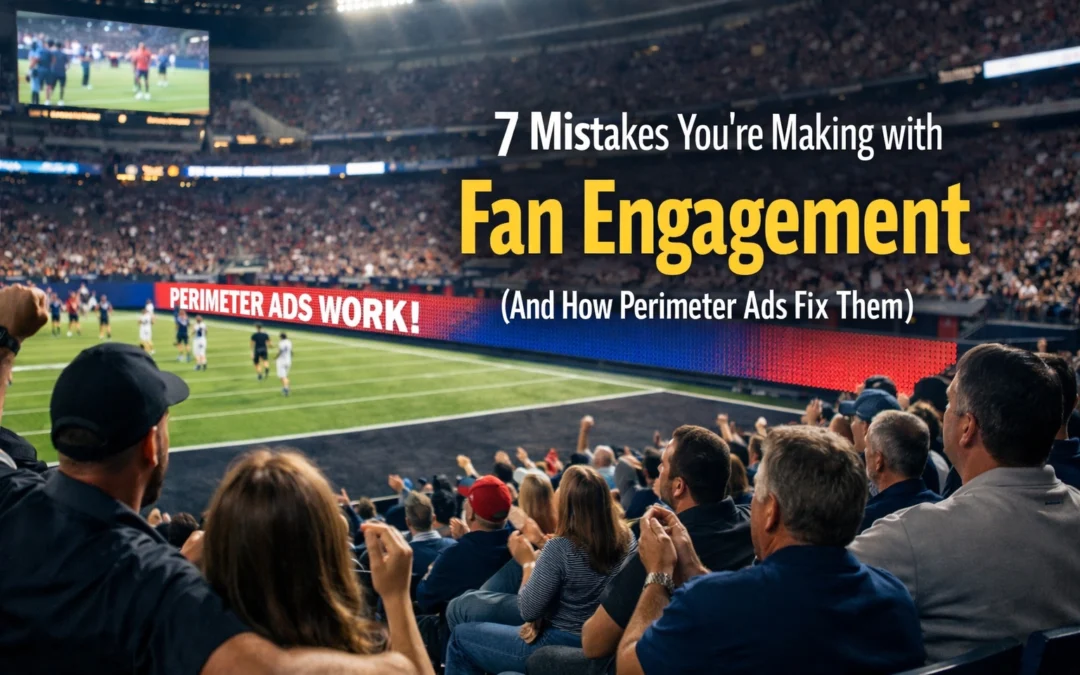
Perimeter ads fix this by becoming part of the stadium atmosphere. When a brand occupies the field level LED boards, it exists within the action. Programmatic digital out of home (DOOH) allows these ads to change based on game triggers, such as a goal or a halftime break. This turns a static message into a reactive element that celebrates or commiserates alongside the fan.

2. Failing to Capture the Second Screen Moment
Data shows that over 85 percent of sports fans use a mobile device while watching a game. Many campaigns fail because they treat the stadium screen and the mobile screen as separate entities. If a brand is only on a fan's phone, it misses the collective experience. If it is only on a billboard, it misses the opportunity for immediate conversion.
Perimeter advertising acts as the visual anchor for the second screen. When fans take photos of the field to share on social media, the perimeter boards are often in the background. This creates organic, user generated content that places the brand at the center of the fan’s digital narrative. By using OOH Sports, brands ensure they are visible in the most photographed areas of the venue.
3. Neglecting Brand Authority and Trust
In an era of deepfakes and fleeting social media ads, brand trust is difficult to build. A mistake many CMOs make is over-allocating budget to "rented" social channels where ads are easily skipped or ignored. This can lead to a brand feeling ephemeral rather than established.
Physical presence in a stadium through perimeter ads provides a level of perceived authority that digital-only ads cannot match. Being a visible partner of a major sports league or team signals stability and scale. It suggests that the brand is a significant player in the industry. High-impact visuals on the perimeter of the field create a sense of permanence and prestige.
4. Overlooking the Global Broadcast Reach
Many marketers view stadium advertising as a local play, meant only for the 50,000 people in the stands. This is a significant strategic oversight. The primary value of perimeter advertising lies in the millions of viewers watching the broadcast at home or in sports bars.
Strategic placement on the "TV visible" side of the pitch ensures that the brand is seen every time the camera follows the ball. Unlike traditional television commercials that viewers might skip or ignore during breaks, perimeter ads are visible during the most intense moments of play. This provides a continuous brand presence that is integrated into the entertainment itself.
5. Lack of Contextual Relevance
Generic messaging is a common pitfall. A creative campaign that works in a shopping mall might fail in a high-stakes football match. Many brands ignore the context of the sport, the rivalry, or the specific timing of the match.
Modern perimeter advertising platforms allow for sophisticated targeting and creative rotation. By utilizing programmatic technology, CMOs can deploy specific creatives that align with the weather, the score, or even the time of day. This level of relevance ensures that the message resonates with the current mindset of the audience. For more on how these strategies are evolving, the article on DOOH sports advertising hitting $50 billion by 2030 provides deeper insights into the future of the industry.

6. Ignoring Data and Attribution
The "set it and forget it" mentality of traditional stadium signage is a mistake of the past. Some brands still believe that the impact of a stadium ad cannot be measured, leading to hesitation in budget allocation.
OOH Sports bridges this gap by offering data-driven insights. By analyzing device IDs exposed to the ads and monitoring brand lift, advertisers can now quantify the impact of their perimeter campaigns. Case studies have shown significant results in this area. For example, AB InBev's Mike’s Hard Iced Tea saw a 119 percent lift in positive brand image through a programmatic DOOH campaign. This evidence-based approach allows CMOs to justify their spend with hard numbers.
7. Focusing on Transactions Over Relationships
The final mistake is treating every ad as a "buy now" request. Fan engagement is a long game. When a brand focuses solely on immediate sales, it misses the opportunity to build a lasting emotional connection with a loyal fan base.
Perimeter ads are an excellent tool for brand building. By consistently appearing in the fan's field of vision during moments of high emotion, the brand becomes associated with the joy and passion of the sport. This builds a relationship that lasts far beyond the final whistle. It is about being a part of the community rather than just a vendor to it.
Strategic Execution: Why Perimeter Ads are the Solution
The move from traditional to digital perimeter boards has revolutionized the field. Digital boards offer brighter colors, animation, and the ability to change creative on the fly. This flexibility is essential for Creative Directors who need to maintain brand consistency across various markets.
The logistics of these campaigns are now more streamlined than ever. Through the OOH Sports marketing platform, brands can coordinate multi-stadium campaigns from a single dashboard. This removes the administrative burden of dealing with individual venues and allows for a cohesive national or international strategy.

Technology and Performance
The integration of programmatic buying into stadium environments has changed the ROI calculation for sports marketing. Advertisers can now bid on specific time slots or game conditions, ensuring that their budget is used as efficiently as possible.
When comparing programmatic DOOH to traditional stadium ads, the benefits in terms of flexibility and measurement are clear. For a detailed comparison, the resource on programmatic DOOH vs. traditional stadium ads offers a breakdown of which delivery method yields better results for specific marketing goals.
Results and Impact
The success of perimeter advertising is not just theoretical. Brands across various sectors have seen measurable success by moving away from old engagement models.
- Purchase Consideration: Campaigns have seen massive jumps in intent. For instance, Sea-Doo increased purchase consideration by 144 percent using digital OOH strategies.
- Brand Awareness: Visibility at the perimeter ensures that the brand is top-of-mind. White Claw’s campaign resulted in a 74 percent lift in purchase consideration for their vodka launch.
These results demonstrate that when a brand avoids common engagement mistakes and embraces the power of perimeter advertising, the impact is both deep and measurable.
Conclusion
Fan engagement is an evolving discipline. By avoiding the pitfalls of passive broadcasting, disconnected digital strategies, and unmeasured spending, brands can reclaim their place at the center of the sports experience. Perimeter advertising provides the visibility, authority, and emotional resonance required to reach modern fans effectively.
For brands looking to elevate their presence and correct these engagement errors, the path forward involves a mix of high-impact physical presence and sophisticated digital delivery. OOH Sports remains the partner of choice for those ready to dominate the field.