
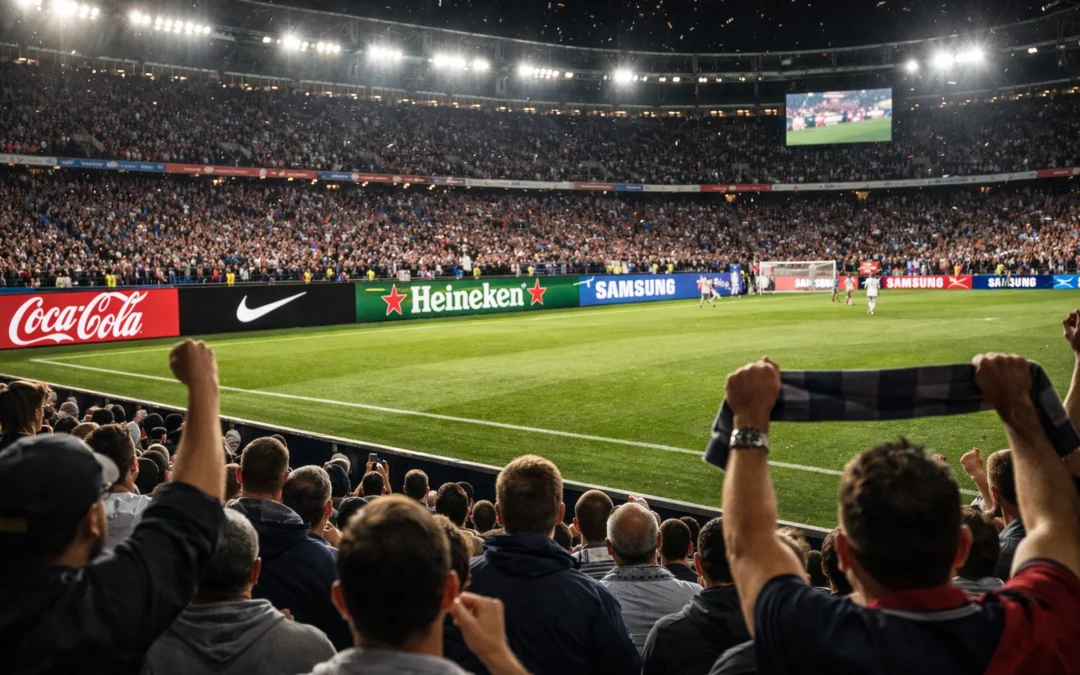
The landscape of sports marketing is undergoing a significant transformation. Traditional television commercials, once the gold standard for reaching mass audiences, now face the challenges of ad-skipping technology and fragmented viewer attention. In this environment, stadium perimeter advertising has emerged as a critical tool for brands seeking unavoidable visibility and high-impact engagement. For Creative Directors and Chief Marketing Officers, understanding the strategic shift toward dynamic, digital-out-of-home (DOOH) solutions within the stadium environment is essential for maintaining brand relevance in a competitive marketplace.
Stadium perimeter advertising refers to the digital LED boards that surround the field of play. Unlike standard billboards or static signage, these displays are integrated into the core experience of the sporting event. They occupy the primary field of vision for both in-person attendees and millions of viewers watching via broadcast or streaming platforms. The following analysis explores why this medium is redefining fan connection and how modern technology has turned the stadium perimeter into a data-driven marketing powerhouse.
The Evolution of Fan Engagement
The primary advantage of stadium perimeter advertising lies in its ability to capture a captive audience. During a live match, the focus of the spectator is directed toward the field. Because the advertising displays are situated directly along the boundary of the action, they become a functional part of the viewing experience. This positioning eliminates the "tune-out" factor common with traditional commercial breaks.
Research indicates that fans are most emotionally invested during live gameplay. When a brand message is delivered in sync with high-stakes moments, such as a scoring play or a crucial defensive stand, the emotional resonance of that moment attaches to the brand. This is not merely passive exposure. It is a strategic alignment with the peak psychological engagement of the consumer.

Objective and Strategy: Beyond Brand Awareness
While brand awareness remains a core objective, modern stadium advertising strategies now target deeper levels of the marketing funnel. The objective is to move from simple visibility to measurable interaction. This is achieved through a multi-layered approach:
- Contextual Relevance: Brands can now tailor their messaging based on the live context of the game. For example, a beverage brand might trigger a specific creative execution during a timeout or halftime when fans are more likely to consider a purchase.
- Visual Dominance: Utilizing full-motion video and high-refresh-rate LEDs ensures that the creative is vibrant and sharp, even during fast-paced broadcast sequences. Studies have shown that animated perimeter content captures attention 23 percent more effectively than static images.
- Omnichannel Integration: Leading brands use perimeter ads as a primary touchpoint that triggers a larger omnichannel journey. This might involve a call-to-action that encourages fans to engage with a mobile app or a social media campaign.
Strategic implementation involves a shift from broad-spectrum messaging to targeted, high-impact bursts. For more insights on how these strategies are being applied, visiting the OOH Sports marketing page provides further context on specialized execution.

Technology Partners and Creative Execution
The effectiveness of perimeter advertising is heavily dependent on the underlying technology. The transition from static boards to programmatic DOOH (Digital Out-of-Home) allows for unprecedented flexibility. Programmatic platforms enable brands to buy inventory based on specific triggers or data points, ensuring that the right message reaches the right audience at the optimal time.
The creative execution must account for the dual-audience nature of sports. The content must look impressive to the fan in the front row and remain legible and striking for a viewer watching on a mobile device or a 4K television. This requires a sophisticated understanding of color contrast, motion speed, and typography.
Modern LED systems used by OOH Sports allow for frame-by-frame synchronization with broadcast cameras. This prevents the "flicker" effect sometimes seen on older digital displays, ensuring that the brand’s visual identity is maintained with high fidelity across all screens. Furthermore, the use of trigger-based promotions, linked to live game data, allows for real-time creative pivots that capitalize on the unfolding narrative of the event.
Interactive Layers and the Second Screen
One of the most significant shifts in stadium advertising is the integration of "second-screen" experiences. As fans increasingly use their smartphones while watching live sports, brands can bridge the gap between the physical stadium and the digital world.
Incorporating QR codes or specific mobile calls-to-action within the perimeter creative allows for immediate offline-to-online conversion. Fans can scan a code to enter a contest, unlock an exclusive discount, or access live statistics. This level of interactivity has been shown to deliver engagement rates 15 to 30 percent higher than traditional static advertising.
Additionally, geo-fencing technology allows brands to complement their stadium presence with targeted mobile ads delivered to fans within the venue. For hospitality or retail brands, this creates a seamless path from the stadium seat to a nearby location. This integrated approach has contributed to significant growth in foot traffic for partners who synchronize their perimeter displays with localized mobile targeting.

Logistics and Measurement: Shifting to Precise Tracking
In the past, the success of stadium advertising was measured through rough estimates of attendance and broadcast ratings. Today, the focus has shifted to precise, data-driven optimization. Brands can now track exposure with granular accuracy, measuring exactly how many frames of a broadcast featured their logo and the quality of that exposure.
The use of computer vision and AI-powered analytics allows marketing teams to evaluate the return on investment (ROI) with high confidence. By shifting from estimates to precise tracking, some brands have seen reported ROI increases of up to 269 percent. This transparency is vital for CMOs who must justify budget allocations and prove media value.
Measurement metrics often include:
- Duration of Exposure: The total time the brand was visible during the broadcast.
- Brand Prominence: An analysis of how central the ad was to the action.
- Audience Sentiment: Measuring social media lift and brand mentions during and after the event.
- Conversion Attribution: Tracking mobile interactions and subsequent purchases or app downloads.
For detailed examples of how these metrics are applied in real-world scenarios, the OOH Sports case study section offers comprehensive breakdowns of performance data.
Results: The Power of the Dual Audience
The unique strength of stadium perimeter advertising is its ability to reach two distinct audiences simultaneously without multiplying production costs.
The first audience is the live crowd. These are the "super-fans" who are physically present and highly engaged. For these individuals, the perimeter ads serve as a constant background to their high-energy experience, fostering deep brand recall.
The second audience is the broadcast and streaming viewers. This group is often exponentially larger than the in-stadium crowd. Because perimeter boards are visible during the majority of play, the brand receives consistent exposure that is unskippable and integrated into the "action" of the content. This dual reach ensures that a single investment provides global visibility while maintaining a local, high-impact presence.

Strategic Considerations for Creative Directors and CMOs
When planning a campaign that includes stadium perimeter advertising, leadership teams should consider the following strategic pillars:
- Design for Motion: Static logos are no longer sufficient. Creative should be designed specifically for the horizontal format of the perimeter, utilizing movement to draw the eye without distracting from the game.
- Leverage Programmatic Efficiency: Using programmatic DOOH platforms allows for more efficient buying and the ability to adjust creative mid-season based on performance data. Information on these platforms can be found through resources like Sportrons.
- Prioritize Emotional Connection: The goal should be to align the brand with the positive emotions of the sport. Successful campaigns often use messaging that mirrors the passion and excitement of the fans.
- Ensure Technological Compatibility: Work with partners who provide high-quality LED hardware and sophisticated measurement software to ensure the creative is displayed perfectly and results are tracked accurately.
The shift toward stadium perimeter advertising is more than a trend. It is a response to the changing way consumers interact with media. By placing brands at the heart of the most exciting moments in sports, OOH Sports provides a pathway for companies to achieve unparalleled visibility and engagement.
For those looking to explore the technical requirements and policies associated with these high-impact campaigns, reviewing the terms of service and company policies can provide the necessary framework for a successful partnership.
Conclusion
Stadium perimeter advertising represents the intersection of tradition and innovation. It takes one of the oldest forms of marketing, sports sponsorship, and revitalizes it with the power of digital technology and data analytics. For brands that want to remain top-of-mind for an audience that is increasingly difficult to reach through traditional channels, the stadium perimeter offers a solution that is as unavoidable as it is effective. Through strategic planning, creative excellence, and a focus on measurement, brands can transform how they connect with sports fans around the world.
To stay updated on the latest trends in sports advertising and out-of-home media, visit the OOH Sports blog for ongoing analysis and industry insights.