
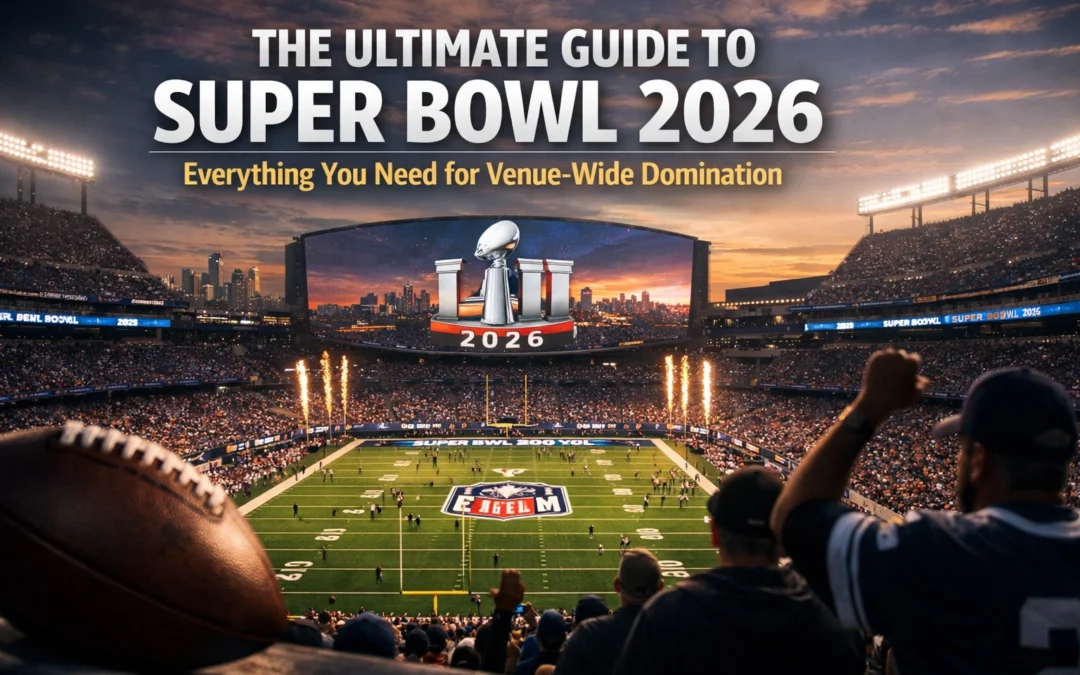
Super Bowl LX took place on February 8, 2026, at Levi’s Stadium in Santa Clara, California. This event served as a massive platform for brand visibility and audience engagement. The Seattle Seahawks secured a 29-13 victory over the New England Patriots in front of a capacity crowd of 70,823 people. While the action on the field and the halftime performance by Bad Bunny captured global attention, the advertising landscape surrounding the venue demonstrated the sheer power of integrated Out of Home (OOH) marketing.
This guide explores the strategies used to achieve venue-wide dominance during the 2026 season and how 40 years of industry leadership in advertising continues to shape the way brands interact with fans.
The Landscape of Super Bowl LX
The environment at Levi’s Stadium was ideal for large scale brand activations. With fair weather at 67 degrees Fahrenheit and a broadcast reaching millions via NBC and Peacock, the stakes for advertisers were at an all time high. This was the second time Levi’s Stadium hosted the Super Bowl, following Super Bowl 50 in 2016. The maturity of the venue infrastructure allowed for a seamless integration of digital and physical advertising assets.
Advertising during a Super Bowl is no longer limited to a 30 second television spot. In 2026, the strategy shifted toward a comprehensive physical presence that starts miles away from the stadium and follows the fan all the way to their seat. This approach ensures that a brand message is not just seen but experienced repeatedly throughout the day.
Four Decades of Advertising Leadership
The expertise required to navigate an event of this magnitude comes from 40 years of specialized experience in the advertising sector. OOH Sports has spent decades refining the logistics of stadium takeovers. This leadership involves understanding the flow of foot traffic, the sightlines from different seating tiers, and the technical requirements for synchronizing hundreds of digital screens.
Over the last 40 years, the transition from static paper billboards to dynamic, programmatic digital displays has changed the industry. However, the core principle remains the same. The goal is to place the right message in front of the right person at the moment of highest emotional engagement. In a sports context, that moment happens during the live game experience.

Venue-Wide Dominance: From Floors to Billboards
To achieve total venue dominance, a campaign must address every available surface. This is often referred to as a "floor to ceiling" strategy. At Super Bowl LX, this involved a mix of traditional and innovative placements.
- Floor Graphics: High durability vinyl graphics were placed in high traffic concourses and entrance gates. These placements are often overlooked but provide a direct line of sight for fans navigating the stadium.
- Stadium Wraps: Large scale wraps covered the exterior of Levi’s Stadium, turning the architecture itself into a brand statement.
- Digital Billboards: Surrounding highways and access roads were lined with digital out of home (DOOH) assets that welcomed fans as they arrived in Santa Clara.
- In-Bowl Connectivity: The use of internal stadium screens, often called Sportrons, allowed brands to sync their messaging with live game events, such as touchdowns or timeouts.
The integration of these elements ensures that there are no gaps in the brand narrative. By utilizing the full spectrum of available assets, a brand can create an immersive environment that feels like an official part of the event.

The Role of Programmatic DOOH in Sports
The rise of programmatic technology has allowed for more agile and effective sports marketing. Rather than committing to a single static image for weeks, advertisers can now change their creative content in real time based on the score, the weather, or the specific demographic of the crowd.
As highlighted in the industry forecast, DOOH sports advertising is expected to hit 50 billion dollars by 2030. This growth is driven by the ability to buy stadium media with the same precision as online ads. For Super Bowl LX, programmatic platforms enabled brands to trigger specific creative assets the moment the Seahawks scored, creating a direct emotional link between the brand and the fans' excitement.
https://www.youtube.com/watch?v=l6J-0zileKE
Case Studies: Driving Brand Lift
The effectiveness of these strategies is backed by significant data from recent years. When analyzing past campaigns, the impact of well executed OOH is clear.
- Purchase Consideration: In a campaign for White Claw’s vodka launch, the use of programmatic digital out of home drove a 74 percent lift in purchase consideration. This shows that even in a crowded market, high impact OOH can move the needle on consumer intent. More details can be found in the White Claw case study.
- Brand Image: AB InBev’s Mike’s Hard Iced Tea saw a 119 percent lift in positive brand image through a targeted DOOH campaign. This level of growth is essential for brands looking to maintain a premium status during high profile events like the Super Bowl.
- Ambush Marketing Success: Not every successful brand is an official sponsor. As seen with Nike during the NYC Marathon, strategic OOH placement can create the perception of official sponsorship. By dominating the physical space around the venue, a brand can capture the audience's attention without the official title.
Technology and Real-Time Measurement
The execution of a venue-wide campaign at Levi’s Stadium required a sophisticated tech stack. Advertisers used mobile device ID tracking to measure how many people were exposed to specific billboards and whether those individuals later visited a retail location or a brand website.

This level of attribution is a far cry from the estimated "impressions" of the past. Today, the focus is on measurable ROI. By comparing the cost of a stadium takeover to the resulting lift in brand awareness and sales, companies can justify the significant investment required for Super Bowl participation.
Key metrics used during Super Bowl LX included:
- Exposed Audience Reach: Total number of unique device IDs captured near advertising assets.
- Brand Preference Rating: Changes in consumer sentiment measured through post event surveys.
- Foot Traffic Attribution: Tracking consumers from the stadium to physical store locations in the weeks following the game.
Logistics of a Super Bowl Takeover
Planning for an event like Super Bowl LX starts at least 12 to 18 months in advance. The process involves securing permits, coordinating with stadium management, and ensuring that all creative assets meet the technical specifications of the various hardware providers.
The complexity of installing large scale wraps and floor graphics requires a dedicated team of specialists. These installations often happen in the middle of the night to avoid disrupting the massive influx of fans and media personnel. For Super Bowl 2026, the coordination between OOH Sports and local California authorities was critical to ensuring that the brand messages were in place and fully functional before the gates opened at 3:30 p.m. PT.

The Impact of 2026 on Future Strategies
The success of the Seattle Seahawks at Levi’s Stadium will be remembered by fans, but for the advertising industry, the legacy of Super Bowl LX is the blueprint it provided for venue-wide domination. The blend of 40 years of traditional expertise with cutting edge programmatic technology has set a new standard for what is possible in sports marketing.
Brands that focus on a holistic approach, moving beyond simple logo placement to create an integrated physical and digital experience, see the highest returns. Whether it is through a massive billboard on the 101 highway or a subtle floor graphic in the VIP lounge, every touchpoint matters.
For more information on how to implement these strategies for upcoming seasons, interested parties can explore the marketing services or review the latest case studies to see the data behind the results. Understanding the mechanics of these campaigns is the first step toward dominating the next major sporting event.