
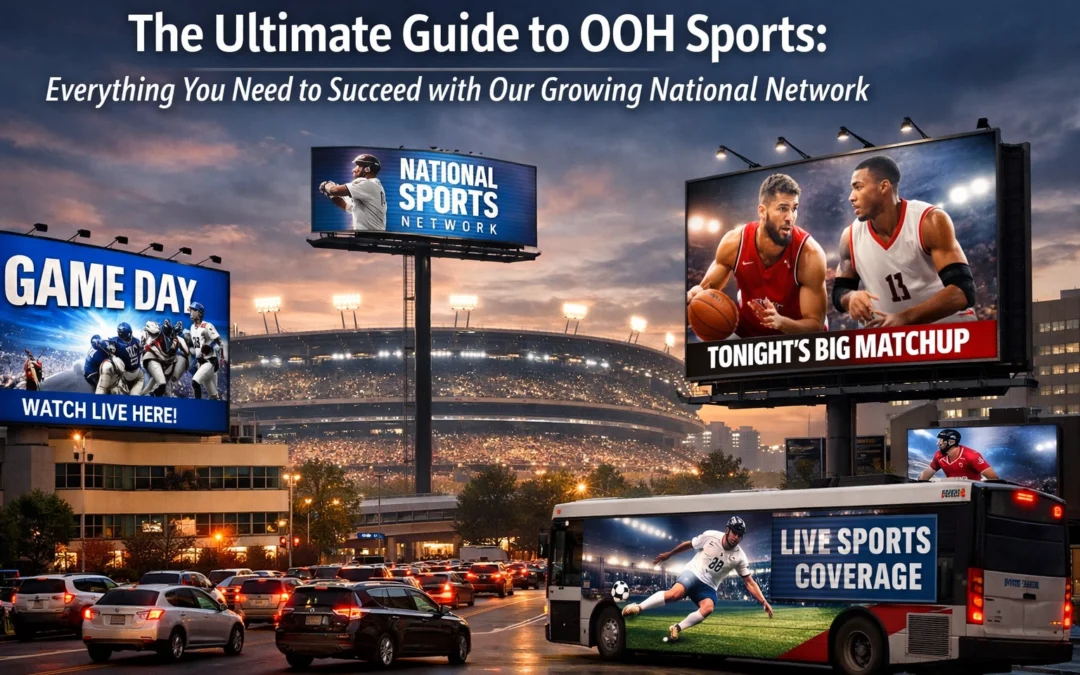
OOH Sports is announcing a significant milestone in the expansion of its national digital out-of-home network. This growth represents a strategic shift in how brands interact with sports fans across the United States. By increasing the density of digital displays in key metropolitan areas and near major sporting venues, the network offers media buyers unprecedented access to a high-value, highly engaged audience. This guide provides a comprehensive overview of the network capabilities, the technology driving its success, and the strategic advantages for advertisers looking to capitalize on the intersection of sports and digital media.
The Strategy Behind National Network Expansion
The primary objective of the OOH Sports network expansion is to create a seamless, end-to-end advertising solution that follows the fan journey. Statistics show that while the game itself is the main event, the vast majority of fan activity occurs outside the stadium walls. To address this, OOH Sports has deployed a multi-layered strategy that places digital assets in transit corridors, high-traffic pedestrian areas, and social hubs where fans gather before and after events.
By establishing a national footprint, OOH Sports allows brands to execute coordinated campaigns that reach fans in multiple cities simultaneously. This is particularly effective for national sponsors of professional leagues or brands launching products with a sports-centric focus. The expansion ensures that the brand message remains consistent and omnipresent, regardless of which city the fan is in. More information on the organizational mission and background can be found on the about page.
Network Infrastructure and Sportrons
At the core of this national network are the Sportrons. These high-definition digital displays are designed specifically for the sports environment. They offer the brightness and clarity required for outdoor visibility while maintaining the technical flexibility needed for dynamic content. Unlike traditional static billboards, Sportrons can be updated in real-time to reflect live scores, player stats, or breaking news, making the advertising content feel like an integrated part of the sports experience.
The network includes a variety of formats to suit different campaign needs:
- Large-format digital billboards in high-visibility transit areas.
- Street-level displays in densely populated urban centers.
- Digital signage within and around stadium concourses.
- Mobile display units that can be deployed for specific high-profile events.

Objective and Strategy for Media Buyers
For media buyers and agencies, the OOH Sports network functions as a bridge between traditional out-of-home advertising and the precision of digital marketing. The strategy focuses on three key pillars: context, timing, and location.
Context: Advertising is placed in an environment where the audience is already primed for sports-related content. This natural alignment reduces ad friction and increases the likelihood of positive brand association.
Timing: Utilizing programmatic technology, advertisers can trigger displays based on specific events, such as the start of a game, a halftime break, or even a specific victory. This ensures that the message is delivered when the audience's emotional engagement is at its peak.
Location: Precision geographic targeting allows brands to focus their budget on specific zip codes, venues, or transit routes that over-index for their target demographic.
Technology Partners and Programmatic Integration
The efficiency of the OOH Sports network is driven by its integration with leading demand-side platforms (DSPs). A key component of this technological stack is the partnership with platforms like StackAdapt. This integration allows for programmatic digital out-of-home (pDOOH) buying, which mirrors the ease and data-centric approach of online display advertising.
Through programmatic buying, media buyers can automate the purchase of ad space across the national network based on real-time data and predefined triggers. This removes the logistical hurdles of traditional OOH, such as manual contracts and static creative rotations. Detailed insights into how these partnerships drive adoption can be found in the spotlight on StackAdapt.

Measurable Results and Case Study Data
The effectiveness of the OOH Sports network is backed by rigorous data and third-party measurement. Several high-profile campaigns have demonstrated the impact of integrating programmatic DOOH into a broader marketing mix. These results provide a benchmark for what new advertisers can expect from the network.
White Claw Vodka Launch:
During the launch of its new vodka line, White Claw utilized programmatic DOOH to drive awareness. The campaign resulted in a 74% lift in purchase consideration, demonstrating that high-visibility digital displays can move the needle on consumer intent for new product entries. Further details are available in the White Claw case study.
Mike’s Hard Iced Tea:
Focusing on brand image, this campaign saw a 119% lift in positive brand image among exposed audiences. By targeting fans during social occasions, the brand was able to reinforce its position as a go-to choice for sports viewing. The full analysis can be found in the Mike's Hard report.
Sea-Doo First DOOH Campaign:
In its debut in the digital out-of-home space, Sea-Doo achieved a 144% increase in purchase consideration. This result highlights the ability of OOH Sports to effectively introduce lifestyle brands to the sports audience through compelling, large-format creative. The methodology is outlined in the Sea-Doo case study.
Logistics and Execution Process
Executing a campaign on the OOH Sports network follows a structured process designed for speed and accuracy.
- Audience Identification: Advertisers use first-party and third-party data to identify the specific fan segments they wish to reach.
- Geographic Mapping: Based on the audience data, specific Sportrons and digital assets are selected across the national network.
- Creative Optimization: Digital assets are optimized for the specific display formats. This often includes creating dynamic versions that can update based on live sports data.
- Programmatic Bidding: The campaign is launched through a DSP, with bids placed in real-time for the selected inventory.
- Real-Time Monitoring: Campaign performance is monitored throughout the flight, allowing for optimizations in creative or spend allocation.
- Attribution Modeling: Post-campaign, OOH Sports works with partners to measure brand lift, foot traffic, or online conversion based on device IDs exposed to the ads.
For a deeper dive into the technical strategies required to succeed in this modern landscape, media buyers can refer to the Ultimate Guide to Sports DOOH.

The Market Opportunity: Growth to 2030
The expansion of the OOH Sports network comes at a time of rapid industry growth. Market projections indicate that DOOH sports advertising is on track to become a 50 billion dollar industry by 2030. This growth is driven by the increasing digitisation of out-of-home assets and the growing demand for brand-safe, high-impact environments.
As traditional television viewership fragment, sports remains one of the few content categories that consistently draws large, live audiences. OOH Sports provides the physical infrastructure to capture this audience where they live, work, and play. Brands that establish a presence on the network now are positioning themselves to capture a share of this growing market. Strategy details regarding this growth can be found in the report on capturing market share.
Comparison with Traditional Stadium Ads
One of the most common questions from media buyers involves the difference between the OOH Sports network and traditional stadium sponsorships. While traditional stadium ads offer prestige, they are often static and limited to the fans physically inside the venue for a limited window of time.
In contrast, the OOH Sports national network offers:
- Greater Reach: Extension beyond the stadium into the city and transit routes.
- Flexibility: The ability to change creative instantly without production costs.
- Measurement: Data-driven insights that traditional signage cannot provide.
- Lower Barrier to Entry: Programmatic options allow for smaller, highly targeted buys rather than multi-year venue contracts.
A detailed comparison of ROI between these two methods can be found in the analysis of programmatic DOOH vs traditional stadium ads.
Conclusion and Future Outlook
The expansion of the OOH Sports network is a strategic milestone that provides brands with a powerful tool for fan engagement. By combining high-impact digital displays with programmatic precision and a national footprint, the network enables sophisticated marketing strategies that were previously impossible in the out-of-home space.
As the network continues to grow, the focus remains on delivering measurable value to advertisers while enhancing the sports experience for fans. For organizations looking to explore these opportunities, the contact page provides a direct line to the network team. All operations and campaign executions adhere to strict company policies and terms of service to ensure the highest standards of transparency and performance in the advertising industry.