
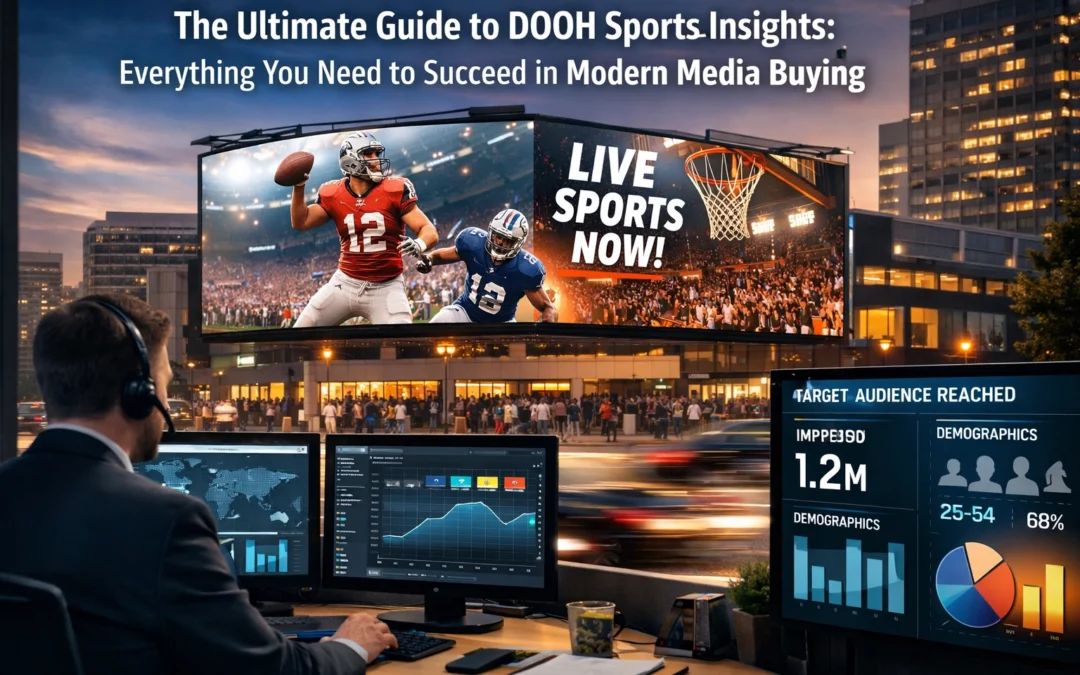
Digital Out-of-Home (DOOH) advertising has transformed from a secondary media buy into a cornerstone of the modern sports marketing mix. In an era where consumer attention is fragmented across dozens of streaming platforms and social media feeds, the physical world remains the one place where brands can achieve unavoidable scale. For advertisers looking to capture the energy of game day, understanding the intersection of data, location, and sports fandom is essential.
This guide provides a comprehensive look at the strategies, technologies, and creative principles that drive success in the sports DOOH space. Whether you are planning for a championship event or a season-long brand awareness play, these insights offer a roadmap for navigating the evolving landscape of outdoor media.

Understanding the Modern Fan Journey
The traditional view of sports advertising often stops at the stadium gates. However, modern fans experience a game as a multi-stage journey that begins hours before kickoff and continues long after the final whistle. Effective DOOH strategies map brand messaging to these specific moments of the day.
The journey typically follows three distinct phases:
- The Build-Up: Fans prepare for the game by traveling to venues, visiting retail outlets for supplies, or gathering at local bars and restaurants. This is the ideal time for roadside billboards and transit displays to establish brand presence.
- The Live Experience: During the event, the concentration of fans in and around the stadium creates a high-density environment. Digital screens in pedestrian zones and urban panels near the venue capture the immediate excitement.
- The Afterglow: Following the game, fans share highlights on social media and travel home. Retargeting these audiences through mobile devices and digital displays in transit hubs reinforces the connection made during the event.
By leveraging OOH Sports and programmatic networks, advertisers can ensure their message is present at every touchpoint, creating a cohesive narrative that follows the fan throughout their day.

Key Formats for Sports-Centric Campaigns
Not all digital screens are created equal. The effectiveness of a DOOH campaign often depends on selecting the right format for the target audience and the specific campaign objective.
- Roadside Digital Billboards: These offer the highest reach and impact. They are perfect for broad brand awareness and "priming" the audience before they reach the city center.
- Urban Panels and Street Furniture: Located at eye-level in high-traffic pedestrian areas, these screens are excellent for detailed messaging and encouraging local actions, such as visiting a nearby retail partner.
- Transit Displays: Targeting fans on subways, buses, and trains allows for longer dwell times. This format is particularly effective in major metropolitan areas where public transport is the primary way fans reach the stadium.
- Place-Based Screens: Found in bars, gyms, and restaurants, these screens reach fans in environments where they are already thinking about sports. This is a highly contextual placement that drives high engagement.
The Power of Programmatic DOOH
One of the most significant shifts in media buying is the rise of programmatic DOOH. This technology allows brands to buy screen time in real-time, similar to how they purchase display or social media ads. This flexibility is a game-changer for sports marketing, where conditions can change in an instant.
Programmatic platforms allow for precise targeting based on triggers such as:
- Weather Conditions: An apparel brand can swap creative to feature rain gear if a storm is forecasted for game time.
- Live Scores: Displays can update in real-time to reflect the current score, creating an immediate sense of relevance and urgency.
- Traffic Patterns: Messaging can be adjusted based on the flow of fans moving toward the stadium, ensuring maximum visibility during peak travel times.
The integration of platforms like the StackAdapt DSP has been instrumental in driving programmatic DOOH adoption in omnichannel campaigns, allowing for a seamless blend of outdoor and digital media.

Strategic Omnichannel Integration
DOOH does not exist in a vacuum. Its true power is unlocked when it is used to amplify other marketing channels. Studies have shown a "priming effect" where consumers who see an OOH ad are significantly more likely to engage with the same brand on their mobile devices or through digital search later.
For example, a campaign might start with a high-impact video on a large-format digital screen near a stadium. This exposure builds a memory structure in the fan's mind. When that same fan later sees a sponsored post on social media or a display ad on a sports news site, the brand's credibility is already established.
This multi-touch approach is essential for high-consideration products. As explored in our strategies for capturing market share, the brands that win are those that use DOOH as the physical anchor for a digital-first strategy.
Creative Optimization: Designing for the Real World
In the digital out-of-home space, you often have less than seven seconds to make an impression. Creative must be designed specifically for the environment in which it will be viewed.
Contrast and Legibility: Use high-contrast color palettes and bold, sans-serif fonts. The message must be readable from a distance and in various lighting conditions, from bright sunlight to evening neon.
Motion and Animation: Static images are easily ignored. Subtle motion, such as a 6 to 15-second video loop or animated text, can increase engagement rates by over 40 percent. However, the movement should enhance the message, not distract from it.
Simplicity is Key: A single, clear call to action or a strong brand image is more effective than a cluttered screen. Fans are often on the move, so the "one idea per screen" rule is a vital guideline for designers.

Proven Results: Lessons from Industry Leaders
The effectiveness of DOOH in the sports and lifestyle sector is well-documented through data-driven case studies. Looking at recent executions provides a blueprint for what success looks like in practice.
For instance, White Claw's programmatic DOOH campaign for their vodka launch resulted in a 74 percent lift in purchase consideration. By targeting the right locations at the right times, they moved the needle on consumer intent in a highly competitive category.
Similarly, AB InBev’s Mike’s Hard Iced Tea campaign saw a 119 percent lift in positive brand image. This was achieved through the clever use of programmatic triggers that ensured the ads appeared when the target demographic was most likely to be in a "socializing" mindset.
Even in the outdoor recreation space, the results are staggering. Sea-Doo’s first digital OOH campaign increased purchase consideration by 144 percent. These examples prove that when DOOH is executed with precision, it delivers measurable ROI that rivals or exceeds traditional digital channels.

Measuring Success in DOOH
One of the lingering myths about outdoor advertising is that it is difficult to measure. Modern DOOH has solved this through sophisticated attribution modeling. Advertisers can now track:
- Brand Lift: Using surveys to compare the brand awareness of people exposed to the ads versus a control group.
- Foot Traffic Attribution: Measuring how many people visited a retail location after passing a digital screen.
- Device ID Passbacks: Understanding the digital behavior of audiences who were in the vicinity of specific screens.
- Sales Lift: Correlating DOOH exposure with increases in regional sales data.
These metrics allow media buyers to optimize their spend and justify the investment based on hard data rather than just estimated impressions.
Looking Ahead: The Future of Sports Advertising
The future of DOOH in sports is defined by even greater personalization and interactivity. We are already seeing the integration of Augmented Reality (AR) where fans can scan a QR code on a digital panel to unlock exclusive stadium content or interactive games.
As 5G connectivity becomes standard, the ability to stream high-definition, low-latency video to thousands of screens simultaneously will allow brands to synchronize their messaging with the live action in ways we are only beginning to imagine.
For brands ready to take the next step, the path forward involves a commitment to data-driven planning and creative excellence. By staying informed on the latest trends and leveraging the right technology partners, advertisers can ensure their message doesn't just reach the fans, it resonates with them.
For more insights on the latest in sports advertising, visit our blog or reach out via our contact page to learn how we can help your next campaign break through the noise.