
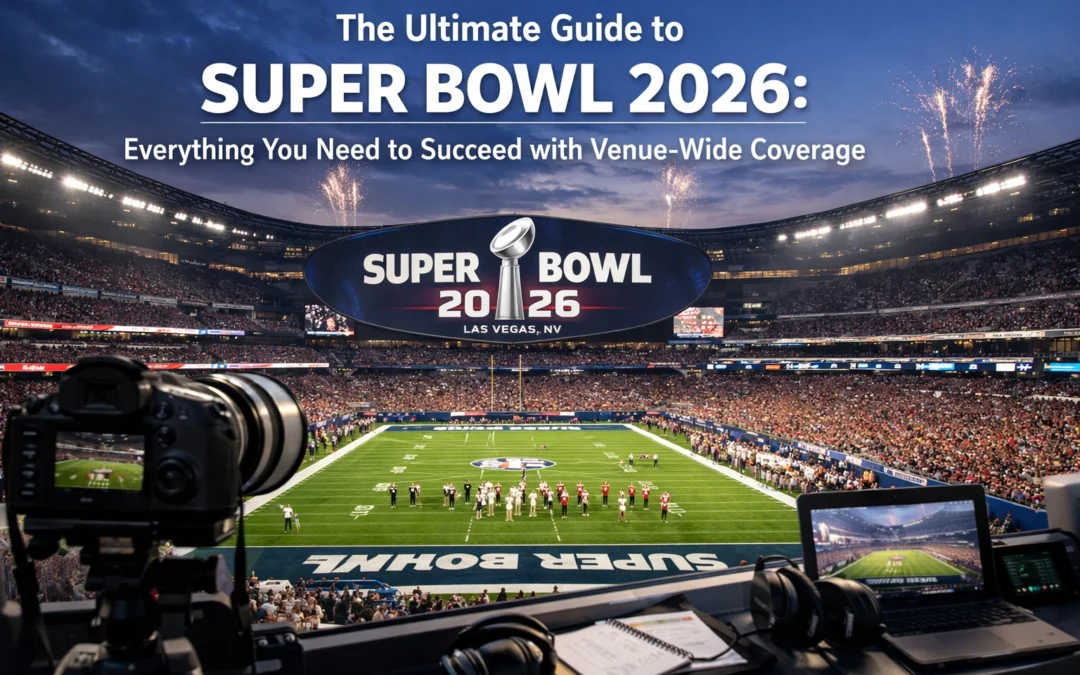
Super Bowl LX has officially entered the history books. On February 8, 2026, at Levi's Stadium in Santa Clara, the world watched as the Seattle Seahawks defeated the New England Patriots with a score of 29-13. While the action on the field was intense, the real masterclass in visibility happened off the field. Advertising leadership in 2026 requires more than just a 30-second television spot. It requires a venue-wide strategy that captures attention from the moment a fan leaves their house until they reach their seat on the stadium floor.

Forty Years of Advertising Leadership
The landscape of sports marketing has shifted dramatically over the last four decades. OOH Sports has been at the forefront of this evolution, moving from simple static posters to the complex, programmatic digital ecosystems seen today. Success in the modern era is built on the foundation of experience. This experience allows for the seamless integration of venue-wide coverage, ensuring that a brand is not just seen, but felt throughout the entire event.
By 2026, the strategy for major sporting events has shifted toward a holistic approach. This includes everything from floor graphics and digital billboards to hyper-targeted mobile integration. The goal is to create a consistent brand presence that follows the 70,823 fans attending the game, as well as the millions navigating the surrounding Santa Clara area.
The Strategy: Venue-Wide Coverage at Levi's Stadium
Levi's Stadium is one of the most technologically advanced venues in the world. For Super Bowl LX, the strategy focused on utilizing every available square inch of advertising real estate. This venue-wide coverage ensured that brand messaging was unavoidable and impactful.
The approach for 2026 focused on three main pillars:
- Entry Points and Transit: Utilizing rideshare load zones and Valley Transportation Authority (VTA) hubs to greet fans as they arrived.
- Internal Navigation: Implementing floor graphics and digital signage that guided fans through the concourse.
- The Main Event: Leveraging high-impact billboards and Sportrons to dominate the visual field during peaks in crowd emotion.
This strategy mirrors the insights found in The Ultimate Guide to Sports DOOH, which emphasizes the importance of multi-touchpoint engagement in modern sports environments.

Objectives and Campaign Execution
The primary objective for any Super Bowl campaign is to maximize brand recall and purchase consideration during a high-stakes, high-emotion event. In 2026, brands had to compete with a massive halftime show featuring Bad Bunny and an opening ceremony by Green Day. To succeed, the advertising had to be as engaging as the entertainment itself.
Execution involved a mix of traditional out-of-home (OOH) media and programmatic digital out-of-home (pDOOH). By using programmatic platforms, advertisers could adjust their creative in real-time based on game events or local weather conditions. This level of flexibility is what separates current leadership from the methods used ten or twenty years ago.
Detailed Logistics of Venue-Wide Advertising
- Floor Graphics: Durable, high-visibility decals placed in high-traffic areas like entrance gates and concession lines.
- Digital Billboards: Large-format screens located along the primary corridors leading to Levi's Stadium, capturing the attention of those arriving via Capitol Corridor trains.
- Sportrons: Advanced stadium displays that integrate live data and social media feeds to keep the audience engaged. For more details on these specialized units, see the Sportrons section.
Lessons from Past Success: Data-Driven Results
The effectiveness of venue-wide coverage is not just theoretical. Data from previous years shows a direct correlation between multi-channel OOH campaigns and significant brand lift.
For instance, a previous campaign for White Claw saw a 74% lift in purchase consideration. This was achieved by using programmatic digital out-of-home to target specific consumer segments at the right time. You can read the full breakdown in the White Claw Case Study.
Similarly, AB InBev's Mike’s Hard Iced Tea experienced a 119% lift in positive brand image by focusing on high-impact DOOH placements. This campaign proved that consistent, simple messaging delivered through modern technology creates a lasting impression. More information is available in the AB InBev Case Study.

Technology Partners and Programmatic Adoption
The success of Super Bowl LX's advertising was largely due to the adoption of sophisticated demand-side platforms (DSPs). Utilizing partners like StackAdapt has allowed for more precise targeting and better ROI. Programmatic DOOH is no longer a niche tactic. It is a fundamental part of a successful omnichannel strategy.
The industry is currently on a path where DOOH sports advertising will hit $50 billion by 2030. Brands that invested in these technologies for the 2026 game are already seeing the benefits of being early adopters. For a deeper look at how these platforms drive adoption, refer to the Spotlight on StackAdapt DSP.
Engaging the Super Bowl Audience
The audience at Levi's Stadium was a diverse mix of fans and corporate partners. With a capacity of 68,500, and over 70,000 in attendance for the Super Bowl, the density of potential customers is unmatched. Advertisers used the venue-wide coverage to create a narrative that lasted the entire day.
Consider the following video, which showcases the dynamic nature of modern sports advertising and the impact of venue-wide placements:
https://www.youtube.com/watch?v=l6J-0zileKE
This visual impact is a key component of what OOH Sports provides. Whether it is a flyover commemorating the United States' 250th birthday or a digital screen in the concourse, the visual must be striking and clear.

Comparing Traditional vs. Programmatic ROI
One of the biggest debates in sports marketing is the comparison between traditional stadium ads and programmatic DOOH. For Super Bowl LX, the data suggested that a hybrid approach delivered the best results. While traditional static billboards provide constant visibility, programmatic elements offer the relevance and timing needed to drive action.
Studies indicate that programmatic DOOH can significantly increase purchase consideration. Sea-Doo, for example, saw a 144% increase in purchase consideration during their first digital OOH campaign. This is a clear indicator that the market is moving toward more interactive and data-driven formats. Detailed findings can be found here: Sea-Doo Campaign Results.
To understand which delivery method works best for specific goals, advertisers often review the analysis of Programmatic DOOH vs. Traditional Stadium Ads.
Planning for the Future: 2027 and Beyond
While Super Bowl 2026 was a massive success for advertisers using venue-wide strategies, the focus now shifts to future events. Super Bowl LXI is scheduled for SoFi Stadium in Inglewood, California on February 14, 2027. Following that, the game will move to Mercedes-Benz Stadium in Atlanta in 2028.
Each venue offers unique opportunities for advertising leadership. SoFi Stadium's massive dual-sided Infinity Screen and expansive outdoor plazas will require an even more integrated approach to venue-wide coverage. Brands that start planning their programmatic and physical presence now will be the ones that dominate the conversation in 2027.

Strategic Takeaways for Brands
To succeed in the next generation of sports advertising, brands should focus on the following tactics:
- Consistency: Ensure that the message on the street-side billboard matches the message on the stadium floor.
- Context: Use programmatic triggers to change creative based on what is happening in the game.
- Coverage: Don't limit the campaign to just one area of the venue. Use floor graphics, billboards, and digital screens for a total takeover.
- Data: Utilize brand lift studies and device ID tracking to measure the true impact of the campaign.
The legacy of OOH Sports is built on forty years of understanding how people move and interact with their environment. Super Bowl LX was a perfect example of how that experience translates into modern success. For those looking to replicate these results, the path is clear: embrace technology, cover the entire venue, and keep the message simple.
For more information on our strategic approach or to view more results, please visit our About page or check out our latest blog posts. If you are ready to plan your next major event campaign, feel free to contact our team.