
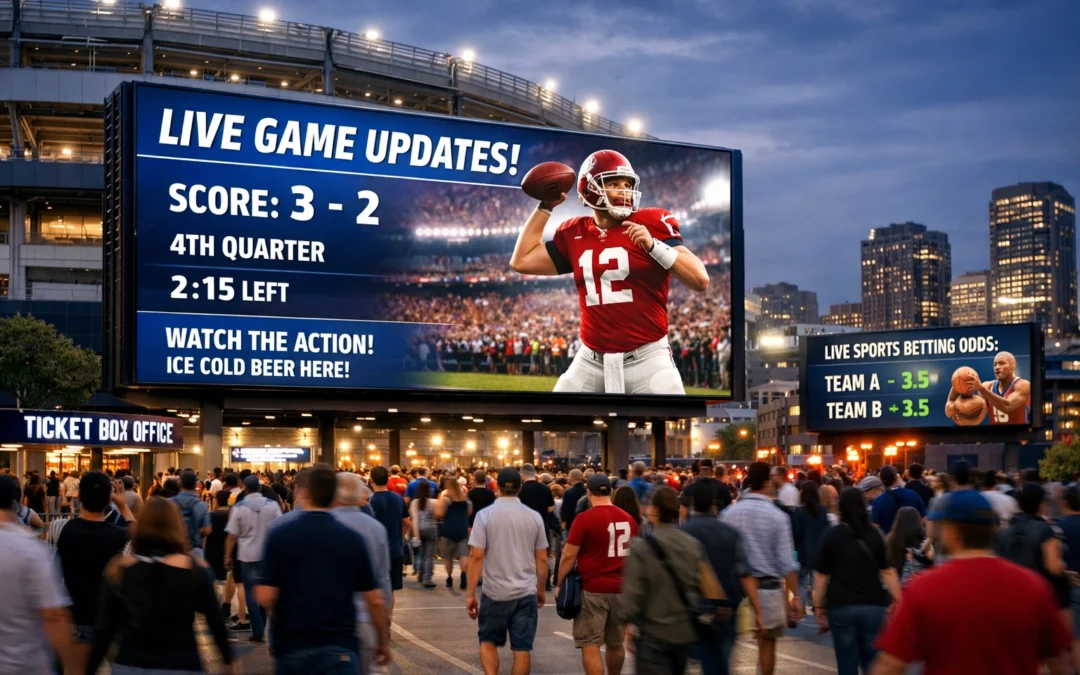
The landscape of sports marketing is undergoing a significant transformation. As traditional advertising methods face increasing fragmentation, digital out-of-home (DOOH) advertising has emerged as a critical channel for reaching audiences in the physical world. Real-time innovation in this space is not merely a technical upgrade. It is a fundamental shift in how brands communicate with fans, moving from static, pre-scheduled messaging to dynamic, contextual engagement that responds to live events.
The Evolution of Fan Engagement Through Context
In the past, outdoor advertising for sporting events was limited by the constraints of physical production. Static billboards required weeks of lead time and remained unchanged regardless of the outcome of a game or the atmosphere of the crowd. Today, real-time DOOH technology enables automated content updates based on live data feeds.
Screens can now display live match scores, countdowns to kickoff, highlight reel moments, and fan reactions as they occur. This level of responsiveness creates a "priming effect" that strengthens brand recall. When a fan sees a live score update on a digital screen during their commute, the brand associated with that information gains immediate relevance. This contextual relevance is a primary driver behind the 81 percent of sports fans who report feeling more positive toward brands that actively sponsor and engage with sports.

Strategy: Reaching the 99 Percent
A common misconception in sports marketing is that the most valuable audience is located inside the stadium. However, data indicates that 99 percent of fan attention actually occurs outside the arena. Whether fans are at home, in transit, or gathered at local venues to watch the game, the opportunity for brand engagement exists far beyond the stadium walls.
Real-time DOOH allows brands to capture fans throughout their entire game-day journey. By deploying content across city centers, transit hubs, and retail locations, advertisers can maintain a presence where fans physically congregate. This approach transforms a location-limited strategy into a routine-based strategy. For instance, campaigns can be geofenced to activate specifically around transport hubs leading to a stadium or in high-traffic entertainment districts where fans gather post-game. For a deeper look at these mechanics, the ultimate guide to sports DOOH provides a comprehensive overview of modern advertising success.

Technology Partners and Programmatic Infrastructure
The shift toward real-time innovation is powered by programmatic DOOH (pDOOH). This technology allows for the automated buying and selling of ad space, similar to online display advertising but in the physical world. By utilizing live APIs and automated triggers, leagues and sponsors can manage content efficiently across thousands of screens simultaneously.
One significant development in this area is the adoption of specialized demand-side platforms (DSPs). For example, the StackAdapt DSP has been instrumental in driving programmatic adoption, allowing brands to integrate DOOH into omnichannel campaigns with ease.
Dynamic creative optimization (DCO) is another critical component. This technology allows the creative execution to change based on external variables such as weather, time of day, or game momentum. If a specific team scores, the creative can instantly switch to a celebratory message, making the ad feel like a part of the live experience rather than an interruption.

Objective and Strategy: The Power of Triggers
The strategic use of real-time triggers ensures that advertising dollars are spent when they are most impactful. Instead of running an ad on a loop for 24 hours, programmatic technology allows for "moment marketing."
- Score-Based Triggers: Ads activate or change creative when a specific score threshold is met.
- Time-Based Triggers: Content shifts from "pre-game excitement" to "live updates" and finally to "post-game celebration."
- Location-Based Triggers: Messaging is tailored to the specific city or neighborhood, utilizing local pride to increase engagement.
- Environment-Based Triggers: For outdoor lifestyle brands, triggers can be set for specific weather conditions that align with sports activities.
This level of precision is explored in the comparison of programmatic DOOH vs traditional stadium ads, highlighting how digital flexibility often delivers a better return on investment (ROI).
Measurable Results and Campaign Impact
The effectiveness of real-time DOOH is reflected in recent performance data across various sectors. Sports-focused DOOH has been shown to drive more than a 47 percent increase in immediate brand usage. Furthermore, brands that leverage major sporting events through DOOH see an average uplift in brand perception of up to 68 percent.
Specific campaign results further validate these strategies:
- White Claw: By utilizing a programmatic approach for a vodka launch, the brand achieved a 74 percent lift in purchase consideration. Detailed logistics of this execution are available in the White Claw case study.
- AB InBev (Mike's Hard Iced Tea): This campaign saw a 119 percent lift in positive brand image by utilizing programmatic DOOH to reach consumers in high-intent environments. The full results can be found in the Mike's Hard Iced Tea analysis.
- Sea-Doo: In its first digital OOH campaign, the brand focused on reaching outdoor enthusiasts, resulting in a 144 percent increase in purchase consideration. More information is available on the Sea-Doo campaign page.
These outcomes demonstrate that real-time innovation does more than just display an image. It drives measurable consumer behavior.

Strategic Tactics: The NYC Marathon Example
Innovation in DOOH also allows brands to participate in major sporting events without being official sponsors. This "ambush marketing" or unofficial sponsorship strategy was effectively utilized by Nike during the New York City Marathon. Even though Nike was not an official sponsor, the strategic deployment of DOOH creative across the city during the event created a dominant brand presence. The execution focused on the runner's journey and utilized the scale of the city's digital infrastructure to capture attention at key moments. This strategy is outlined in the report on Nike's NYC Marathon presence.
Omnichannel Synergy
Real-time DOOH acts as a powerful amplifier for other marketing channels. When a consumer is exposed to a television spot and later sees a shorter, real-time DOOH version of that same message during their daily routine, the impact is compounded. This omnichannel approach ensures that the brand remains top-of-mind throughout the consumer's day.
To maximize this synergy, brands often utilize Sportrons, which provide specialized displays designed to integrate seamlessly with live sports data and high-traffic environments. As the industry moves toward a predicted 50 billion dollar market by 2030, the ability to integrate these technologies will be a defining factor for successful marketing teams. Strategies for capturing a share of this growth are discussed in the 2030 DOOH forecast.
Conclusion: A New Standard for Sports Marketing
The integration of real-time data, programmatic automation, and high-impact digital displays has set a new standard for reaching sports fans. By focusing on the fan journey outside the stadium and utilizing dynamic triggers to ensure relevance, brands can achieve significant lifts in purchase consideration and brand image.
For organizations looking to implement these strategies, the focus must remain on technical fluency and strategic alignment with the fan experience. As the technology continues to evolve, the gap between the live game and the physical world will continue to close, offering unprecedented opportunities for those ready to innovate.
To explore more insights or to discuss specific campaign requirements, interested parties can visit the OOH Sports blog or reach out via the contact page. Understanding the logistics of this medium is the first step toward achieving the results seen by industry leaders in the sports advertising space.