
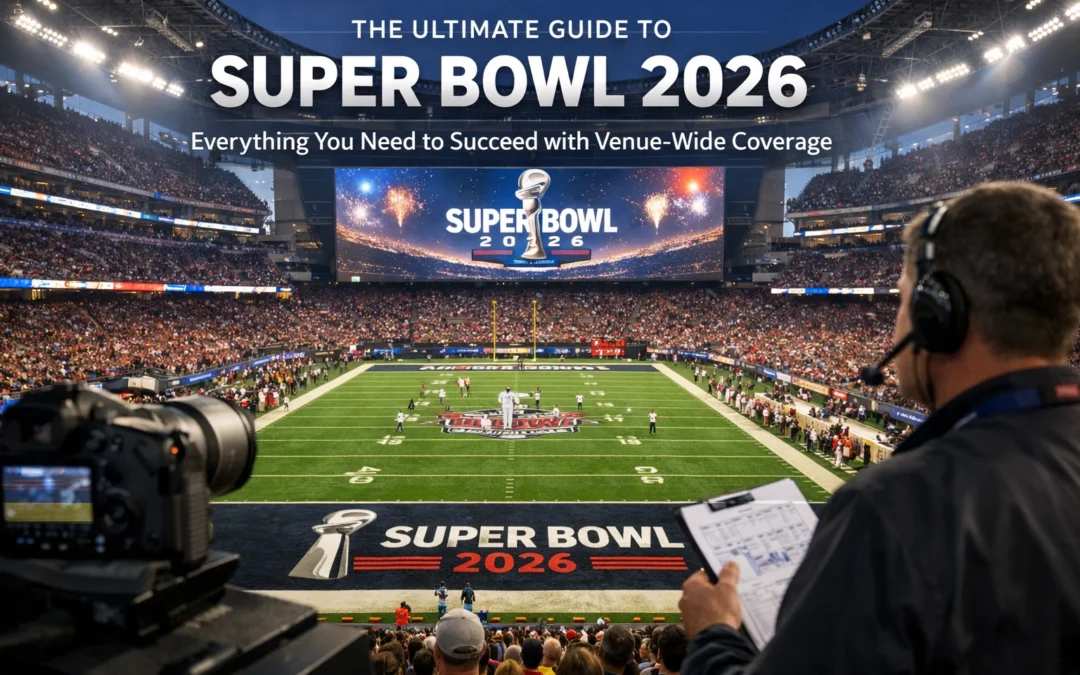
Super Bowl LX took place on February 8, 2026, at Levi’s Stadium in Santa Clara, California. This historic event saw the Seattle Seahawks emerge victorious over the New England Patriots in front of a crowd of 70,823 fans. While the action on the field captured global attention, the advertising landscape within the stadium and across the San Francisco Bay Area represented a new peak in sports marketing. For brands looking to achieve maximum impact, Super Bowl 2026 proved that venue-wide coverage is no longer an optional luxury but a strategic necessity.
Forty Years of Advertising Leadership
The success of the 2026 campaign season was built on a foundation of four decades of industry experience. OOH Sports has spent 40 years navigating the complexities of stadium environments and outdoor advertising. This long-standing leadership allows for a deep understanding of fan behavior, crowd flow, and the technical requirements of large-scale activations.
Experience in the field has shown that a single billboard or a 30-second television spot is often insufficient to cut through the noise of a major championship game. Instead, the most successful brands at Super Bowl LX utilized a multi-layered approach that engaged fans from the moment they arrived in Santa Clara until they left the venue. This evolution from simple signage to immersive, venue-wide technology reflects the broader trend in the industry where sports DOOH is projected to hit $50 billion by 2030.

The Objective and Strategy for Super Bowl 2026
The primary objective for major advertisers during Super Bowl 2026 was to achieve total brand dominance within the Levi’s Stadium perimeter. To accomplish this, the strategy moved beyond the scoreboard. The goal was to create a continuous brand journey. This involved mapping out every touchpoint a fan encounters, including transit routes, parking structures, entry gates, concourses, and the seating bowl itself.
A venue-wide strategy ensures that a brand message is reinforced through repetition and variety. When a fan sees a brand on a digital billboard on the way to the game, then encounters it on floor graphics in the concourse, and finally sees it on the Sportrons during the game, the cumulative impact is significantly higher than a fragmented approach.
Venue-Wide Coverage: From Floors to Billboards
The 2026 Super Bowl execution demonstrated that every surface is a potential canvas for communication. Venue-wide coverage at Levi’s Stadium included several key components:
1. High-Impact Billboards and External Displays
The journey began outside the stadium. Digital Out-of-Home (DOOH) displays strategically placed along major transit corridors captured the attention of fans traveling from San Francisco and San Jose. These displays used programmatic technology to deliver contextually relevant messages based on the time of day and local traffic conditions.
2. Immersive Concourse Graphics and Floor Advertising
Inside Levi’s Stadium, brands utilized non-traditional spaces to maintain visibility. High-durability floor graphics directed fans toward concessions and restrooms while keeping brand logos in their direct line of sight. This "feet on the street" approach ensures that even when fans are not looking at the field, they are still engaging with the advertiser.
3. Digital Signage and Sportrons
The use of large-scale digital displays and Sportrons allowed for real-time updates and high-definition creative content. These screens provided the backbone of the in-stadium experience, offering opportunities for brands to align themselves with key game moments, such as replays or halftime entertainment featuring Bad Bunny.

Integrating Dynamic Video Content
A critical element of the 2026 strategy was the integration of dynamic video across all digital platforms. Static images are often overlooked in high-energy environments. Video content, however, draws the eye and increases dwell time. Advertisers utilized short, punchy video clips that could be understood without audio, a necessity in a loud stadium seating 70,000 people.
For a deeper look at how venue-wide integration works in practice, this video illustrates the scale and impact of modern sports advertising:
https://www.youtube.com/watch?v=l6J-0zileKE
Technology Partners and Programmatic Execution
The precision of the Super Bowl 2026 campaigns was made possible through advanced programmatic DOOH technology. By utilizing platforms like the StackAdapt DSP, OOH Sports enabled brands to buy and manage inventory with unprecedented efficiency.
Programmatic execution allows for data-driven targeting. During the 2026 game, advertisers could adjust their creative in real-time based on game events or weather conditions. For example, if the temperature at kickoff was a fair 67°F, beverage brands could emphasize refreshing cold drinks. This level of agility is a major advantage over traditional static stadium ads, often delivering better ROI for sports marketing.

Measuring the Results: Impact and Brand Lift
The success of the venue-wide coverage at Super Bowl 2026 was measured through a combination of mobile location data and brand lift studies. By tracking device IDs exposed to stadium displays, OOH Sports could determine how many fans later engaged with the brand online or visited a physical retail location.
Historical data from similar campaigns provides a benchmark for these results. For instance, a programmatic DOOH campaign for White Claw saw a 74 percent lift in purchase consideration. Similarly, AB InBev’s Mike’s Hard Iced Tea achieved a 119 percent lift in positive brand image through strategic DOOH placements. The 2026 Super Bowl campaigns followed this trajectory, showing that consistent, venue-wide exposure directly correlates with increased brand metrics.
Key performance indicators for the 2026 event included:
- Brand Awareness: A significant increase in top-of-mind awareness for brands utilizing floor-to-billboard coverage.
- Engagement: Higher interaction rates with mobile retargeting ads sent to fans who were present at Levi's Stadium.
- Sentiment: Positive brand association stemming from the seamless integration of advertising into the fan experience.
Lessons for Future Sporting Events
As the industry looks toward Super Bowl LXI at SoFi Stadium in 2027 and Super Bowl LXII in Atlanta, the lessons from 2026 are clear. Success in modern sports advertising requires a move away from isolated placements toward a holistic venue-wide approach.
Brands must consider the entire fan journey. This includes the initial commute, the entry process, the time spent in the concourse, and the game itself. By covering all these touchpoints, advertisers can ensure their message is not just seen but remembered. The 40 years of leadership at OOH Sports provides the expertise needed to manage these complex, multi-layered campaigns.

Conclusion on Super Bowl 2026 Coverage
The 2026 Super Bowl at Levi's Stadium was more than just a championship football game. It was a showcase for the power of integrated, venue-wide advertising. From the floor graphics in the hallways to the massive digital billboards visible from the highway, the coverage was total.
For those looking to replicate this success in future seasons, the blueprint is available. It involves a combination of long-term industry experience, cutting-edge programmatic technology, and a commitment to utilizing every available surface within the venue. As sports marketing continues to evolve, this venue-wide strategy remains the ultimate guide for brands that want to win on the world's biggest stage.
For more information on how to implement these strategies for your next campaign, visit the OOH Sports blog or explore our comprehensive guide to modern sports DOOH.