
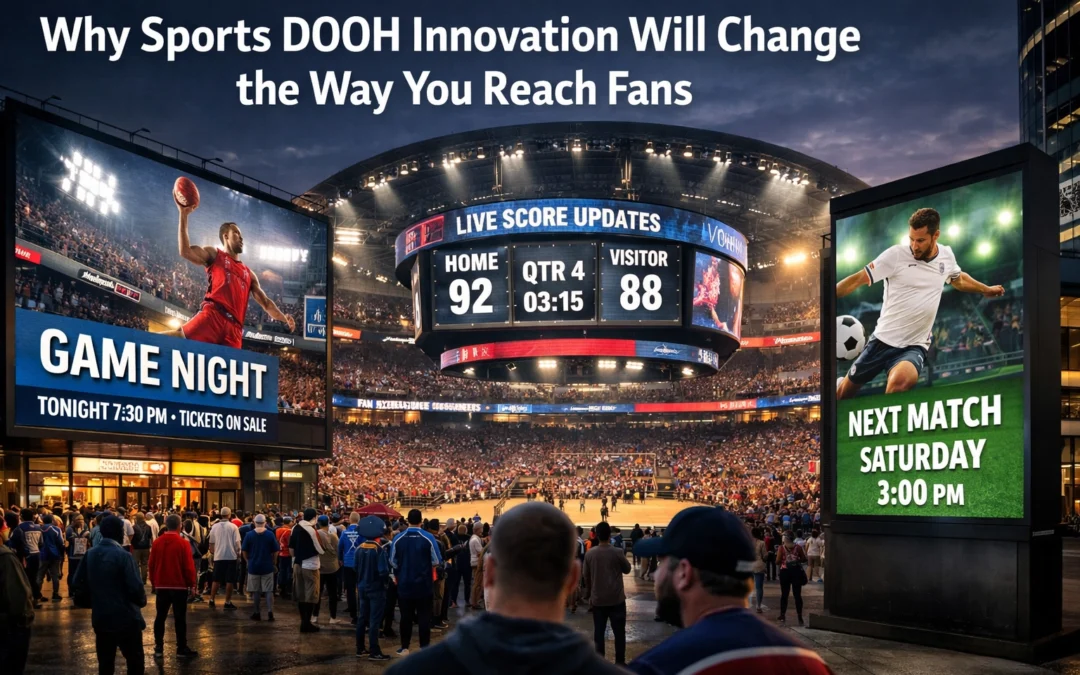
The landscape of sports advertising is undergoing a significant transformation. For decades, brands relied on static stadium signage and traditional television spots to reach captured audiences. However, the rise of Digital Out-of-Home (DOOH) technology, specifically tailored for the sports ecosystem, has introduced a level of agility and precision previously unavailable to media buyers and brand managers. This evolution is not just about moving from paper to pixels. It is about the ability to synchronize brand messaging with the high-stakes, emotional moments that define the fan experience.
The Evolution of Sports Signage
Traditional sports marketing often relied on long-term placements and fixed creative assets. While these methods built brand awareness over time, they lacked the flexibility to respond to the rapid-fire nature of live competition. Modern sports DOOH innovation addresses this gap by utilizing high-resolution digital displays and sophisticated software to deliver content that is as dynamic as the game itself.
Innovation in this space allows for a seamless integration of brand stories into the fan journey. From the moment a supporter leaves their home to their arrival at the venue and their eventual post-match celebrations, digital touchpoints provide a continuous narrative. This shift ensures that advertising is no longer a background element but an active participant in the sports environment.

Real-Time Agility Through Dynamic Creative Optimization
One of the most impactful innovations in the sports DOOH sector is Dynamic Creative Optimization (DCO). This technology allows advertisers to automate the creative process, changing the content of an ad based on external data triggers. In the context of sports, these triggers can include live scores, match events, weather conditions, or even crowd sentiment.
Consider a scenario where a beverage brand displays a specific creative when a home team scores a goal, or a retail brand promotes rain gear on digital screens around the stadium when a sudden downpour begins. This context-aware messaging ensures that the brand remains relevant to the immediate needs and emotions of the fans. DCO removes the lag time associated with traditional advertising, allowing brands to capitalize on the "now" with surgical precision. This level of relevance is a primary reason why many are looking toward OOH Sports to lead their next campaign.
Precision Targeting and the Fan Journey
The modern fan does not just exist within the four walls of a stadium. The fan journey begins hours before kickoff and continues long after the final whistle. Addressable targeting in DOOH allows brand managers to reach these audiences at multiple high-intent locations.
Using geolocation data and behavioral patterns, media buyers can activate screens in transit hubs, airports, fan zones, and entertainment districts. This strategy ensures that a brand is visible where fans congregate, not just where they sit. By using geofencing, advertisers can trigger specific messages when a high density of sports fans is detected in a particular zone. This methodology moves away from broad-spectrum buying toward a strategy focused on actual movement and intent.

The Programmatic Edge for Media Buyers
The adoption of programmatic DOOH (pDOOH) has streamlined how inventory is purchased and managed. Unlike traditional buys that require manual negotiations and long lead times, programmatic platforms allow for automated bidding and real-time execution. This flexibility is vital for sports marketing, where match schedules or playoff brackets can change quickly.
Media buyers can use pDOOH to secure premium inventory in advance while maintaining the ability to adjust spending based on performance or situational changes. This efficiency reduces overhead and allows for more complex, multi-layered campaigns. For those interested in the technical logistics of these placements, exploring OOH Sports Sportrons provides a clear view of how specialized inventory can be leveraged for maximum impact.
Interactive Engagement and Data Collection
Innovation in sports DOOH has also bridged the gap between physical displays and digital interaction. Interactive features such as QR codes, live polls, and mobile prompts turn a passive viewing experience into an active exchange. When a fan scans a code on a digital billboard to enter a contest or claim a discount, it creates a direct link between the brand and the consumer.
This interaction is a goldmine for first-party data collection. In an era where privacy regulations are becoming more stringent, the ability to collect opt-in data through engaging DOOH experiences is invaluable. These touchpoints allow brands to retarget fans later with personalized offers, extending the life of the campaign far beyond the initial impression.
Immersive Technologies and Shareable Moments
The visual capabilities of modern DOOH screens go beyond standard 2D images. Immersive technologies, including 3D anamorphic visuals and augmented reality (AR) billboards, are creating "spectacle" advertising that demands attention. These installations often go viral on social media, providing brands with earned media that far exceeds the initial investment.
When a digital screen creates the illusion of a giant athlete stepping out into the street, it creates a memorable brand moment. These high-impact visuals are particularly effective in high-traffic areas like New York City or major sports hubs. Brands looking to understand the scale of these opportunities can review strategies for major shopping and sports destinations to see how location and technology intersect.

Measurable Outcomes and ROI
Historically, out-of-home advertising was difficult to measure. Today, the integration of device IDs and attribution modeling has turned DOOH into a data-driven channel. Research indicates that 99 percent of fans who attend a game after being exposed to OOH ads spend money locally, and over 90 percent take some form of follow-up action, such as visiting a website or searching for a brand online.
Brand lift studies and foot traffic analysis now provide concrete proof of ROI. By measuring the number of exposed devices that later appeared in a retail location or visited a digital storefront, brand managers can justify their spend with hard data. This shift toward accountability is a cornerstone of modern marketing strategies.
Lessons from Successful Campaigns
The effectiveness of these strategies is best seen in real-world applications. For instance, brands like White Claw have used programmatic DOOH to drive significant lifts in purchase consideration by targeting specific consumption moments. Similarly, beverage giants have seen substantial increases in positive brand image by aligning their digital creative with the energy of live sports events.
Even brands that are not official sponsors can find success through clever DOOH placement. By surrounding a major event with strategic digital signage, a brand can achieve high visibility and "ambush" the conversation without the heavy price tag of an official partnership. This tactical approach is detailed in various case studies that highlight the power of location-based digital advertising.

Strategic Best Practices for Brand Managers
To successfully navigate the world of sports DOOH, brand managers should focus on a few key pillars:
- Context is King: Ensure that creative assets are designed to work with real-time triggers. A static ad in a dynamic environment is a missed opportunity.
- Integrated Omnichannel Approach: DOOH should not exist in a vacuum. It should be synchronized with social media, mobile, and television efforts to create a unified brand voice.
- Focus on the Fan Journey: Map out where the audience will be before, during, and after the game. Use this map to select the most impactful screen locations.
- Leverage Programmatic Flexibility: Use pDOOH to remain agile. If a particular match-up is generating more buzz than expected, be prepared to shift budget toward those screens.
- Prioritize Measurement: Work with partners who can provide detailed attribution reports. Knowing exactly how an ad influenced consumer behavior is essential for long-term success.
The Role of Specialized Partnerships
Executing a complex DOOH campaign requires specialized expertise and access to premium inventory. Partnering with a company that understands the nuances of the sports audience is critical. From navigating the technical requirements of different screen formats to optimizing bidding strategies on a DSP, the right partnership can make or break a campaign. For more information on the company's background and mission, the about page offers deeper insight.
Final Thoughts on Innovation
The future of sports marketing is undeniably digital and increasingly out-of-home. As technology continues to advance, the boundaries between the physical and digital worlds will continue to blur. For media buyers and brand managers, the goal remains the same: to reach the right person, at the right time, with a message that resonates. Innovation in sports DOOH provides the tools to achieve this goal with more efficiency and impact than ever before.

By embracing real-time data, programmatic buying, and interactive technology, brands can transform their sports marketing from a simple broadcast into a meaningful conversation with fans. The shift is already happening. Those who adapt to these innovations will be the ones who successfully capture the attention and loyalty of the modern sports enthusiast.