
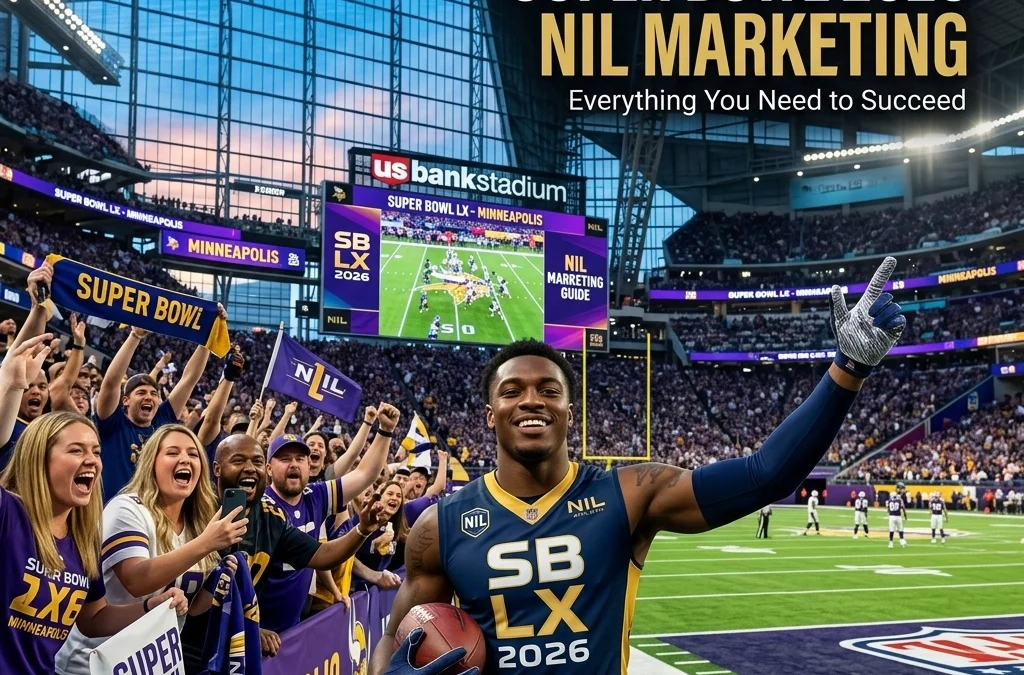
The landscape of Super Bowl advertising changed forever in 2026. While the traditional 30-second television spot remains a powerhouse, the price tag has climbed to over $7 million. For many media buyers, that cost is a barrier to entry. However, a new heavy hitter has emerged in the marketing playbook: Name, Image, and Likeness (NIL) partnerships.
By leveraging the influence of student-athletes, brands are finding ways to dominate the conversation around the Big Game without needing a massive TV budget. This guide breaks down how the OOH Sports NIL platform connects brands with over 20,000 authentic voices to create a winning Super Bowl strategy.
The Shift Toward Authentic Influence
Traditional celebrity endorsements often feel like a transaction. Viewers know a famous actor is being paid millions to hold a soda. Student-athletes offer something different. Their followers are peers, alumni, and local fans who have a genuine stake in their journey. This personal connection results in engagement rates that far exceed those of professional celebrities.
In the lead-up to Super Bowl 2026, data showed that college athletes achieved average engagement rates of 8.7 percent. This is nearly triple the industry standard for traditional influencers. For a media buyer, this means every dollar spent on NIL marketing works harder and reaches a more attentive audience.
Why the OOH Sports NIL Platform is a Game Changer
OOH Sports provides a centralized hub for media buyers to tap into a massive network of student-athletes. With over 20,000 voices available, brands can scale their message from a local level to a national stage with ease. The platform simplifies the logistics of managing hundreds or even thousands of individual partnerships.
The OOH Sports approach combines the digital reach of social media with the physical presence of digital out-of-home (DOOH) advertising. By syncing athlete content with digital screens across the country, brands create a surround-sound effect that follows fans from their phones to the streets.

A Three-Phase Strategy for Success
Successful Super Bowl campaigns are not built on a single day. The most effective strategies in 2026 followed a clear three-phase timeline to build and sustain momentum.
Phase 1: The Pre-Game Build (January 15 to February 7)
The goal here is anticipation. Athletes share "game day essentials" and behind-the-scenes content of their preparation. This phase allows brands to weave their products into the lifestyle of the athlete long before the coin toss. It sets the stage so that by Sunday, the brand feels like a natural part of the event.
Phase 2: Game Day Activations
This is where real-time engagement happens. Athletes capture authentic reactions and "in the moment" content. Whether they are at the game or hosting a watch party, their live updates provide an "all-access" feel for their followers. This level of intimacy is something a produced TV commercial simply cannot replicate.
Phase 3: Post-Game Momentum
The conversation does not end when the trophy is hoisted. Post-game reflections and "what is next" narratives extend the campaign lifecycle. Data from 2026 showed that 67 percent of NIL partnerships converted into longer-term deals because the post-game engagement remained so high.
Lessons from the 2026 Super Bowl Blitz
The 72-hour Super Bowl Blitz was a defining moment for NIL marketing. Over 1,200 athletes from 43 different sports participated in creating branded content for 89 Fortune 500 companies. The results were staggering. The campaign generated 847 million combined social media impressions.
One of the key takeaways for media buyers is that authenticity outperforms production value. Content that looked like it was filmed on an athlete's phone in their dorm or kitchen generated 3 to 4 times higher engagement than polished, agency-produced videos. Giving athletes creative freedom to speak in their own voice is the secret to unlocking these results.
https://www.youtube.com/watch?v=l6J-0zileKE
The Power of Micro-Influencers
It is tempting to go after the star quarterback with millions of followers. However, the 2026 data proves that micro-influencers: athletes with 5,000 to 50,000 followers: often deliver better returns. Their audiences are highly concentrated and deeply loyal.
When a brand partners with 10 or 20 micro-influencers instead of one superstar, they create a compounding effect. This diversity of voices creates cross-pollination across different sports and schools, leading to a 67 percent increase in total impressions compared to single-athlete spends.

Integrating NIL with Out-of-Home Media
OOH Sports specializes in taking these digital conversations and putting them on the big screen. By integrating NIL content with a network of over 25,000 digital screens, brands can reach sports fans wherever they are. This omnichannel approach is proven to drive results.
For instance, previous campaigns in the beverage category have seen a 119 percent lift in positive brand image when combining digital content with programmatic DOOH. You can read more about how big brands use these tactics on the OOH Sports case study page.
Athlete Economics and Media Buying Logistics
During the 2026 cycle, the median athlete earned roughly $1,850 for a 72-hour activation window. Top performers who managed multiple partnerships crossed the $25,000 mark. For a media buyer, this incentive structure is ideal. Athletes are personally invested in the success of the campaign because their personal brand is on the line.
The OOH Sports platform handles the heavy lifting of contracts, compliance, and performance analytics. This allows media buyers to focus on strategy rather than administrative paperwork. Whether the goal is national reach or hyper-local targeting in a specific college town, the platform provides the tools to execute with precision.

Measurable Impact and Results
Marketing during the Super Bowl is about more than just "vibes." It is about data. Campaigns using the OOH Sports network have consistently shown significant lifts in purchase consideration. For example, White Claw saw a 74 percent lift in purchase consideration for their vodka launch by utilizing a programmatic approach. You can find the full details of that campaign here.
Other brands, such as Sea-Doo, have seen purchase consideration increase by 144 percent through targeted digital out-of-home efforts. These numbers prove that the combination of athlete influence and strategic screen placement is a potent formula for ROI.
How to Get Started for the Next Season
The window for Super Bowl planning opens earlier every year. Media buyers looking to secure the best talent and the best screen inventory should begin their outreach months in advance. The process involves:
- Reviewing the Athlete Portfolio: Identify which sports and schools align with the brand’s target demographic.
- Setting Clear Objectives: Whether the goal is brand awareness or direct sales, the strategy must be tailored accordingly.
- Granting Creative Freedom: Trust the athletes to know their audience.
- Leveraging Analytics: Use the OOH Sports marketing tools to track performance in real time.
Conclusion
NIL marketing is no longer a "nice to have" experimental tactic. It is a fundamental pillar of modern sports advertising. The 2026 Super Bowl proved that 20,000 authentic voices are more powerful than one 30-second commercial. By connecting brands to the heart of the sports community, OOH Sports is helping media buyers win big on the world’s largest stage.
For more information on how to integrate NIL into your next campaign, visit the OOH Sports homepage or explore our latest blog posts for more industry insights.