
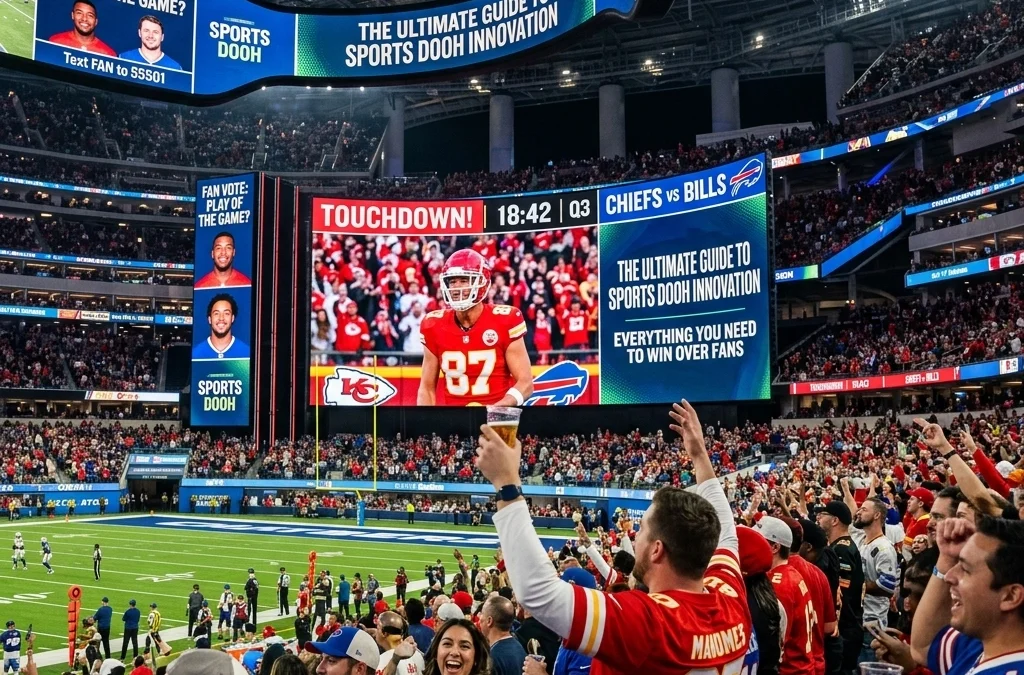
The landscape of sports marketing is undergoing a significant transformation. While traditional television commercials and static stadium billboards once defined the industry, the rise of Digital Out-of-Home (DOOH) advertising has introduced a new level of precision and engagement. For media buyers and brand managers, understanding the intersection of technology and fan behavior is no longer optional. It is the primary requirement for a successful campaign.
Sports fans are a unique audience. They are mobile, highly emotional, and deeply connected to physical spaces like stadiums, transit hubs, and fan zones. DOOH leverages these characteristics by delivering real-time, location-based messaging that resonates with fans during their most engaged moments. This guide explores the core innovations driving the industry and how brands can utilize them to secure a competitive advantage.
The Strategic Shift to Digital Out-of-Home
Traditional advertising often relies on broad reach with minimal contextual relevance. In contrast, DOOH operates in the physical world where fans naturally congregate. Research indicates that nearly six in ten sports fans recall seeing Out-of-Home (OOH) advertisements around major sporting events. Even more impactful is the fact that over 90 percent of those fans take a follow-up action after exposure.
The movement toward DOOH is driven by the need for flexibility. Static billboards are fixed in time and space, but sports are unpredictable. A game can change in seconds, and a brand's message should be able to do the same. By moving to digital formats, advertisers can align their creative content with the actual atmosphere of the event, ensuring that the brand remains a relevant part of the conversation.

Objective and Strategy: The Fan Journey
An effective sports marketing strategy must account for the entire fan journey. This journey is typically divided into three distinct phases: pre-game buildup, live gameplay, and post-game celebration or analysis.
Pre-Game Excitement
During the hours leading up to a match, fans are in transit. They are moving through airports, using public transportation, or gathering in local bars and restaurants. The strategic objective here is to build anticipation. DOOH screens in high-traffic transit hubs allow brands to reach fans when their excitement is peaking.
Live Gameplay and Real-Time Interaction
Inside and immediately around the venue, the focus shifts to the immediate experience. This is where specialized hardware like Sportrons comes into play. These digital displays provide a platform for high-impact visuals that complement the live action.
Post-Game Engagement
After the final whistle, fans continue to interact with OOH media as they leave the stadium or head to post-game celebrations. This is an ideal time for brands to reinforce their message or provide calls to action, such as exclusive offers or social media prompts. Data shows that 42 percent of consumers discuss sporting events with friends or family after seeing OOH ads, which creates an opportunity for organic brand amplification.
Innovation 1: Real-Time Dynamic Creative Optimization (DCO)
One of the most significant technological advancements in the field is Dynamic Creative Optimization (DCO). This technology allows advertisers to change their creative content instantly based on external data triggers.
In the context of sports, DCO can be triggered by:
- Live game scores and updates.
- Weather changes (e.g., promoting rain gear or cold beverages).
- Unexpected match upsets or record-breaking moments.
- Foot traffic density around specific stadium gates.
By using DCO, a campaign becomes a living part of the event. If a team scores a goal, the digital screens in the surrounding area can immediately switch to a celebratory creative. This level of relevance ensures that the audience does not view the advertisement as an interruption, but rather as an enhancement to their experience.

Innovation 2: Programmatic DOOH (pDOOH) and Flexibility
The adoption of programmatic buying models has simplified the way media buyers access premium sports inventory. Programmatic Digital OOH (pDOOH) allows for the automated buying and selling of ad space, similar to how digital display ads are purchased online.
The primary benefit of pDOOH is agility. Brands can secure high-demand screens well in advance while maintaining the ability to adjust their parameters closer to the event. For example, a brand might choose to increase its ad frequency only if a specific team reaches the finals. This data-driven approach ensures that marketing budgets are allocated to the moments of highest impact.
Furthermore, pDOOH enables brands to activate campaigns across a diverse network of screens, from large-scale digital billboards to smaller displays in retail environments. This cross-environment presence ensures that the brand remains top-of-mind throughout the fan’s day.
Innovation 3: Audience-Led Targeting and Geofencing
Modern DOOH has moved beyond simple demographic targeting. Today, success is built on audience-led targeting and geofencing. By analyzing movement patterns and mobile signals, advertisers can identify "high-intent zones" where fans are most likely to gather.
Geofencing allows a brand to create a virtual perimeter around a specific location, such as a stadium or a popular fan park. When a fan enters this zone, the DOOH screens can trigger specific content, and the brand can even extend the reach by retargeting those same individuals on their mobile devices. This omnichannel approach creates a cohesive brand experience that follows the consumer from the physical screen to their personal device.
Technology Partners and Strategic Execution
Executing a sophisticated DOOH campaign requires the right infrastructure. Platforms like OOH Sports provide the necessary tools to navigate this complex environment. Effective execution involves a combination of high-quality hardware and intelligent software.
Strategic Planning Steps:
- Identify Key Locations: Prioritize screens in airports, transit hubs, and areas adjacent to the sporting venue.
- Select Data Triggers: Determine which real-world events will trigger changes in the creative content.
- Integrate Mobile Retargeting: Use device IDs to connect OOH exposure with mobile engagement.
- Monitor in Real-Time: Use analytics dashboards to track performance and adjust campaign parameters on the fly.

Quantifiable Results and Case Study Evidence
The effectiveness of DOOH in the sports and beverage category is well-documented through various brand lift studies. These results demonstrate that when DOOH is used strategically, it drives significant increases in brand perception and purchase intent.
Impact on Purchase Consideration
A campaign for Sea-Doo utilized digital OOH to reach outdoor enthusiasts and sports fans. The strategic placement of ads in relevant geographic areas resulted in a 144 percent increase in purchase consideration. You can read the full breakdown of this Sea-Doo case study for more details.
Driving Brand Preference
In another instance, AB InBev’s Mike’s Hard Iced Tea used programmatic DOOH to target specific consumption moments. This campaign led to a 119 percent lift in positive brand image, proving that digital screens can effectively shift consumer sentiment. Detailed results are available in the AB InBev case study.
High-Impact Product Launches
For the launch of a new vodka product, White Claw employed pDOOH to reach urban audiences and fans. The campaign successfully drove a 74 percent lift in purchase consideration, demonstrating the power of DOOH to introduce new products into a crowded market. More information can be found in the White Claw campaign analysis.
Measuring Impact and ROI
One of the historical challenges of OOH was measurement. However, modern innovations have replaced guesswork with data. Media buyers can now track success through:
- Foot Traffic Attribution: Measuring the increase in visitors to a retail location or fan zone following ad exposure.
- Brand Lift Studies: Surveys that quantify changes in brand awareness, favorability, and intent.
- Cross-Device Attribution: Linking an OOH impression to a website visit or a mobile app download.
- Household-Level Tracking: Connecting screen exposure to specific household behaviors and purchases.
This level of measurement moves DOOH from a top-of-funnel awareness play to a full-funnel marketing solution. By proving concrete ROI, brand managers can justify larger investments in the DOOH space.

Future-Proofing Sports Marketing
As the industry continues to evolve, the brands that succeed will be those that embrace innovation. The combination of real-time data, programmatic flexibility, and high-impact physical displays creates a winning formula for reaching modern fans.
By focusing on the fan journey and utilizing the tools available through OOH Sports, media buyers can create campaigns that are not only seen but remembered. The goal is to move beyond passive advertising and become an integral part of the sports experience. For those ready to explore these opportunities, further information is available on the OOH Sports about page or via the contact section.
In the world of sports, timing is everything. With DOOH innovation, brands can finally ensure their timing is always perfect.