
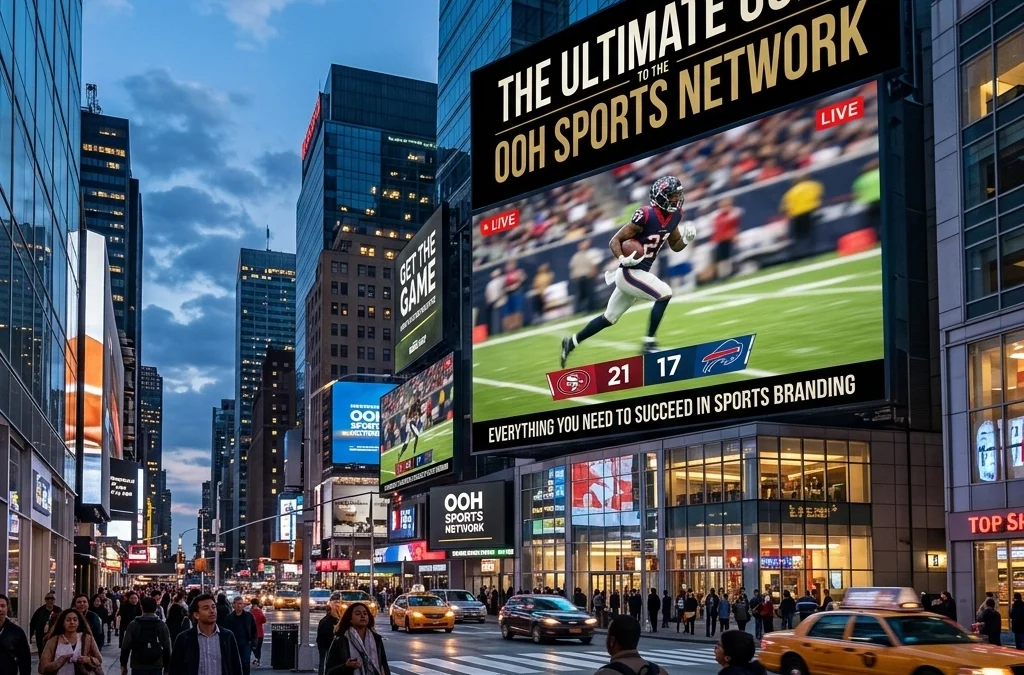
The landscape of sports advertising is experiencing a massive shift toward digital integration and physical presence. OOH Sports has officially reached a significant milestone in this evolution, expanding its network to include over 25,000 digital screens nationwide. This expansion represents a critical turning point for media buyers and brand managers seeking to capture the attention of high-value sports audiences in real-time environments.
This guide explores the strategic infrastructure of the OOH Sports network, the technology driving its growth, and the methodologies used to deliver measurable brand lift for major global advertisers.
The Evolution of the OOH Sports Network
The OOH Sports network is built on the premise that sports fans are most receptive to brand messaging when they are in a high-energy, community-focused environment. By deploying 25,000+ screens across stadium approach routes, entertainment districts, and sports-themed venues, the network provides a comprehensive "surround-sound" effect for brands.
Unlike traditional static billboards, the digital nature of this network allows for national scale with local precision. Campaigns can be deployed simultaneously across major metropolitan hubs or narrowed down to specific zip codes where game-day traffic is highest. This scalability eliminates the logistical hurdles typically associated with regional out-of-home (OOH) planning, offering a streamlined path for media buyers to execute complex, multi-market campaigns.
Core Infrastructure: The Sporttron Digital Network
At the heart of the OOH Sports expansion is the Sporttron Digital Network. These specialized digital screens are engineered specifically for high-traffic sports environments. The hardware is designed to cut through the visual noise of crowded venues, ensuring that brand creative remains clear and impactful regardless of lighting conditions or distance.
The transition from static to digital infrastructure allows for:
- Dynamic Creative Rotation: Advertisers can cycle through multiple messages to prevent creative fatigue.
- Temporal Relevance: Messaging can change based on the time of day, moving from pre-game hype to post-game celebration.
- Immediate Deployment: New creative assets can be uploaded and live across the entire network in a fraction of the time required for traditional print OOH.
Strategic Placement Throughout the Fan Journey
Success in sports branding depends on identifying and owning the touchpoints where fans congregate. The OOH Sports network identifies four primary zones for maximum impact:
1. Entertainment Districts
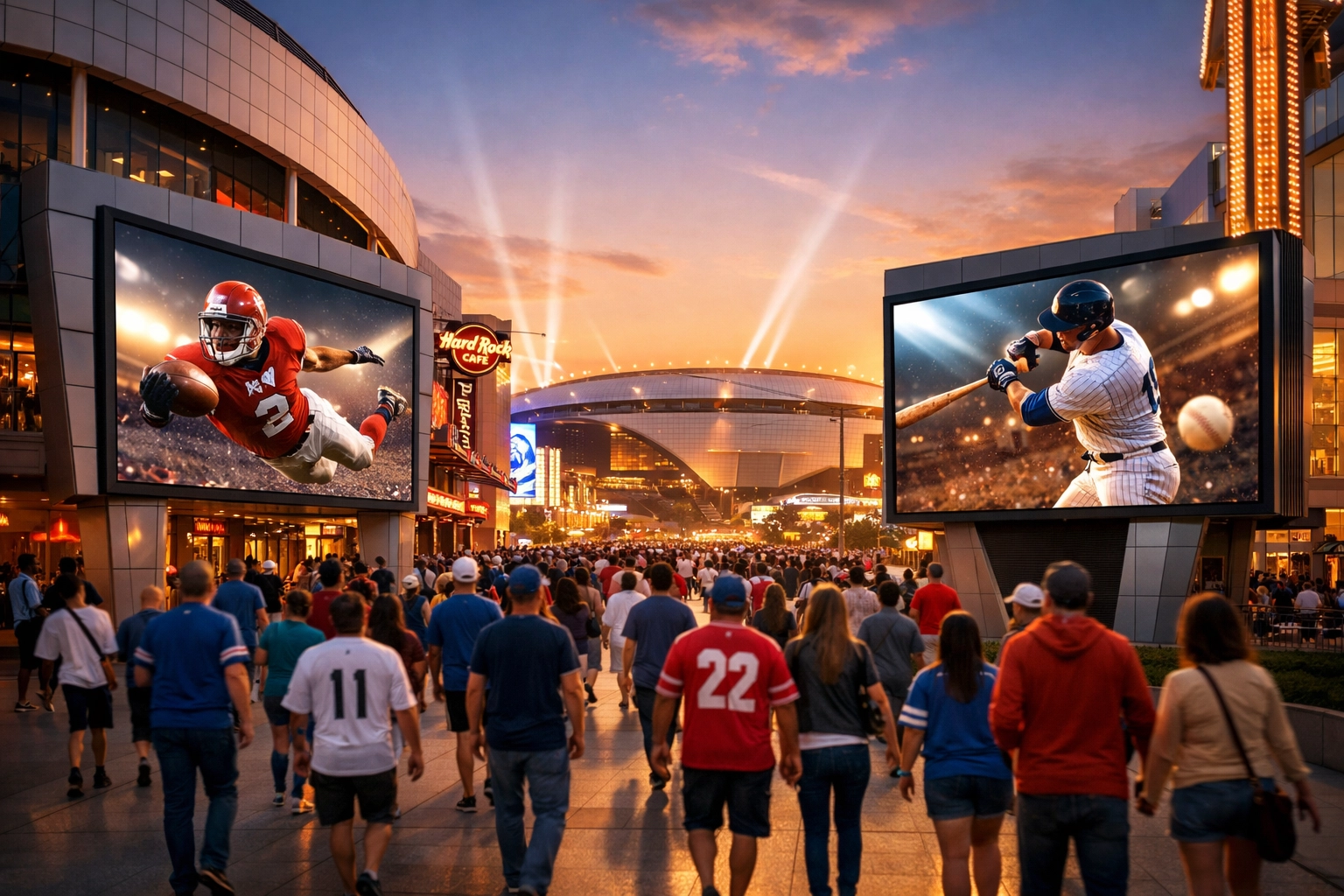
These are the pre-game energy zones where fans gather hours before an event starts. High-traffic pedestrian areas in these districts are ideal for wallscapes and interactive displays. These placements benefit from high dwell times as fans eat, drink, and socialize.
2. Stadium Approach Routes
The 30 to 60 minutes before a game starts represents a peak window of fan excitement. By placing digital screens along the main arteries leading to the stadium, brands ensure top-of-mind awareness exactly when the audience is most engaged.
3. Transit Wait Points
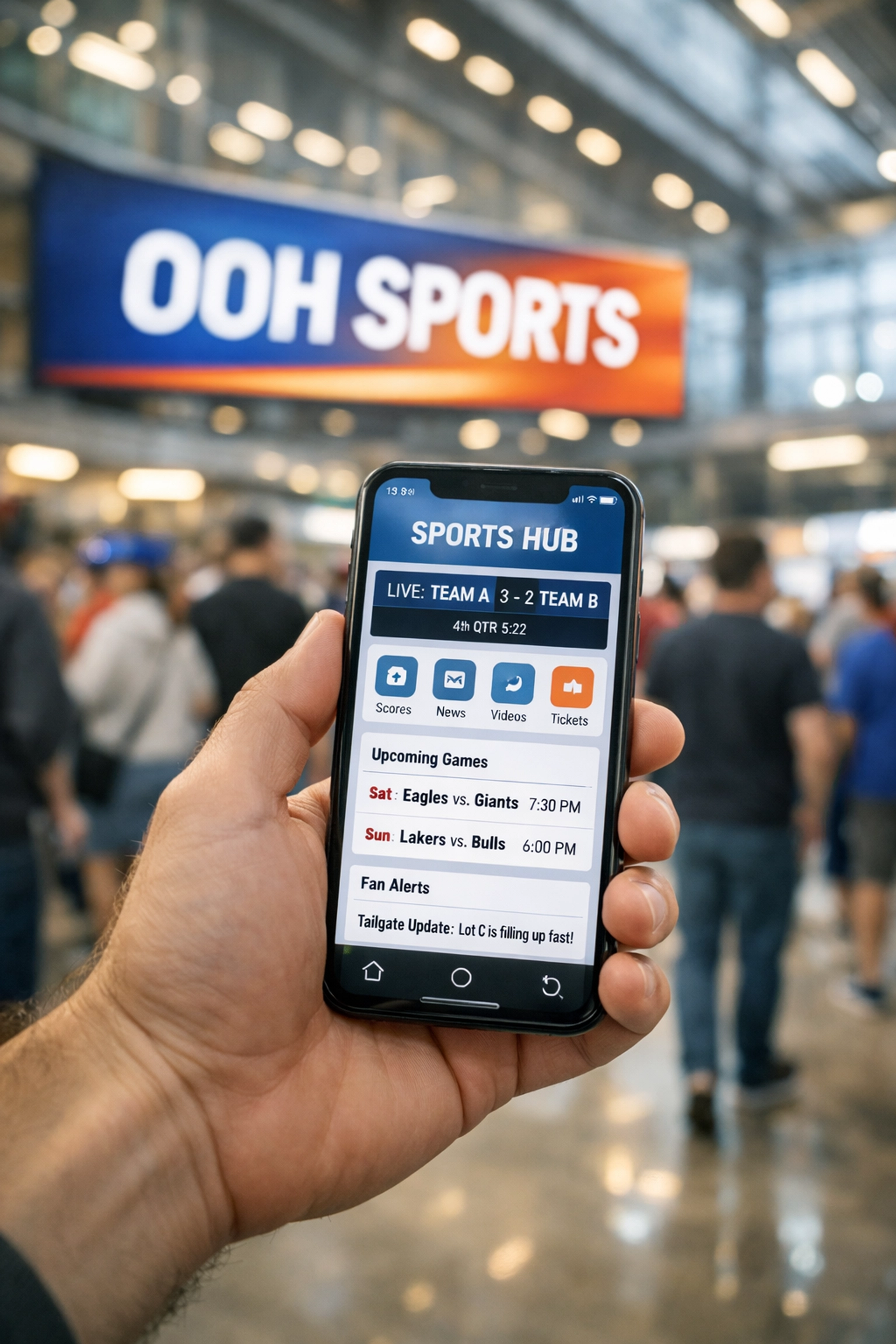
Rideshare lots, shuttle queues, and rail platforms are high-frequency locations. During these wait times, fans are frequently looking for information or entertainment, making them highly receptive to digital content that bridges the gap between their physical environment and their mobile devices.
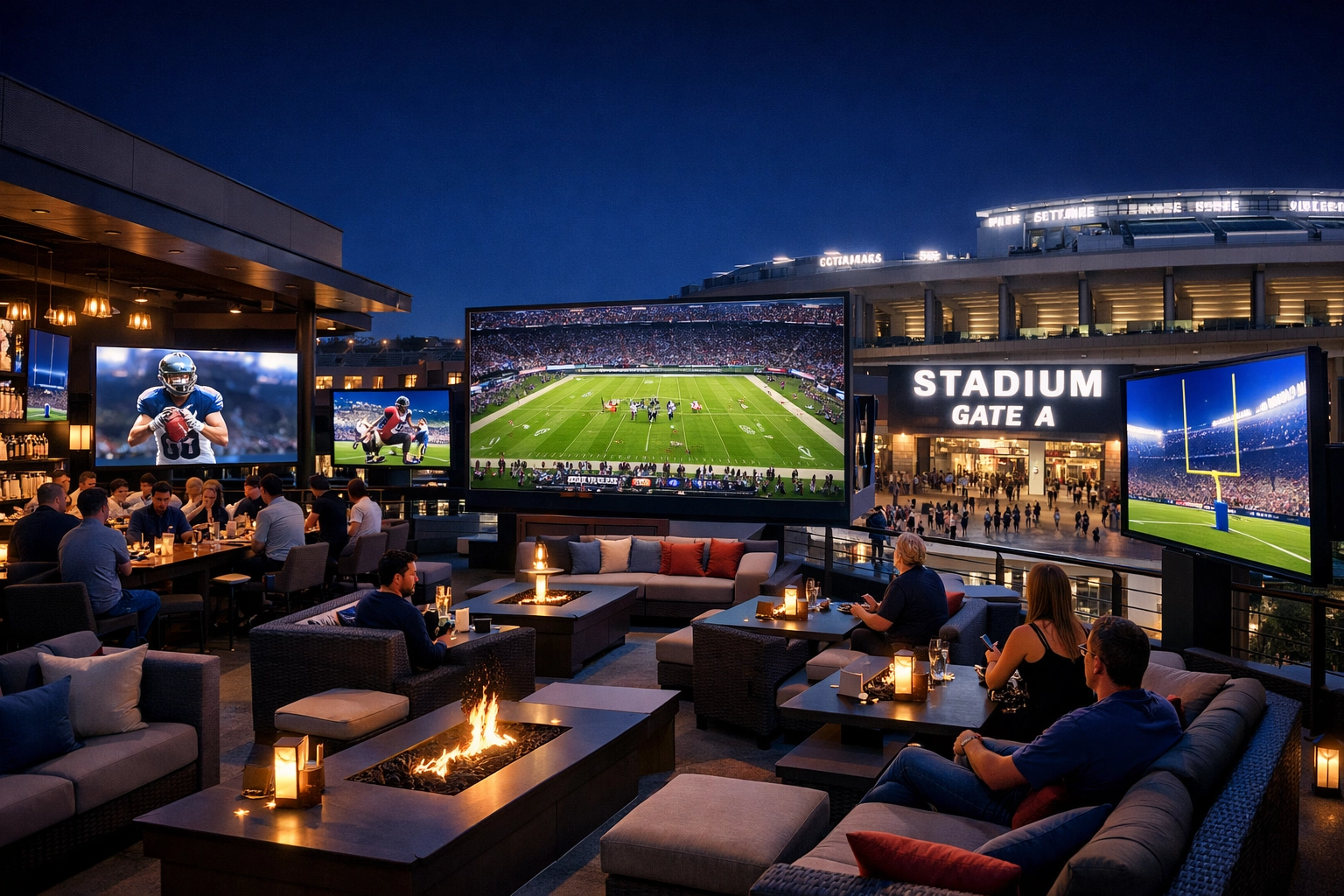
4. Sports Restaurants and Bars
The fan experience does not end when the final whistle blows. By maintaining a presence in post-game venues, brands can maintain conversation continuity. This extended impression window allows for a cumulative brand exposure that far exceeds the duration of a standard 30-second television spot.
Programmatic DOOH and Creative Agility
The integration of programmatic buying has transformed how media buyers interact with the OOH Sports network. By leveraging StackAdapt and other DSP partners, advertisers can acquire inventory in real-time, targeting audiences based on movement patterns and specific behaviors.
The true power of the network lies in creative agility. Data shows that creative tied to a specific moment, such as a team victory or a specific player's performance, drives 2.2x more recall than generic brand messaging. The digital infrastructure allows brands to update creative instantly when significant events occur. If a local team wins a championship, the entire network can pivot to celebratory messaging within minutes.
The Physical-Digital Bridge: Measurement and Attribution
One of the historical challenges of OOH advertising was the difficulty of measurement. OOH Sports has solved this by creating a physical-digital bridge. This involves several key technologies:
- Device ID Capture: The network utilizes technology to capture anonymous device IDs within the vicinity of the screens. This allows for detailed attribution modeling.
- Mobile Retargeting: Once a device is exposed to a physical screen, that audience can be retargeted with follow-up digital messaging on their mobile devices, creating a closed-loop marketing system.
- QR Code Integration: Strategic use of QR codes on digital screens allows for immediate conversion, whether it is a coupon download or a direct link to a product page.
For a deeper dive into how these strategies compare to traditional advertising, the analysis on programmatic DOOH vs. traditional stadium ads provides valuable ROI insights.
Proven Results: Case Study Highlights
The effectiveness of the OOH Sports network is best demonstrated through the performance data of recent campaigns. Major brands have utilized the network to drive significant shifts in consumer behavior.
- White Claw: By utilizing a programmatic digital OOH campaign for a vodka launch, the brand saw a 74% lift in purchase consideration. The campaign focused on high-traffic urban areas and sports venues to reach an active, social demographic. Detailed results are available in the White Claw case study.
- Mike’s Hard Iced Tea: This campaign focused on brand image and perception. By aligning with the energy of sports environments, the brand achieved a 119% lift in positive brand image. More information can be found in the Mike's Hard report.
- Sea-Doo: In its first digital OOH campaign, Sea-Doo targeted sports fans to increase purchase consideration by 144%. The strategy used the scale of the network to build a sense of adventure and lifestyle alignment. View the full Sea-Doo case study.
Future Outlook: The $50 Billion Opportunity
Industry forecasts suggest that DOOH sports advertising will reach $50 billion by 2030. This growth is driven by digital fatigue among consumers and a renewed focus on physical media that cannot be skipped or blocked by ad-blockers.
The OOH Sports network expansion to 25,000+ screens is a direct response to this market demand. As more brands shift their budgets toward experiential and out-of-home channels, the ability to deliver high-impact, data-driven content in sports environments becomes a primary competitive advantage.
Implementation Strategy for Media Buyers
To successfully leverage the OOH Sports network, media buyers should focus on three core principles:
- Contextual Integration: Ensure that creative assets feel like a natural part of the fan experience. Use localized references and sports-specific terminology to build authenticity.
- Layered Formatting: Combine high-impact digital screens with traditional static formats for sustained presence. While digital offers agility, static placements provide a persistent visual anchor in a specific market.
- Data-Led Optimization: Use the real-time data provided by the network to adjust campaigns mid-flight. If certain locations are showing higher engagement or traffic, reallocate budget to those screens to maximize ROI.
The OOH Sports network provides the scale, technology, and strategic placement necessary to succeed in the modern sports branding landscape. By moving beyond traditional media and embracing the dynamic capabilities of digital out-of-home, brands can connect with fans in meaningful, measurable ways.
For those ready to explore the possibilities of a nationwide sports branding campaign, more information can be found on the OOH Sports marketing page or by reaching out via the contact page.