
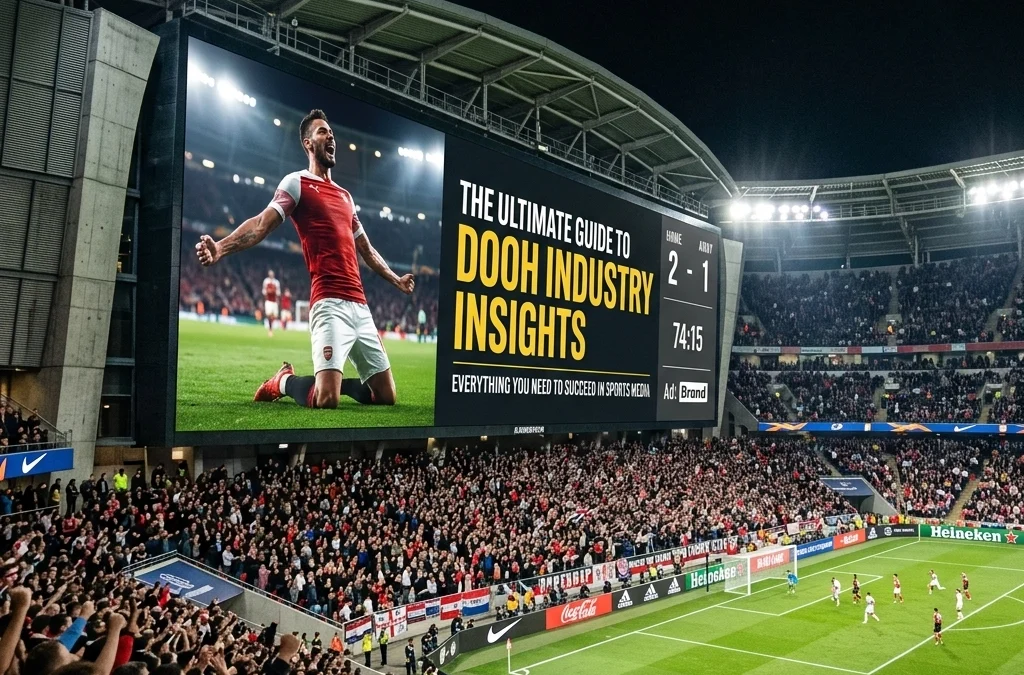
The landscape of sports media is undergoing a massive shift. While the thrill of the game remains centered in the stadium, the battle for fan attention has moved into the streets, transit hubs, and local gathering spots. Digital Out-of-Home (DOOH) advertising has emerged as the essential tool for brands looking to capitalize on the energy of live sports without necessarily paying the premium for a jersey patch or a stadium naming right.
This guide provides a comprehensive look into the current state of the DOOH industry, offering insights and strategic tactics for navigating the complex world of sports marketing. Whether the goal is to increase brand awareness or drive immediate purchase consideration, understanding these trends is the first step toward a successful campaign.
The Rapid Growth of Digital Out-of-Home
The advertising industry has seen a significant migration toward digital formats, and the out-of-home sector is no exception. DOOH now represents 36.3 percent of total OOH revenues, a figure that continues to climb with a year-over-year growth rate of 9.4 percent. This growth is fueled by the increasing accessibility of digital screens in high-traffic areas and the move toward programmatic buying.
Sports, technology, and entertainment brands are currently the largest spenders in this space. Global events like the Olympics and the FIFA World Cup act as catalysts for this transformation, often leading to the installation of permanent digital infrastructure in host cities. This creates a lasting ecosystem where brands can engage with audiences long after the final whistle blows.
Strategic Opportunities for Every Brand Size
One of the most significant advantages of DOOH in the sports world is its ability to democratize access. In the past, sports marketing was often reserved for the biggest players with the deepest pockets. Today, the flexibility of digital screens allows for a more varied approach.
For Small to Mid-Sized Brands
For emerging brands, DOOH offers a cost-effective alternative to traditional sponsorships. Instead of competing for a national TV spot during a major game, a brand can act as a precision player. By targeting specific neighborhoods, sports bars, or transit routes leading to a stadium, smaller companies can achieve high frequency and relevance within a defined community. This hyper-local strategy ensures that marketing budgets are spent on the most relevant audience segments rather than on broad, waste-heavy coverage.
For Global Enterprises
For major corporations that already invest in stadium sponsorships and national television commercials, DOOH serves as a powerful multiplier. Research into the priming effect shows that when a consumer sees a 30-second television spot followed by a shorter, 6-second reinforcement on a digital urban panel during their commute, the memory structure of the campaign is significantly strengthened. DOOH ensures that the momentum of a high-cost media buy is maintained throughout the consumer's daily routine.

Real-Time Data and Dynamic Creative Optimization
The true power of modern DOOH lies in its ability to respond to the live nature of sports. Static billboards are a thing of the past. Today, campaigns utilize Dynamic Creative Optimization (DCO) to stay relevant to the second.
The integration of live APIs allows brands to display:
- Real-time scores and game countdowns.
- Live betting odds updated as the game progresses.
- Weather-triggered ads, such as promoting rain gear or indoor venues when a storm hits a stadium location.
- Fan-generated social media content curated for the big screen.
A notable example of this in action is the use of live playoff data. During major tournaments, programmatic DOOH screens can be programmed to update automatically based on game results. This keeps the messaging fresh and provides a genuine utility to fans who may be away from their televisions or smartphones. It transforms an advertisement into a valuable information source, increasing the likelihood of positive brand association.
Mapping the Fan Journey: Strategic Touchpoints
To maximize the impact of a sports-centric DOOH campaign, it is necessary to look beyond the stadium gates. The fan journey begins hours, sometimes days, before the event and continues well after.
Strategic placements should include:
- Travel Hubs: Airports and train stations are prime locations for capturing fans traveling to a match.
- Petrol Stations: These serve as critical touchpoints for the "road trip" fan demographic.
- Workplaces: Corporate common areas are where the "water cooler" talk happens, making them ideal for reinforcing brand messaging during the work week.
- Food and Hospitality: Restaurants and delivery pickup points see a significant surge in traffic during game days. Brands that appear in these locations capitalize on the immediate needs of the consumer.
By spreading touchpoints across these various environments, a campaign can achieve a seamless presence in the consumer’s life.

Measurable Results and Case Studies
In the current advertising climate, data is the ultimate currency. DOOH has evolved to provide measurement capabilities that rival digital and social media platforms. Through the use of anonymized mobile location data and brand lift studies, advertisers can now quantify the exact impact of their outdoor campaigns.
Recent industry data highlights the effectiveness of this medium:
- Purchase Consideration: Specialized campaigns in the beverage sector have seen as much as a 74 percent lift in purchase consideration for new product launches. White Claw’s programmatic campaign serves as a primary example of how targeted DOOH can move the needle.
- Brand Image: Strategic alignment with sporting events can lead to a 119 percent lift in positive brand image, as seen in recent tea and spirits campaigns.
- Targeted Engagement: Even for brands that are not official sponsors of an event, DOOH allows for "ambush marketing" tactics that are both effective and ethical. By dominating the outdoor space around a major marathon or tournament, a brand can create a perception of official involvement, significantly boosting purchase consideration.

The Efficiency of Programmatic Buying
The shift toward programmatic DOOH (pDOOH) has changed how sports media is purchased. Instead of manual contracts and long lead times, programmatic platforms allow for automated, real-time bidding. This means a brand can choose to activate screens only when a specific game is happening, or only when a certain team wins.
This level of control ensures that no part of the budget is wasted on irrelevant times or locations. It allows for the speed and responsiveness that modern sports demand. If an underdog team makes a surprise run in a tournament, brands can pivot their creative and location targeting within hours, not weeks. This agility is what separates successful sports marketers from those left behind.
Navigating Costs and ROI
While high-profile television spots, such as those during the Super Bowl, can reach upwards of $10 million for 30 seconds, DOOH offers a more scalable entry point. The ROI on DOOH is often higher because it reaches consumers in a "lean-forward" state. People are out in the world, active, and closer to points of purchase than when they are sitting on a sofa.
To get the most out of an investment, brands should focus on:
- Contextual Relevance: The creative must match the environment. An ad in a sports bar should feel different from an ad in an airport.
- Frequency: Repeated exposure across different touchpoints is key to building memory structures.
- Attribution: Working with partners who can provide clear data on foot traffic and brand lift is essential.
For more information on the technical side of these installations, exploring the Sportrons page can provide deeper insights into the hardware and software driving these experiences.
Looking Ahead
As we look toward the future of sports media, the integration of AI-powered hyper-personalization and year-round community engagement will become the standard. DOOH is no longer a "nice to have" part of a media plan; it is the connective tissue that holds a multichannel strategy together.
For brands looking to stay ahead of the curve, the message is clear: the most effective way to reach the modern sports fan is to meet them where they live, work, and play. By leveraging real-time data, strategic placements, and the latest in programmatic technology, any brand can achieve championship-level results in the world of sports advertising.
To learn more about how to implement these strategies, visit our marketing section or reach out to the team via our contact page. Stay updated on the latest trends by following the OOH Sports blog.