
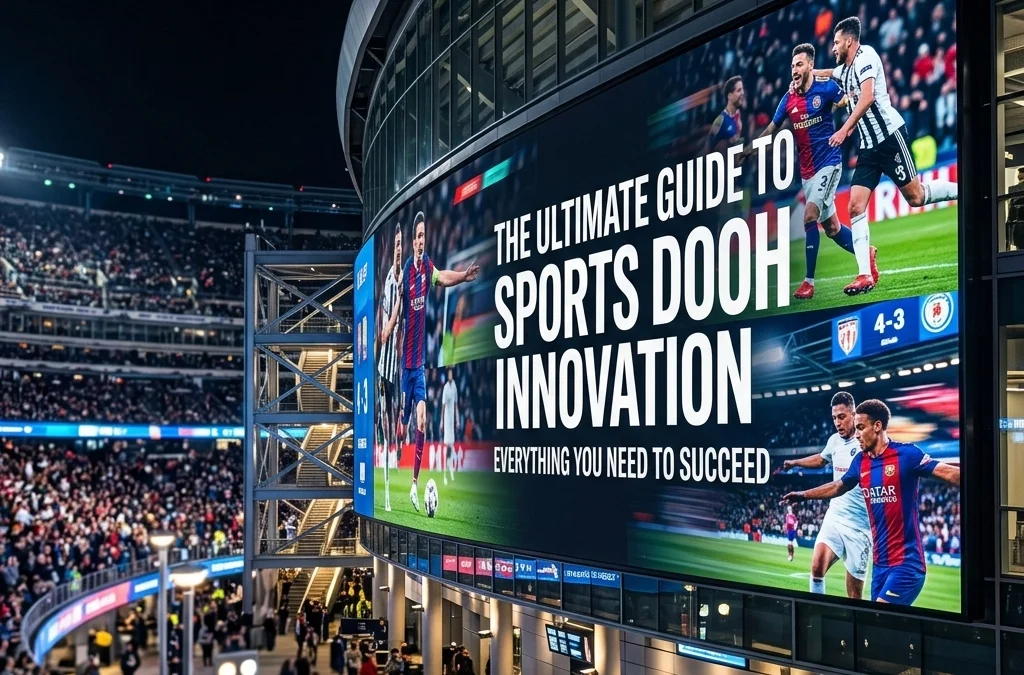
Sports marketing has undergone a fundamental transformation. The focus has shifted from high cost stadium sponsorships to a strategy that captures fan attention across everyday environments. This transition is driven by Digital Out-of-Home (DOOH) technology, which allows brands to reach audiences during their daily routines, commutes, and social gatherings. For media buyers and brand managers, understanding these innovations is the key to achieving a high return on investment in a competitive landscape.
The Evolution of the Fan Journey
The traditional approach to sports marketing relied heavily on the "four P's": Planning, Packaging, Positioning, and Perception. In the modern era, these elements are applied to the complete fan journey rather than just the three hours of a live game. Fans now engage with sports content through multiple channels, including social media, streaming services, and mobile apps.
Sports DOOH bridges the gap between the digital and physical worlds. By using a network of digital screens located in transit hubs, office districts, and retail centers, brands can maintain a consistent presence throughout the fan’s day. This routine based strategy ensures that messaging is not limited to the stadium but follows the fan from the morning commute to the post game celebration.
Strategic Implementation of Dynamic Creative Optimization
One of the most significant innovations in the industry is Dynamic Creative Optimization (DCO). This technology enables ad content to change automatically based on external data triggers. This level of agility was previously impossible with traditional static billboards.
Real-Time Triggers and Live Data
DCO allows for highly relevant messaging that responds to the environment in real time. Several key triggers are commonly used in successful sports campaigns:
- Live Game Scores: Ads can update seconds after a goal, touchdown, or home run. This creates an immediate connection between the brand and the emotional state of the fan.
- Weather Conditions: Apparel brands can trigger advertisements for rain gear when a storm is detected near a venue. Conversely, beverage brands can promote cold drinks when local temperatures exceed a specific threshold.
- Countdowns: Building anticipation is a core component of sports marketing. Digital screens can display live countdowns to kickoff or the start of a major tournament, driving urgency and ticket sales.
- Betting Odds: For sports betting partners, streaming live odds to screens in sports bars and high traffic areas transforms an advertisement into a functional utility for the viewer.
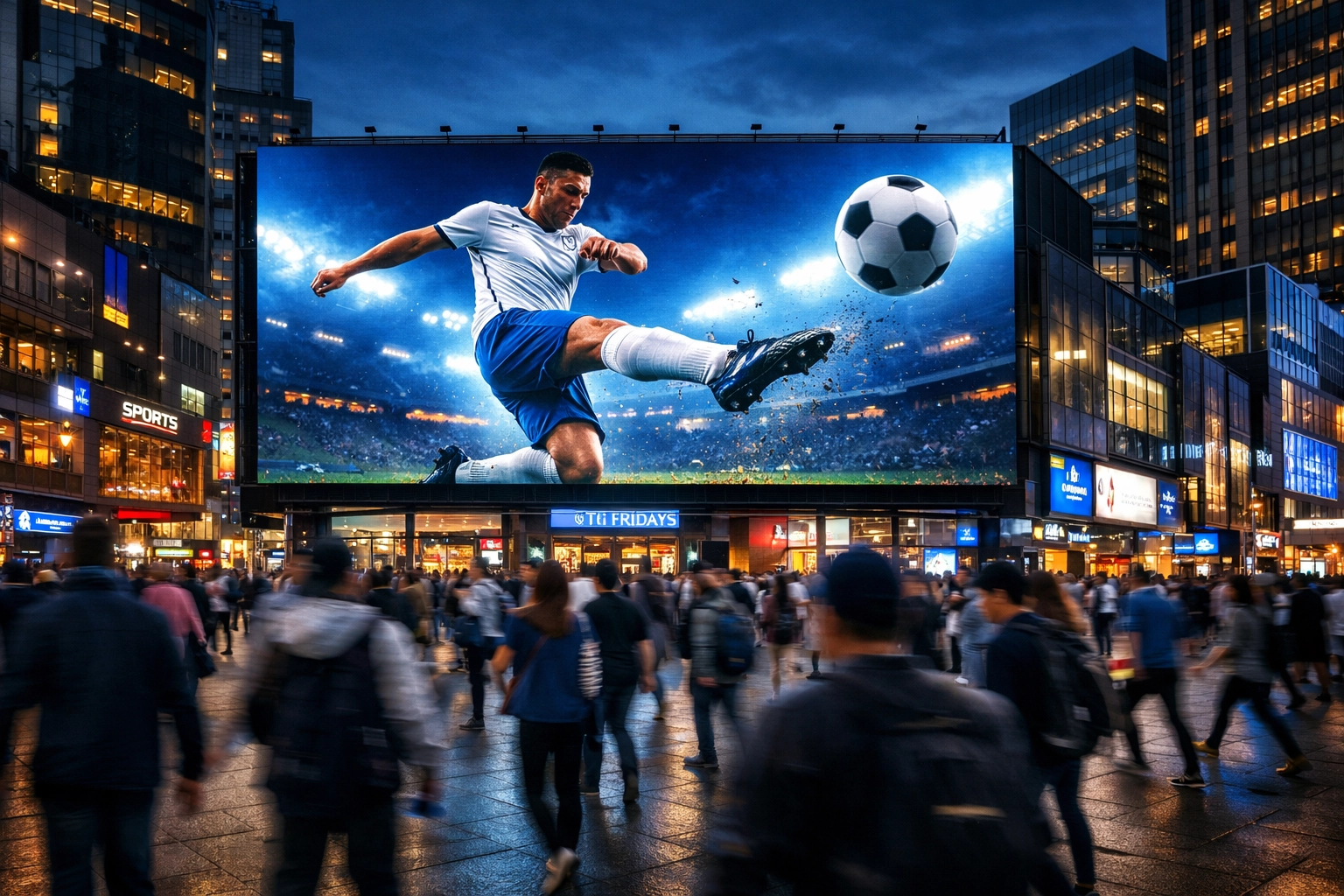
Precision Targeting with Programmatic DOOH
The shift toward programmatic DOOH (pDOOH) has provided media buyers with unprecedented precision. By using location intelligence and mobility data, advertisers can identify where their target audience is most likely to be at any given time.
Audience Affinity and Behavior
Programmatic platforms allow brands to bid on inventory in real time. This ensures that budgets are spent only when the desired audience is present. For instance, a brand targeting high affinity sports fans can prioritize screens near stadiums, sports bars, or fitness centers. Data shows that 81% of fans feel more positive toward brands that sponsor or engage with their favorite sports.
Using specialized platforms, advertisers can reach these fans with surgical precision. To learn more about these technical strategies, visit https://oohsports.com/marketing.
Geofencing and Surround Tactics
The 48 hours leading up to a major sporting event are critical. During this window, fans are planning logistics and checking betting lines. Successful campaigns use geofencing to dominate the areas around arenas and transit hubs. This "surround tactic" ensures the brand is top of mind as fans travel to the game and return home.
Omnichannel Reinforcement and the Priming Effect
Marketing effectiveness increases when multiple channels work together. This is known as the "priming effect." When a fan sees a short digital urban panel during their commute and later views a television spot during the game, the memory structure of the campaign is significantly strengthened.
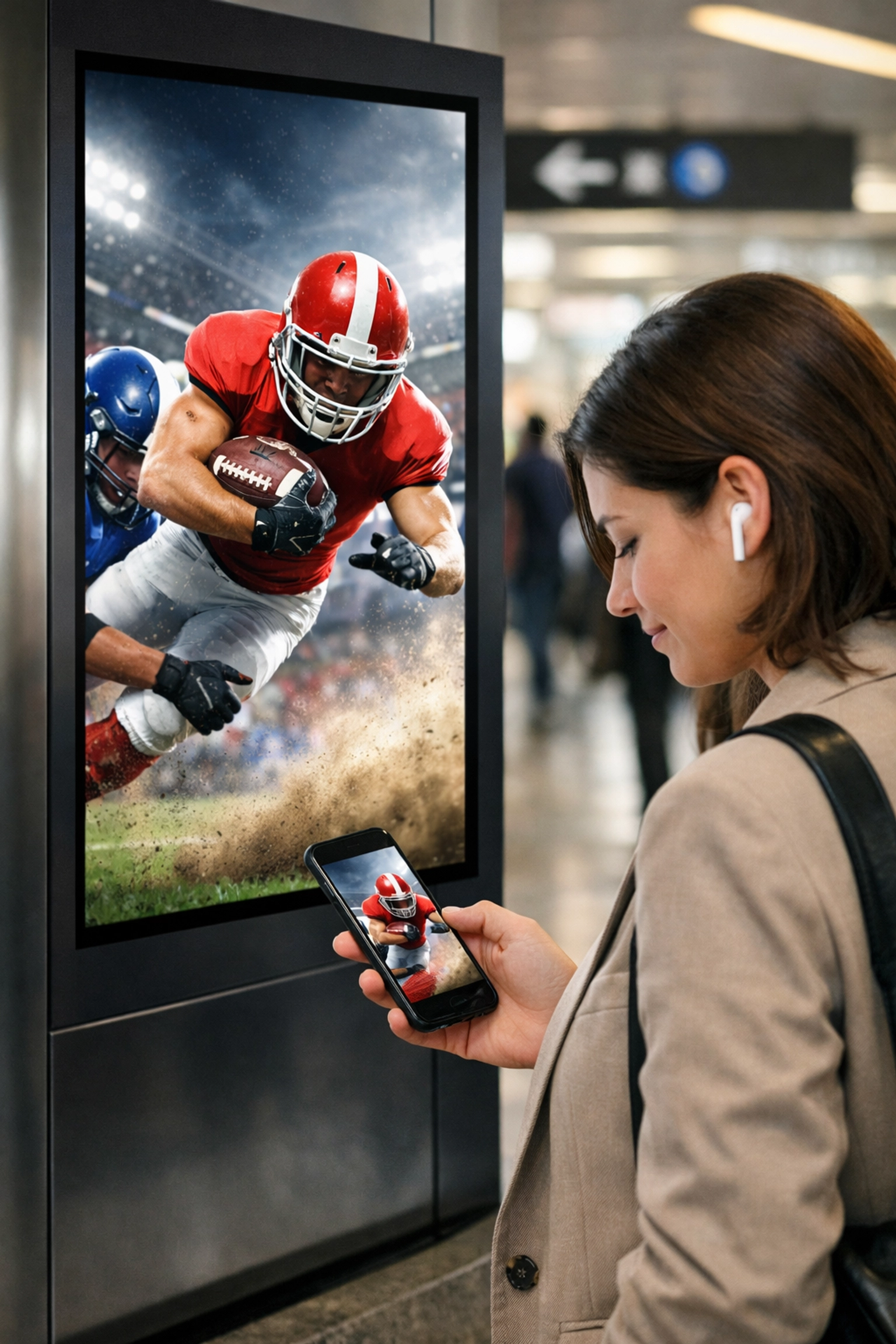
DOOH serves as a powerful reinforcement tool. It reaches fans in high dwell time locations where they are often looking at their mobile devices. By coordinating DOOH messaging with mobile ads and connected TV (CTV) schedules, brands create a unified voice across all screens. This multi-screen coordination is essential for maximizing product visibility during peak broadcast periods.
Measurable Results and Case Studies
The success of sports DOOH innovation is supported by significant data from recent campaigns. Quantitative studies show that programmatic execution leads to measurable lifts in brand awareness and purchase consideration.
- White Claw: A programmatic campaign for a vodka launch resulted in a 74% lift in purchase consideration. By targeting specific audience segments in real time, the brand moved the needle on consumer intent. More details can be found at https://oohsports.com/2024/09/21/white-claws-programmatic-digital-out-of-home-campaign-drives-74-lift-in-purchase-consideration-for-vodka-launch.
- AB InBev’s Mike’s Hard: This campaign saw a 119% lift in positive brand image. The use of dynamic creative and strategic placement allowed the brand to align with the positive emotions of the sports environment. Full results are available at https://oohsports.com/2024/10/21/ab-inbevs-mikes-hard-iced-tea-sees-a-119-lift-in-positive-brand-image-with-programmatic-dooh-campaign.
- Sea-Doo: In its first digital OOH campaign, the brand increased purchase consideration by 144%. This highlights how even brands that are new to the medium can achieve substantial impact through targeted execution. Read the study at https://oohsports.com/2024/11/21/how-sea-doos-first-digital-ooh-campaign-increased-purchase-consideration-by-144.
These outcomes demonstrate that DOOH is a highly effective tool for driving specific consumer behaviors. For a broader look at performance data across different sectors, visit https://oohsports.com/case-study.
Democratization of Sports Advertising
Historically, sports marketing was dominated by enterprise brands with massive budgets. However, the rise of digital networks has democratized access to the sports ecosystem.
Enterprise vs. Emerging Brands
Large sponsors continue to use their scale to dominate nationwide campaigns with sophisticated DCO feeds. However, small and emerging brands can now compete by becoming "precision players." By focusing on specific neighborhoods, local fan spaces, and tactical geofencing, smaller brands can achieve high visibility without the need for national buy-ins.
Scaling for Success
The industry is projected to see massive growth, with some estimates suggesting the sports DOOH sector will reach $50 billion by the end of the decade. Strategies for capturing a share of this growth involve staying ahead of technology trends and focusing on the fan's daily routine. Detailed strategies for long term success are outlined at https://oohsports.com/2025/03/29/dooh-sports-advertising-will-hit-50-billion-by-2030-7-strategies-to-capture-your-share.

Interactive and Contextual Elements
The modern DOOH screen is more than just a display. It is an interactive portal. Screens now incorporate QR codes, live social media feeds, and real time updates. This allows fans to take immediate action, such as downloading an app, claiming a discount, or entering a contest.
In retail and restobar environments, ads can automatically adjust based on inventory levels or the time of day. This contextual relevance ensures that the content being shown is always useful to the consumer. When a brand provides value: such as broadcast schedules or real time scores: the audience is more likely to engage with the advertisement.
Technical Infrastructure and Measurement
Success in DOOH innovation requires a robust technical infrastructure. Collaboration with specialized Demand Side Platforms (DSPs) allows advertisers to manage complex campaigns across diverse screen networks.
Measurement has also evolved. Advertisers now use brand lift studies and device ID tracking to understand how many people were exposed to an ad and their subsequent behavior. This level of attribution provides the data needed to justify spend and optimize future campaigns. By focusing on metrics like brand preference ratings and purchase intent, media buyers can move beyond simple impressions to understand true business impact.
The line between physical and digital advertising will continue to blur. Brands that embrace immersion, mobile integration, and contextual relevance will be the ones that win the loyalty of the next generation of fans. Whether managing a global brand or a growing local business, the flexibility and impact of DOOH offer the tools necessary to succeed in the evolving sports marketing landscape.