
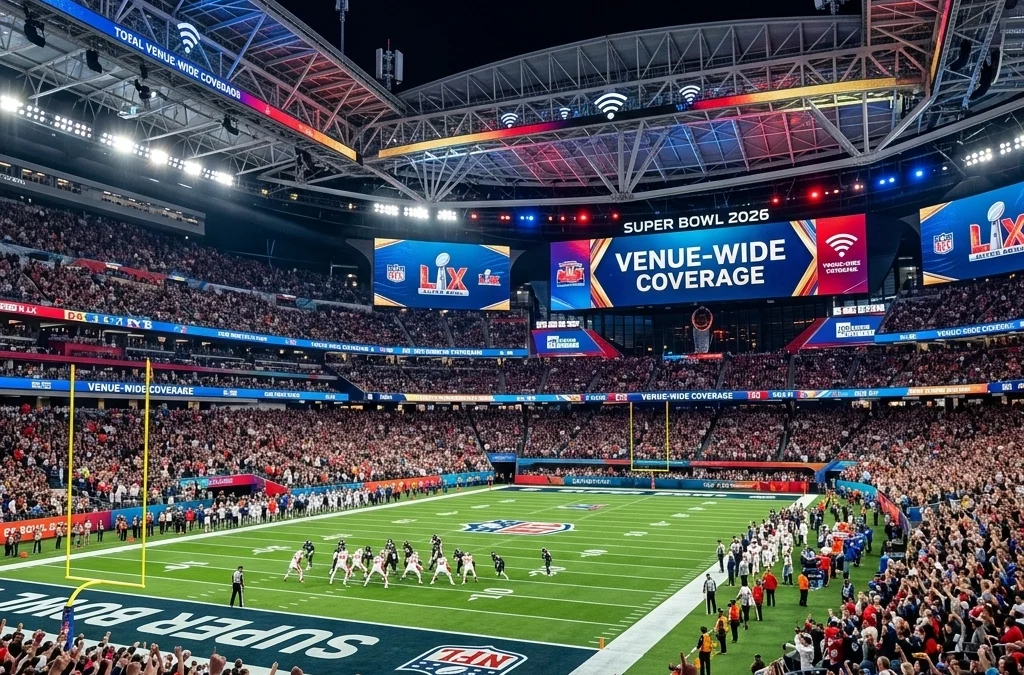
Super Bowl LX has officially entered the history books. On February 8, 2026, the Seattle Seahawks secured a 29-13 victory over the New England Patriots at Levi's Stadium in Santa Clara, California. While the action on the field was intense, the real battle for brand supremacy happened across the entire venue. In the heart of Silicon Valley, advertisers faced a sophisticated audience of over 70,000 fans in person and millions more watching at home.
Winning at the Super Bowl requires more than just a 30 second television spot. It requires a strategy that captures attention from the moment a fan steps off the light rail until they leave the stadium. OOH Sports has spent 40 years perfecting this approach, moving beyond simple signs to create total venue-wide coverage. This guide explores how the most successful brands dominated the 2026 landscape by leveraging everything from floor graphics to massive digital billboards.
A Legacy of 40 Years in Sports Advertising
The advertising world has changed significantly since the mid-1980s, but the core principle remains the same: go where the fans are. OOH Sports has led the industry for four decades by identifying the most high-traffic touchpoints within the sporting ecosystem. In 2026, this legacy was on full display. The transition from traditional printed posters to high-definition digital out-of-home (DOOH) displays has allowed brands to be more reactive and creative than ever before.
Experience matters when dealing with the logistical nightmare of a Super Bowl. Coordination with stadium management, local transit authorities, and technical teams is a massive undertaking. By focusing on 40 years of established relationships and technical expertise, OOH Sports ensures that every campaign runs smoothly. This level of leadership is what separates a basic ad buy from a venue-wide takeover.
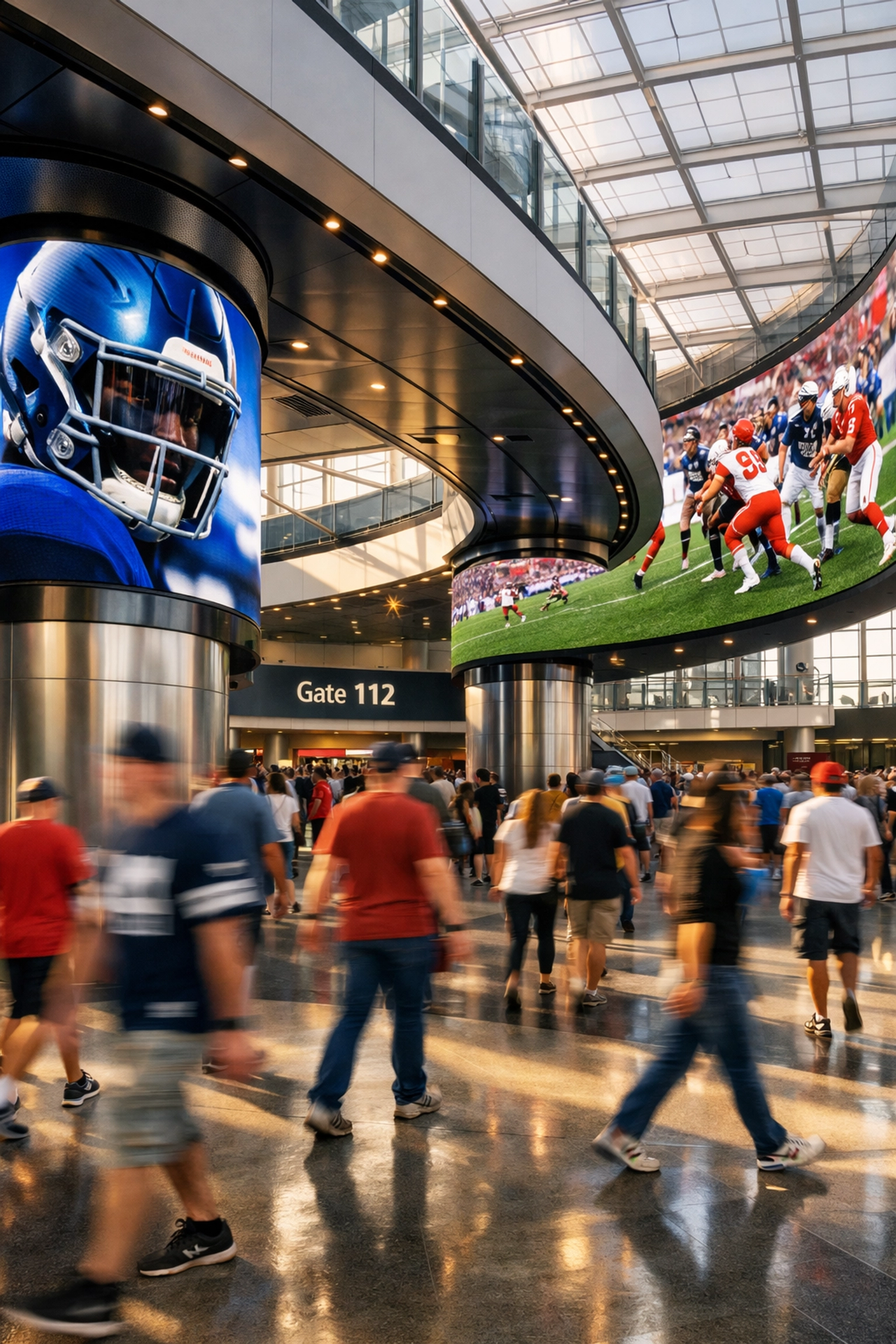
Total Venue-Wide Coverage: From Floors to Billboards
The 2026 Super Bowl demonstrated that any surface can be a canvas. Total venue-wide coverage means thinking about the fan journey in layers. It is not just about the big screen during a timeout. It is about the floor graphics in the concourse, the digital wraps on the elevators, and the programmatic billboards lining the 101 highway leading into Santa Clara.
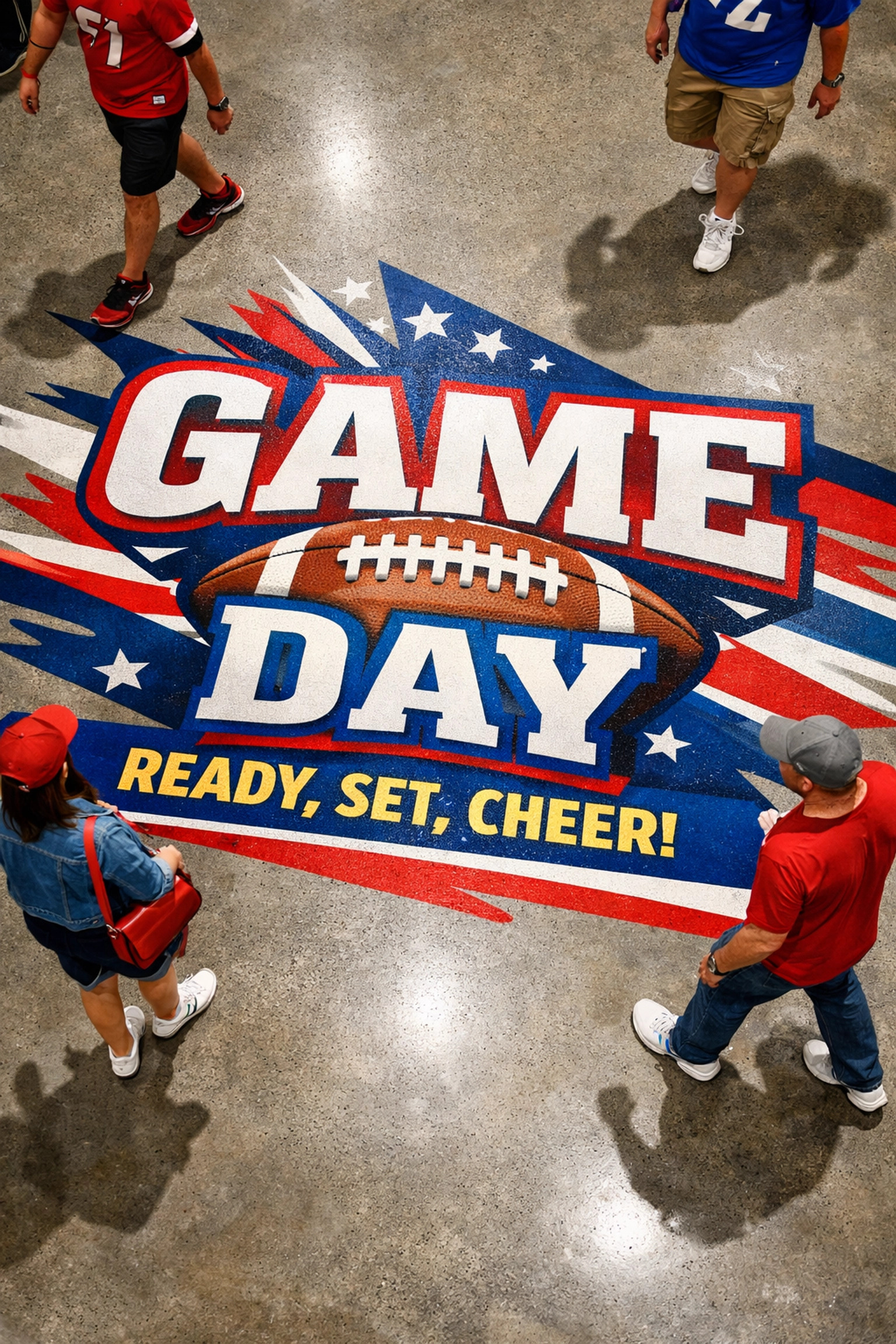
Why Floor Graphics Matter
Often overlooked, the floor is one of the most effective places to advertise in a crowded stadium. When thousands of fans are navigating the Moscone Center for the Super Bowl Experience or walking the open-air concourses of Levi's Stadium, they are naturally looking down at their path. Strategic floor graphics provide a high-impact, low-clutter environment. They can guide fans toward specific activations or simply reinforce brand presence at a scale that traditional wall posters cannot match.
The Power of Digital Billboards
Outside the stadium, the Bay Area became a digital playground for advertisers. Utilizing programmatic DOOH allowed brands to change their messaging based on the time of day or the current score. For example, brands could shift from "Welcome to the Game" messaging on Friday to "Congratulations Seahawks" on Sunday night. This flexibility is a hallmark of modern sports marketing.
https://www.youtube.com/watch?v=l6J-0zileKE
The Strategic Shift to Programmatic DOOH
One of the biggest shifts in 2026 was the heavy reliance on programmatic technology. Rather than buying a static board for a month, advertisers used platforms to bid on space in real-time. This strategy allowed for hyper-local targeting, ensuring that ads appeared exactly when and where they would have the most impact.
The effectiveness of this approach is backed by significant data. For instance, recent campaigns have shown that programmatic DOOH can drive a 74% lift in purchase consideration, as seen in the White Claw case study. During an event as massive as the Super Bowl, this ability to drive actual consumer behavior is the difference between a wasted budget and a successful ROI.
Omnichannel Integration
The most successful Super Bowl 2026 campaigns did not treat OOH as a silo. Instead, they integrated it into an omnichannel strategy. By using a StackAdapt DSP, marketers could retarget fans on their mobile devices after they had been exposed to a stadium billboard. This constant reinforcement keeps the brand top-of-mind long after the final whistle.
Lessons from Levi’s Stadium: The Silicon Valley Edge
Levi's Stadium is one of the most technologically advanced venues in the world. With its proximity to San Jose and San Francisco, the 2026 Super Bowl was a showcase for "Smart Advertising." The stadium's infrastructure allowed for seamless integration of Sportrons, which are specialized digital displays designed for high-energy sports environments.
Fans at the 2026 game were treated to a fair-weather experience, with temperatures sitting at a comfortable 67 degrees. This kept spectators in the concourses and open-air zones longer, increasing the dwell time for OOH advertisements. Advertisers who understood the stadium's layout, such as the steep seating that brings fans closer to the field, were able to place ads that felt like a natural part of the environment rather than an intrusion.
Impact of Live Entertainment
The presence of major stars like Green Day, Bad Bunny, and Charlie Puth created specific windows of high engagement. Brands that coordinated their venue-wide coverage with the halftime show or the national anthem saw a massive spike in social media mentions. When a fan takes a selfie with a stadium backdrop that happens to feature a prominent brand, that ad reach extends far beyond the 70,823 people in attendance.
Quantifying Success: The ROI of Stadium Ads
In the past, measuring the success of a billboard was difficult. In 2026, data is the driving force behind every decision. Through brand lift studies and device ID tracking, OOH Sports can provide clear metrics on how a campaign performed.
Consider the results from similar high-profile sporting events. Brands like Mike's Hard Iced Tea have seen a 119% lift in positive brand image through programmatic DOOH. Similarly, Sea-Doo increased purchase consideration by 144% using digital out-of-home tactics. These numbers prove that the "big game" environment is one of the most fertile grounds for brand growth.

Looking Ahead: The Road to 2030
The success of the 2026 Super Bowl is just the beginning. The industry is currently on a trajectory where DOOH sports advertising will hit $50 billion by 2030. This growth is driven by the fact that sports remain one of the few "appointment viewing" events left in a fragmented media landscape.
As we look toward future championships, the focus will continue to shift toward programmatic DOOH vs traditional stadium ads. The flexibility and data-driven nature of programmatic will become the standard, rather than the exception.
Summary of Strategies for Success
To win in these environments, brands must follow a specific blueprint:
- Early Engagement: Start the conversation on the transit routes and in the fan zones like the Moscone Center.
- Visual Dominance: Use a mix of floor graphics, digital wraps, and traditional billboards to ensure the brand is seen from every angle.
- Data-Driven Placement: Use programmatic tools to reach fans at the right time.
- Consistency: Leverage 40 years of industry knowledge to avoid the common pitfalls of stadium logistics.
Conclusion
The 2026 Super Bowl at Levi's Stadium was a masterclass in modern advertising. By combining 40 years of experience with cutting-edge digital technology, OOH Sports helped brands reach fans in a meaningful way. Whether it was the Seahawks dominating the field or a brand dominating the concourse, the theme of the day was total coverage.
For companies looking to make an impact at the next major sporting event, the message is clear: don't just buy an ad, own the venue. To learn more about how to execute a high-impact campaign, visit the OOH Sports contact page or explore our about page to see our history of leadership in the field.
Winning the fans is a marathon, not a sprint. With the right strategy and a venue-wide approach, any brand can achieve Super Bowl-level success.