
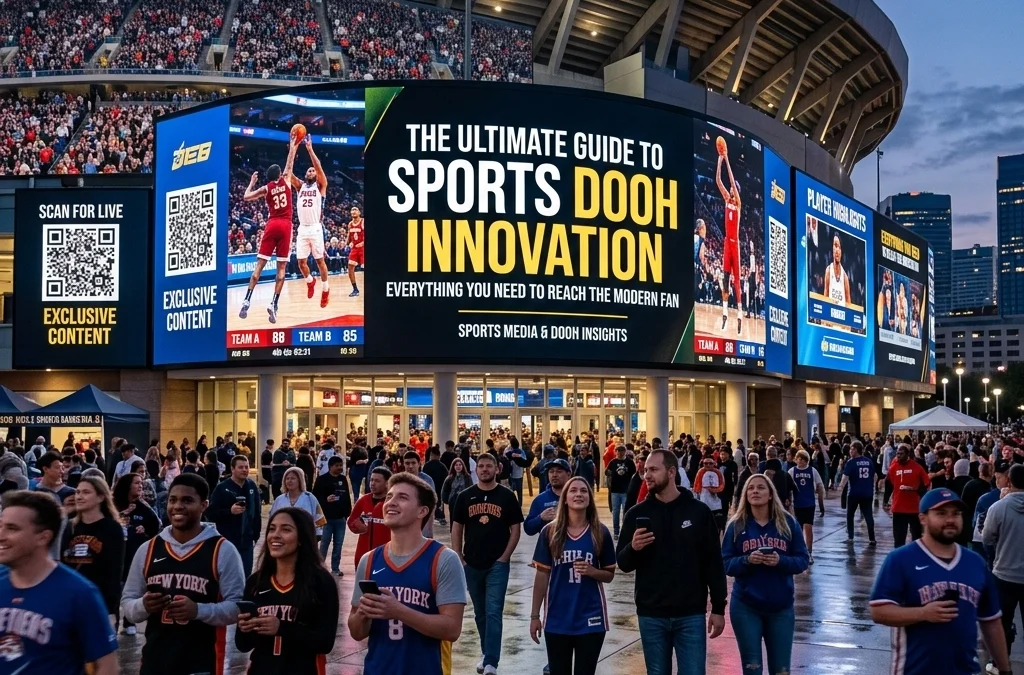
The world of sports marketing is no longer confined to the four walls of a stadium or the duration of a broadcast. For years, brands focused their efforts on securing expensive jersey patches or 30-second television spots during the big game. While those high-profile placements still hold value, the modern fan lives their life in a much broader ecosystem.
Sports marketing has shifted toward a model of direct-to-fan engagement that spans everyday spaces. The defining principle for today’s media buyers is simple: capture the attention that exists outside the arena. Research indicates that the vast majority of fan engagement occurs during the routine moments of daily life, away from the live event itself. Digital Out-of-Home (DOOH) advertising has emerged as the most effective mechanism to bridge the gap between the physical world and the digital excitement of sports.

The Modern Sports Marketing Paradigm
Traditional sports advertising often relies on a stadium-centric approach. However, this only reaches a small percentage of a team’s total fanbase at any given time. The true opportunity for growth lies in reaching the fans who are watching at bars, commuting to work, or running errands.
Innovation in this space is defined by three major forces: direct-to-fan messaging, data-driven personalization, and year-round engagement. The goal is to move beyond location-based buying and toward a routine-based strategy. By placing ads where fans naturally spend their time, brands can become a fixture in their daily lives.
For media buyers, this requires a shift in how a campaign is structured. Instead of looking at a billboard as a static image, it should be viewed as a dynamic touchpoint that can change based on the context of the sports world. This is where OOH Sports marketing strategies excel, offering a way to turn traditional advertising into a real-time conversation.
Scaling with Sports DOOH
One of the biggest hurdles in sports marketing has always been the cost of entry. Official league sponsorships and national TV slots are often reserved for brands with massive budgets. Digital Out-of-Home technology is democratizing this access. With approximately 25,000 digital screens available across various networks, brands of all sizes can now scale their presence.
The value proposition of DOOH is not just about buying a screen. It is about buying a specific moment in a fan’s routine. Whether a fan is in a residential lobby, an office district, or a retail center, digital screens provide a canvas for scalable alternatives to traditional placements.
For small and emerging brands, DOOH allows for precision playing in specific neighborhoods. Rather than trying to compete on a national stage, a brand can dominate the area surrounding a stadium or a popular sports district. For major sponsors, DOOH extends the value of their existing investments. When a fan sees a TV spot at home and then encounters a reinforced message on a digital panel during their commute, a priming effect occurs. This strengthens campaign memory and makes every marketing dollar more efficient.
Advanced Technology: Dynamic Creative Optimization
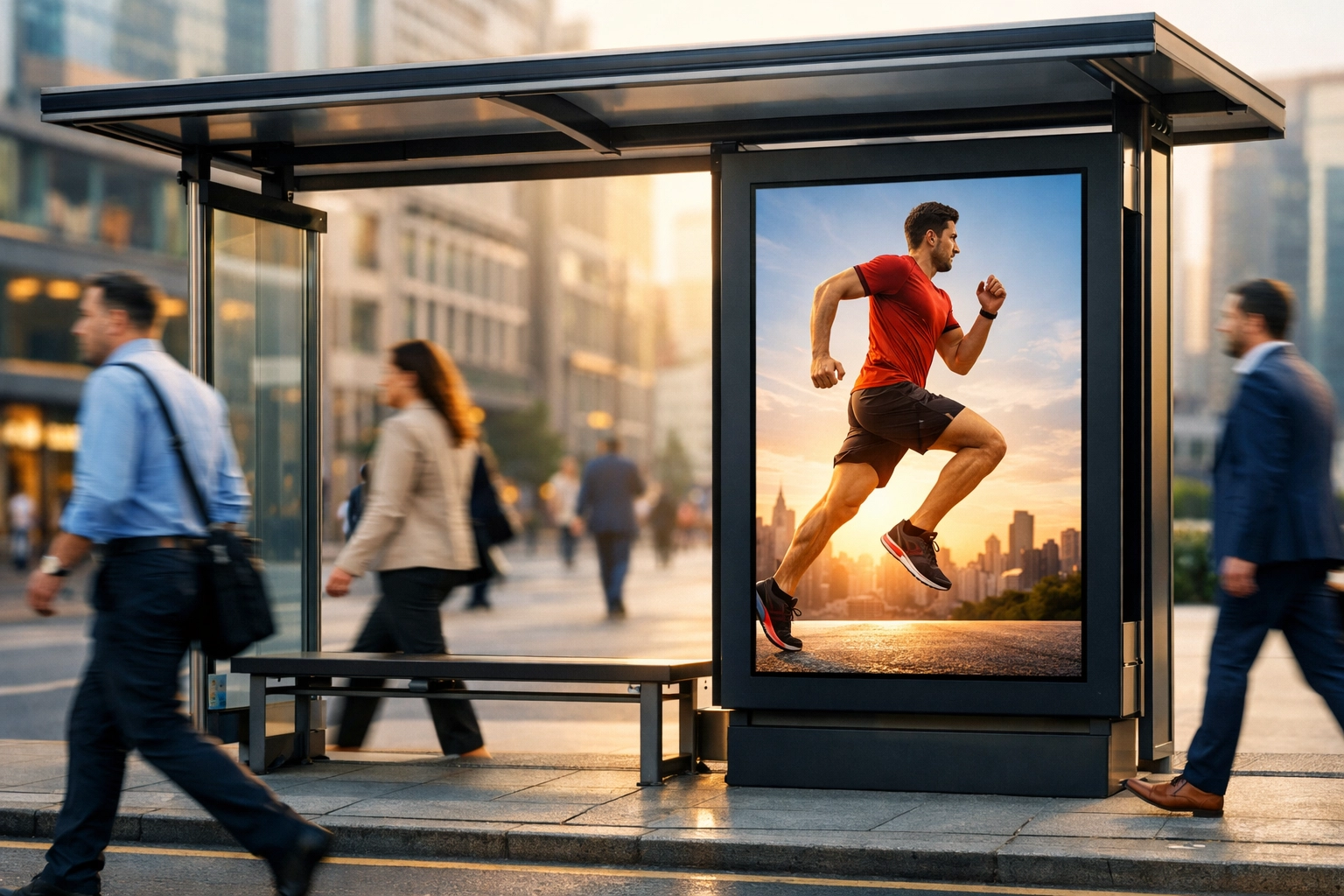
The most significant innovation in the sports DOOH space is Dynamic Creative Optimization (DCO). This technology allows ads to update automatically in real-time based on external data triggers. This level of agility is impossible with static billboards and provides a level of relevance that catches the fan's eye.
Weather-Triggered Campaigns
Context is everything. An apparel brand can use DCO to trigger advertisements for rain gear the moment a storm approaches a stadium. Conversely, on a hot afternoon, a beverage brand can promote refreshing drinks to fans walking toward the gates. This utility-driven approach ensures the ad feels like a helpful suggestion rather than an intrusion.
Game-Triggered Updates
In sports, the narrative changes every minute. DCO enables brands to change their creative based on live score updates or final outcomes. If the home team wins, a quick-service restaurant might instantly display a celebration offer, such as discounted fries for the next 24 hours. Aligning promotions with specific plays, like a home run or an interception, creates an immediate emotional connection with the viewer.
Real-Time Utility
Betting partners and sports news outlets can stream live odds or broadcast schedules directly to screens in high-traffic areas. By providing information that fans actively want to see, the ad space is transformed into utility content. This builds brand trust, as the fan begins to rely on the screen for game-day updates.
Critical Touchpoints for Reaching Fans
To maximize the impact of a sports DOOH campaign, media buyers must understand where fans congregate. It is not just about being "out of home," it is about being in the right "home away from home."
Sports Bars and On-Premise Venues
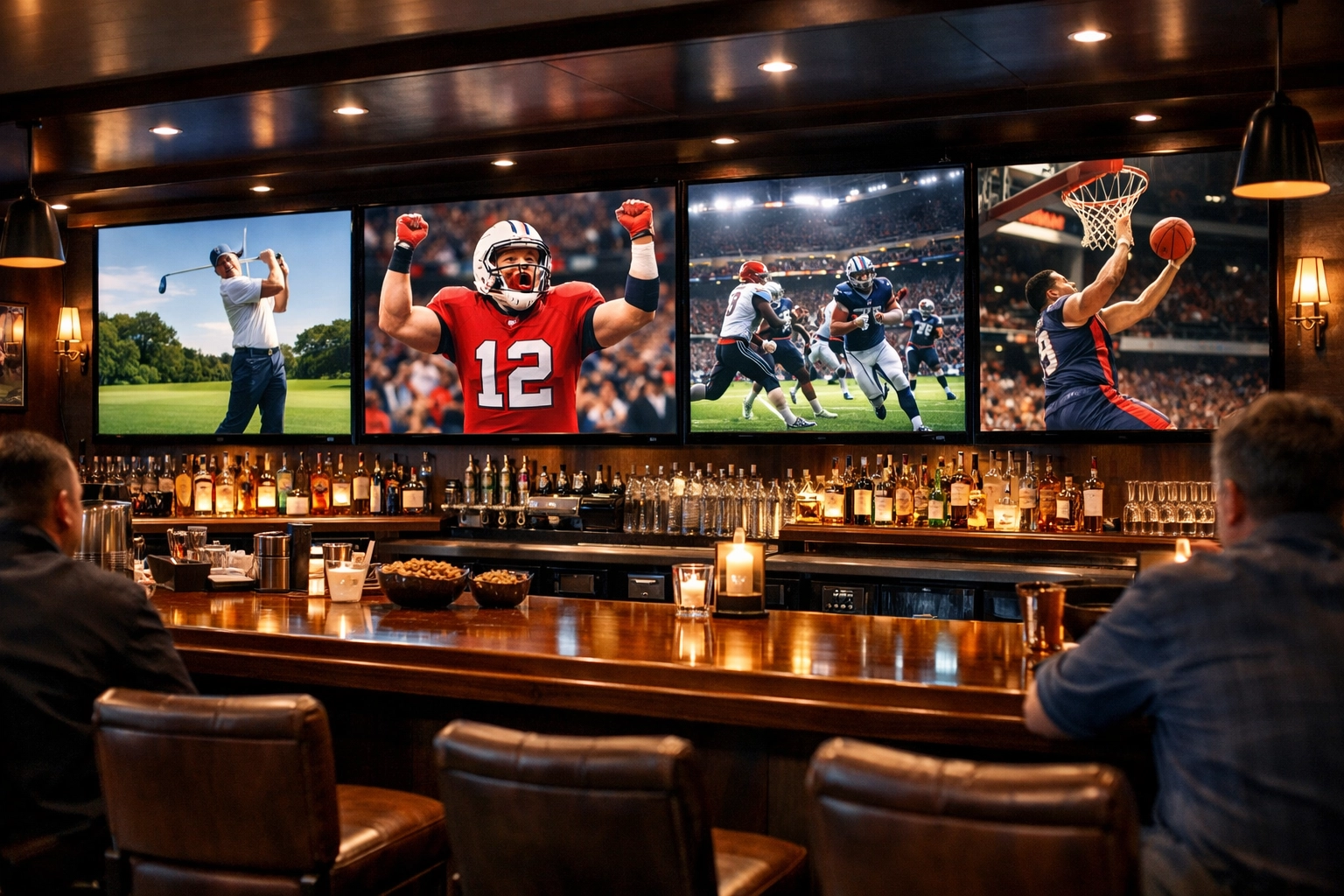
The majority of fans watch games at sports bars and restaurants. Statistics show that over 90 percent of fans aged 21 to 34 and nearly 90 percent of those aged 35 to 54 frequent these venues. Placing ads during pre-game warm-ups, halftime breaks, and post-game celebrations captures fans at their peak engagement moments. These environments are ideal for beverage brands, sports betting apps, and casual dining chains.
The 48-Hour Pre-Game Window
The two days leading up to a kickoff are critical. During this time, fans are planning logistics, checking betting lines, and building anticipation. Digital screens in transit hubs, commuter pathways, and retail centers are perfect for countdown clocks and broadcast reminders. To learn more about how these screens operate, exploring the concept of Sportrons can provide deeper insight into high-impact hardware.
Geo-Fenced Stadium Surrounds
Using location intelligence allows brands to target areas with dense fan loyalty. This includes billboards on major routes to the stadium or screens in residential lobbies where fans live. Keeping a brand top-of-mind as fans travel to and from an event ensures that the brand remains part of the total game-day experience.
Data-Driven Targeting and Precision
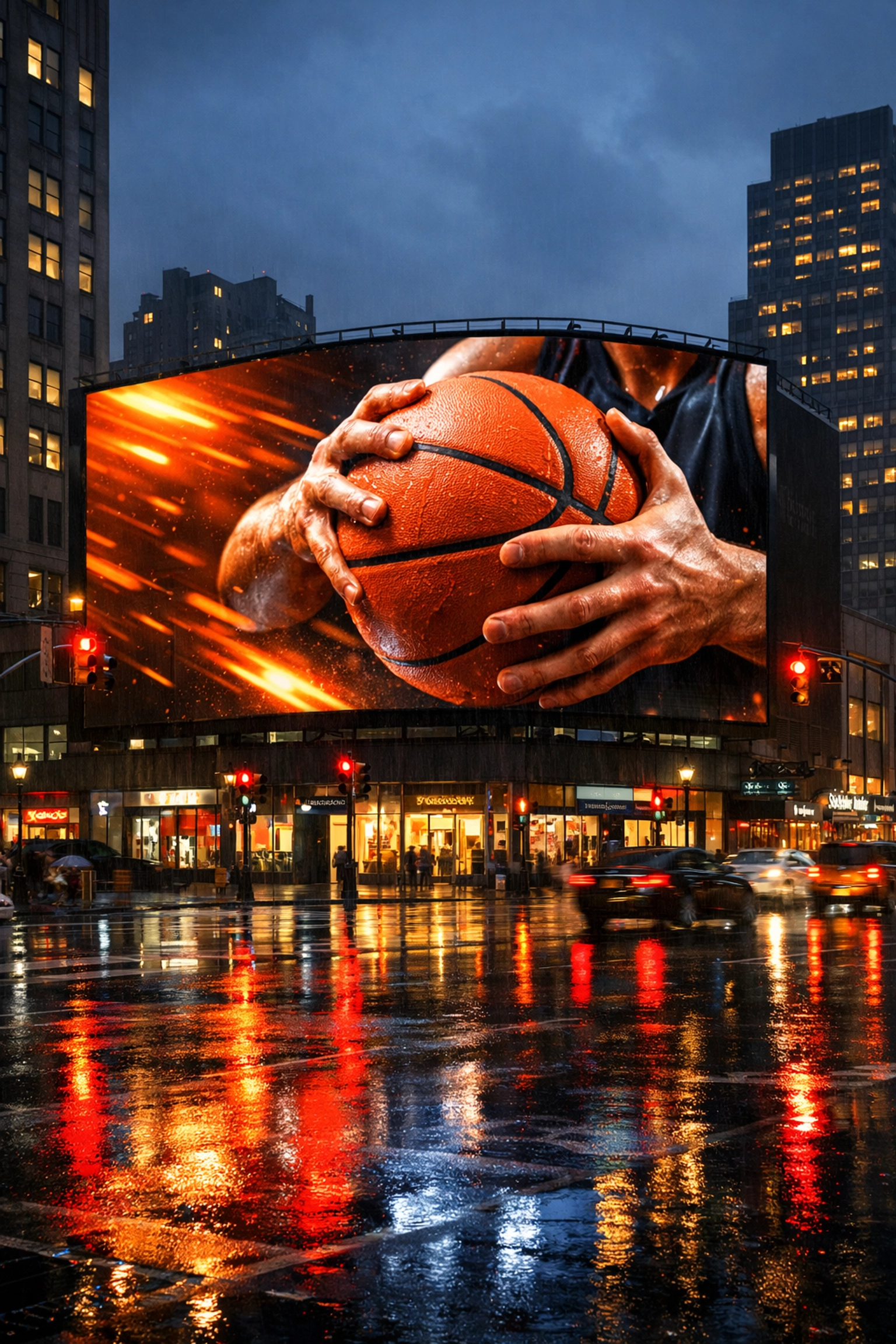
Modern DOOH is powered by location intelligence and mobility data. Media buyers no longer have to guess who is seeing their ads. They can understand the exact movement patterns, frequency of exposure, and behavioral traits of the audience passing a screen.
Programmatic DOOH enables real-time bidding on inventory. This ensures that ads only appear when the target audience is most likely to be present. For example, if data shows that target fans are most active in a certain downtown district three hours before a game, the campaign can be tuned to prioritize those screens during that specific window.
This level of precision leads to measurable results. By analyzing device IDs exposed to the ads, brands can track foot traffic to retail locations or lift in brand search queries. This data-backed approach provides the transparency that brand managers need to justify their media spend.
Proven Results in the Industry
The effectiveness of these strategies is not just theoretical. Major brands have already seen significant success by integrating programmatic DOOH into their sports marketing mix.
For instance, when looking at beverage launches, campaigns have driven substantial increases in purchase consideration. A notable study showed a 74 percent lift in purchase consideration for a vodka launch through the use of programmatic DOOH. Similarly, other brands in the refreshment category have seen a 119 percent lift in positive brand image by utilizing these dynamic placements.
Even brands that are not official sponsors of major events can find success. By strategically placing ads in key geographic locations during high-profile sports weeks, brands can create an "ambush" effect that makes them feel like part of the event. A classic example is how Nike utilized NYC locations to maintain a dominant presence during a marathon without being an official sponsor. These results are detailed further in various case studies that highlight the power of creative placement.
The Path Forward: Digital and Physical Immersion
The future of sports media is one where the boundary between the digital world and the physical world continues to dissolve. Smart venues and urban environments are increasingly integrating DOOH screens with mobile apps to create interactive experiences.
Brands that embrace this digital-physical immersion will be the ones that capture the loyalty of the next generation of fans. Success requires moving from being a mere sponsor of a game to becoming a fixture in a fan’s life. From the morning commute to the evening errands, delivering clear and compelling messages through DOOH builds an authentic relationship that lasts long after the final whistle.
Innovation in sports DOOH is not just a trend. It is a fundamental shift in how we communicate with a mobile, tech-savvy audience. By leveraging programmatic buying, dynamic creative, and strategic touchpoints, media buyers can ensure their message is always in the right place at the right time.
For more information on how to implement these strategies, feel free to visit our blog or contact us to discuss your next campaign.