
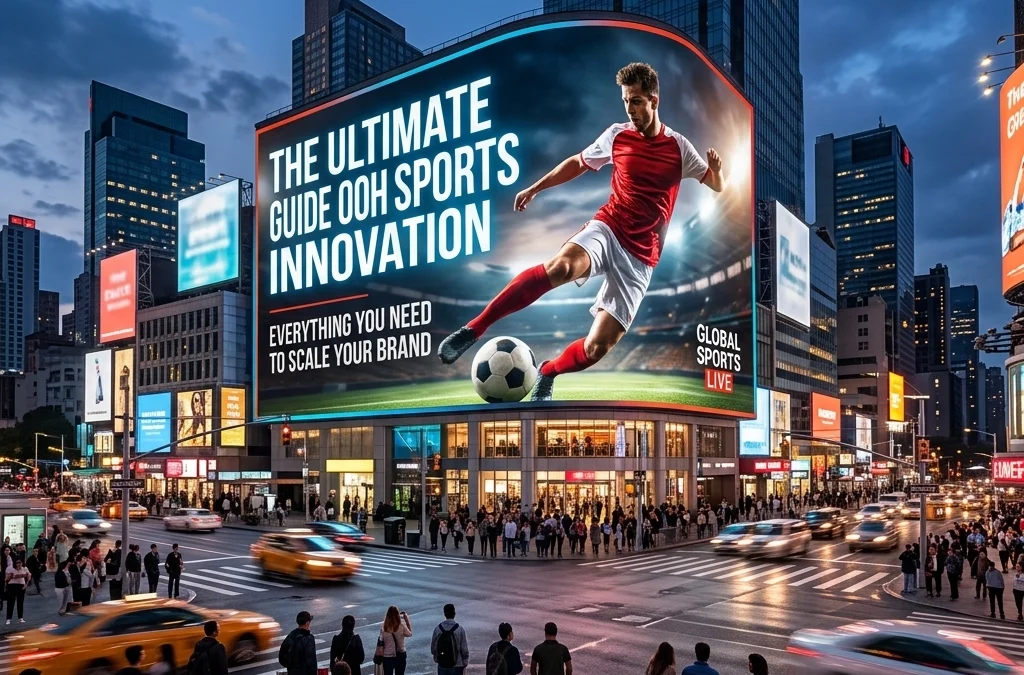
Out-of-home (OOH) advertising has undergone a significant transformation, evolving from static paper billboards into a sophisticated digital ecosystem. For brands looking to scale within the sports industry, this medium offers a unique combination of massive physical presence and high-tech digital precision. In a world where digital fatigue is common, the physical world provides a space that is unskippable, impactful, and inherently social.
Effective sports marketing innovation relies on reaching fans when their emotional engagement is at its peak. Whether it is the anticipation before a kickoff or the celebration after a victory, the environment surrounding sports events provides a fertile ground for brand growth. This guide outlines the strategies, technologies, and execution tactics necessary to master modern OOH sports advertising.
Strategy: The Unskippable Power of Physical Presence
The primary advantage of OOH in a sports context is its inability to be ignored. Unlike mobile or television advertisements, physical displays cannot be blocked, skipped, or silenced. Research indicates that OOH advertising drives significantly more social activations per dollar spent compared to other media channels. When a fan sees a high-impact digital display in a high-traffic area, the likelihood of that fan searching for the brand or sharing the content on social media increases dramatically.
For younger demographics, specifically Gen Z, the impact is even more pronounced. A high percentage of these consumers report taking action after seeing compelling physical advertisements. This creates a bridge between the physical world and the digital landscape, allowing brands to start a conversation on the street that continues on a smartphone.

Objective & Strategy: The Decision Zones Framework
Scaling a brand requires more than just placing advertisements near a stadium. It requires a strategic understanding of the fan journey. The Decision Zones framework identifies key areas where fans are most receptive to brand messaging and most likely to make purchasing decisions.
Entertainment Districts
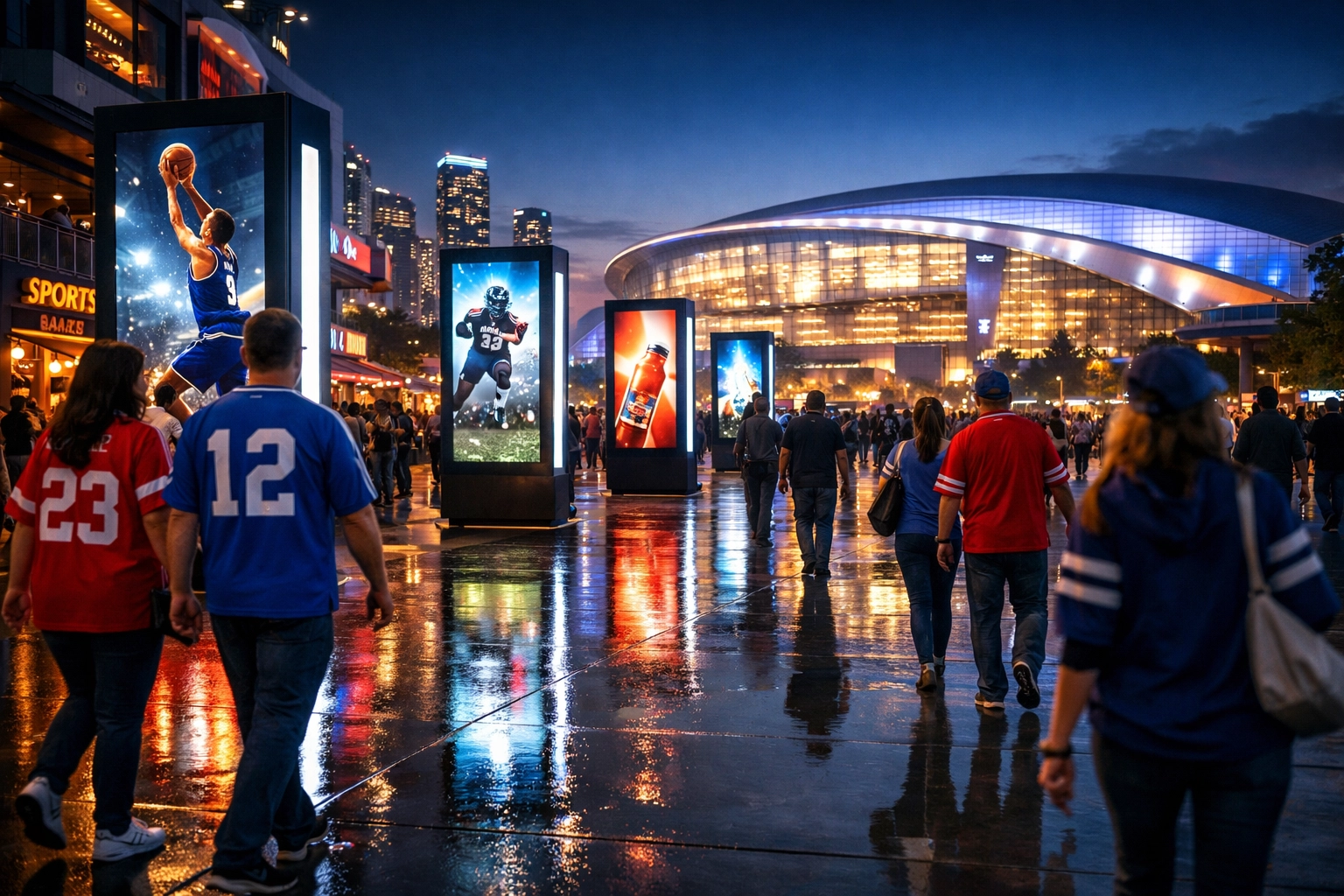
These are areas where fans gather before and after events. High-foot-traffic zones, such as outdoor shopping malls or restaurant rows, are ideal for interactive digital displays. These placements encourage social sharing and provide a high dwell time, allowing the brand message to resonate.
Stadium Approach Routes
The 30 to 60 minutes before a game begins represents a peak window for fan excitement. Brand recall is highest during this time. Strategic placements along primary routes to the venue ensure that the brand is the last thing a fan sees before entering the stadium.
Transit Wait Points
Rideshare lots, train platforms, and shuttle queues are high-dwell-time locations. Fans in these areas are often looking at their phones or their surroundings while they wait. This creates a perfect opportunity for geofenced advertisements that trigger digital interactions.
Bars and Sports Restaurants
The conversation does not end when the game does. Post-game venues are critical for maintaining brand momentum. By placing advertisements in these secondary gathering spots, brands can capitalize on the post-game analysis and social atmosphere.
Technology: The Rise of Programmatic DOOH
The integration of technology into out-of-home advertising, known as Digital Out-of-Home (DOOH), has introduced a level of flexibility previously unavailable to brand managers. Programmatic buying allows for the purchase of inventory in real time, based on audience movement patterns and specific environmental triggers.
Dynamic Creative Optimization
One of the most innovative aspects of DOOH is the ability to change creative content instantly. Advertisements can adapt based on real-time factors such as:
- Live sports scores and game results.
- Local weather conditions.
- Traffic patterns.
- Time of day.
This level of relevance ensures that the creative is always tied to the moment. Industry data suggests that creative referencing specific local events or real-time game outcomes can drive more than double the recall compared to generic messaging.
Real-Time Measurement and Analytics
Modern OOH platforms provide detailed data on impressions and audience interactions. By using anonymized mobile location data, advertisers can understand the dwell time and movement patterns of the people exposed to their ads. This data-driven approach moves OOH from a "guesswork" medium to a precise, measurable component of a marketing stack.
Integration: Bridging Physical and Digital
OOH sports marketing is most effective when it functions as part of an omnichannel strategy. The goal is to create a seamless experience for the consumer as they move from the physical world to their digital devices.
Geofencing and Retargeting
By establishing virtual boundaries around OOH assets, brands can identify mobile devices that have been exposed to a specific advertisement. These users can then be retargeted with follow-up ads on social media or search engines. This reinforces the message and provides a clear path to conversion, such as a website visit or an app download.
Content Generation and Influencers
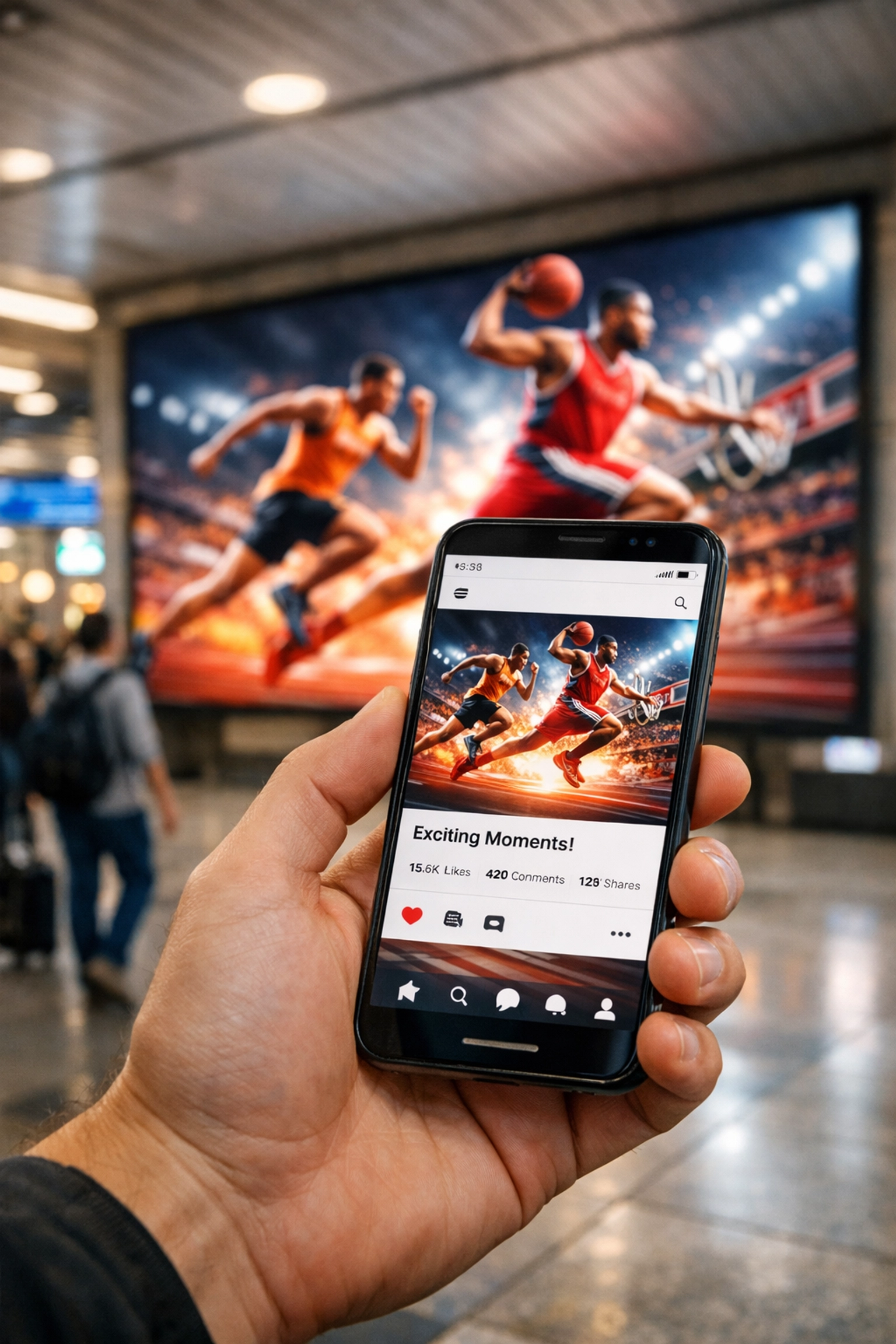
Bold and creative OOH displays often serve as high-production backgrounds for content creators. When a brand creates a visually stunning or interactive installation, it becomes shareable content. This organic social engagement extends the reach of the physical asset far beyond its geographic location.
Results: Case Studies in Innovation
The effectiveness of these strategies is best illustrated through successful campaign execution. Various brands have utilized the OOH Sports approach to achieve measurable growth in brand preference and purchase consideration.
For example, the launch of a new beverage product utilized programmatic DOOH to drive a 74% lift in purchase consideration. By targeting specific high-traffic zones during key leisure times, the campaign successfully reached the intended audience when they were most likely to buy. This case study can be reviewed in detail at White Claw Programmatic DOOH Results.
In another instance, a campaign focused on brand image saw a 119% lift in positive perception by using dynamic creative that responded to local environmental signals. The details of this strategy are available at Brand Image Lift Case Study.
Furthermore, the impact on purchase consideration was clearly seen in a campaign for outdoor recreational equipment, which achieved a 144% increase. This was accomplished by placing ads in locations where the target audience was already in a mindset for adventure and outdoor activities. More information is available at Sea-Doo Campaign Analysis.
Even brands that are not official sponsors of major events can achieve dominance through strategic OOH placement. During a major marathon event, a leading athletic brand used surrounding OOH assets to create a presence so strong that consumers perceived them as a primary sponsor. The strategic execution of this "ambush" marketing can be found at Nike NYC Marathon Strategy.
Scaling Tactics for Brand Managers
To effectively scale a brand using OOH sports innovation, media buyers and brand managers should follow a systematic approach:
- Leverage a Network Effect: Utilize a broad network of digital screens, such as those provided by Sportrons, to ensure national or regional coordination.
- Prioritize Agility: Use programmatic platforms to remain flexible. If a certain location or creative is underperforming, it can be adjusted in real time without the costs associated with traditional static media.
- Focus on High-ROI Zones: Avoid spreading the budget too thin. Focus investments on the Decision Zones where the fan journey is most impactful.
- Implement Attribution Tracking: Use device ID tracking and brand lift studies to prove the effectiveness of the campaign. This data is essential for justifying future marketing spend.
The Future of OOH Sports Innovation
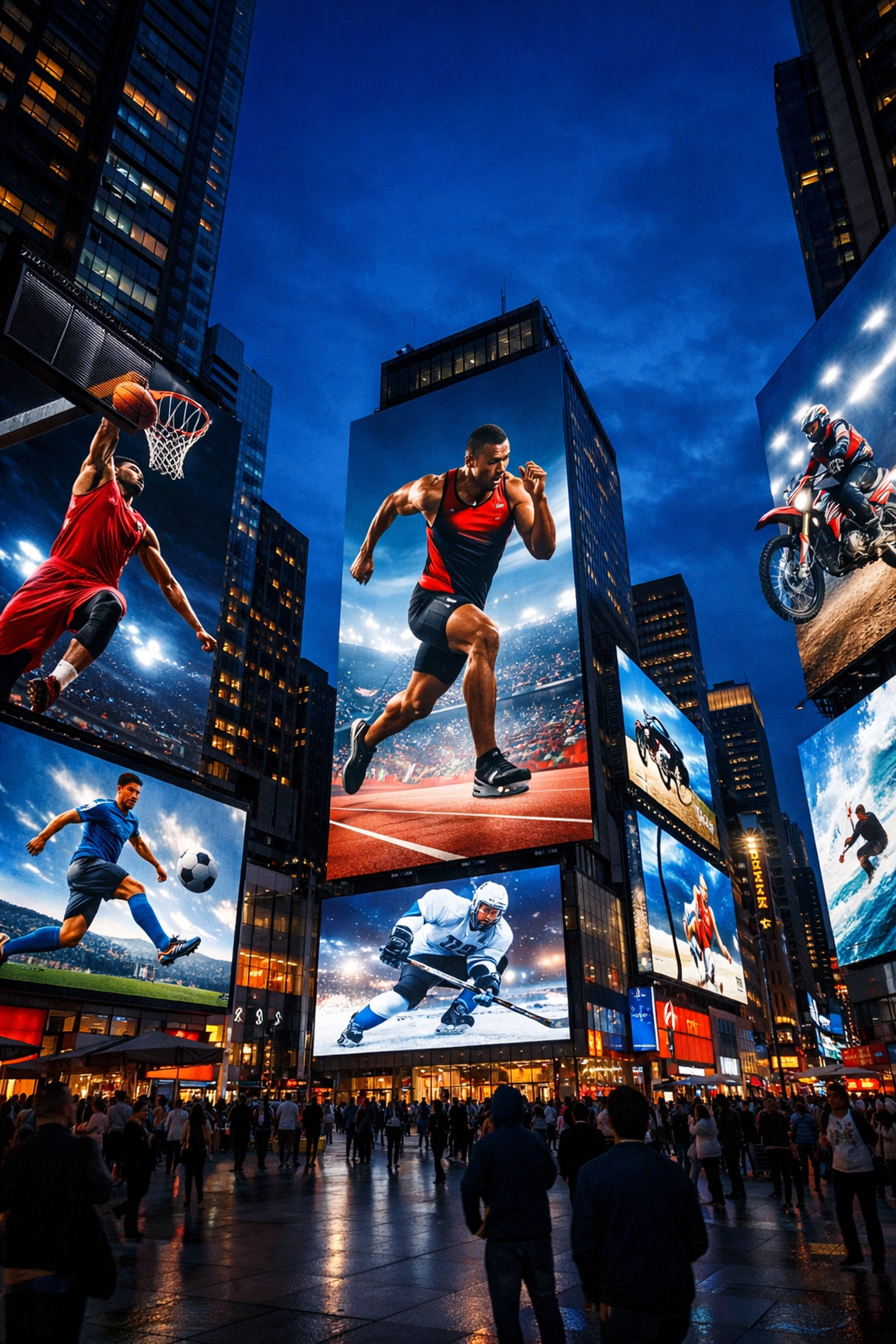
As technology continues to advance, the opportunities for brand scaling will only increase. Future trends in the industry point toward several key developments:
- AI-Driven Targeting: Predictive analytics will allow for even more precise programmatic buying, identifying where an audience will be before they even arrive.
- Shoppable Screens: The integration of "tap-to-buy" or QR code technology will turn every digital screen into a point of sale.
- Sustainable Innovation: There is a growing focus on using renewable energy and sustainable materials for physical displays, aligning brand marketing with corporate social responsibility goals.
- Augmented Reality (AR): Using OOH displays as triggers for AR experiences on fans' mobile devices will further blur the line between the physical and digital worlds.
By staying ahead of these trends and utilizing the strategic frameworks outlined in this guide, brands can ensure they remain at the forefront of sports marketing innovation. For those ready to begin their journey, more resources and contact information can be found at OOH Sports Contact.