
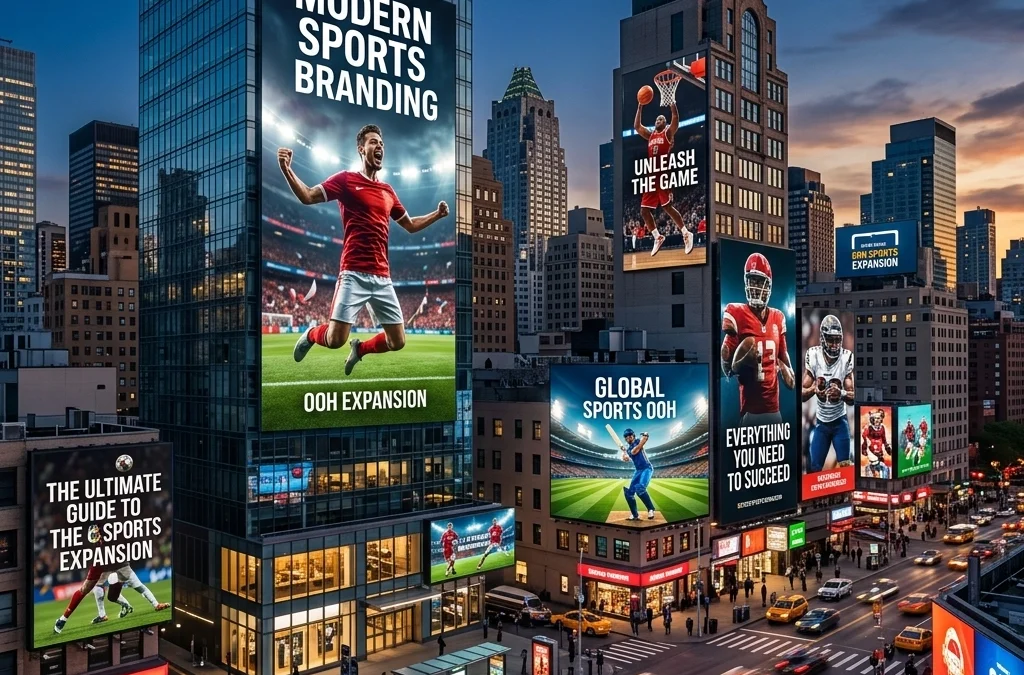
The landscape of sports advertising is undergoing a fundamental transformation. As traditional broadcast viewership fragments and stadium naming rights reach record price points, a more agile and measurable alternative has emerged. OOH Sports has officially expanded its digital out-of-home (DOOH) advertising network to include more than 25,000 digital screens across the United States. This expansion represents a significant milestone in the company’s growth, offering media buyers and brands an unprecedented level of access to highly engaged sports fans in real-world environments.
This guide explores the mechanics of the OOH Sports expansion, the technology driving its success, and the strategic advantages it offers to brands looking to dominate the modern sports branding space.
The Milestone: 25,000 Screens and National Reach
The core of the OOH Sports expansion is the sheer scale of the network. By surpassing 25,000 digital screens, the network now provides a comprehensive national footprint that covers major metropolitan markets and secondary cities. This growth ensures that advertisers can execute large scale campaigns that follow the fan journey from daily commutes to leisure activities.
Unlike traditional billboards that rely on passive viewership, the OOH Sports network is strategically positioned in high-traffic, high-dwell-time locations. The network is no longer just a collection of screens, it is a synchronized ecosystem designed to capture attention when fans are at their most receptive.

Strategic Venue Placement: Beyond the Stadium
The expansion focuses on diversifying venue categories to ensure contextual relevance. The modern sports fan does not just exist inside a stadium, they are active participants in a wide range of social and wellness environments. The OOH Sports network targets these specific touchpoints:
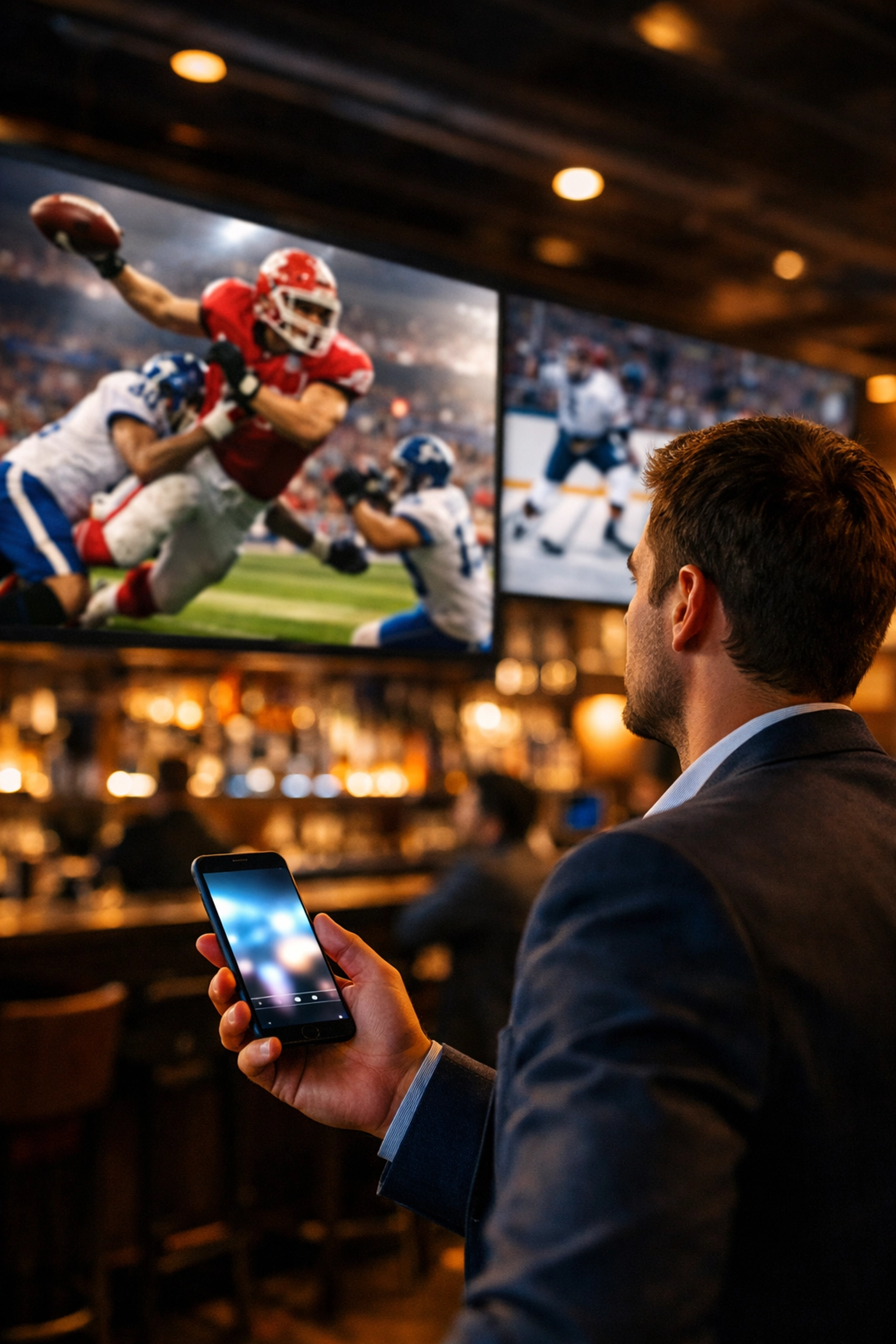
- Sports Bars and Entertainment Districts: These locations offer an average dwell time of two to four hours during live game broadcasts. This creates an environment where brand messaging is not just seen once, but reinforced multiple times during a single visit.
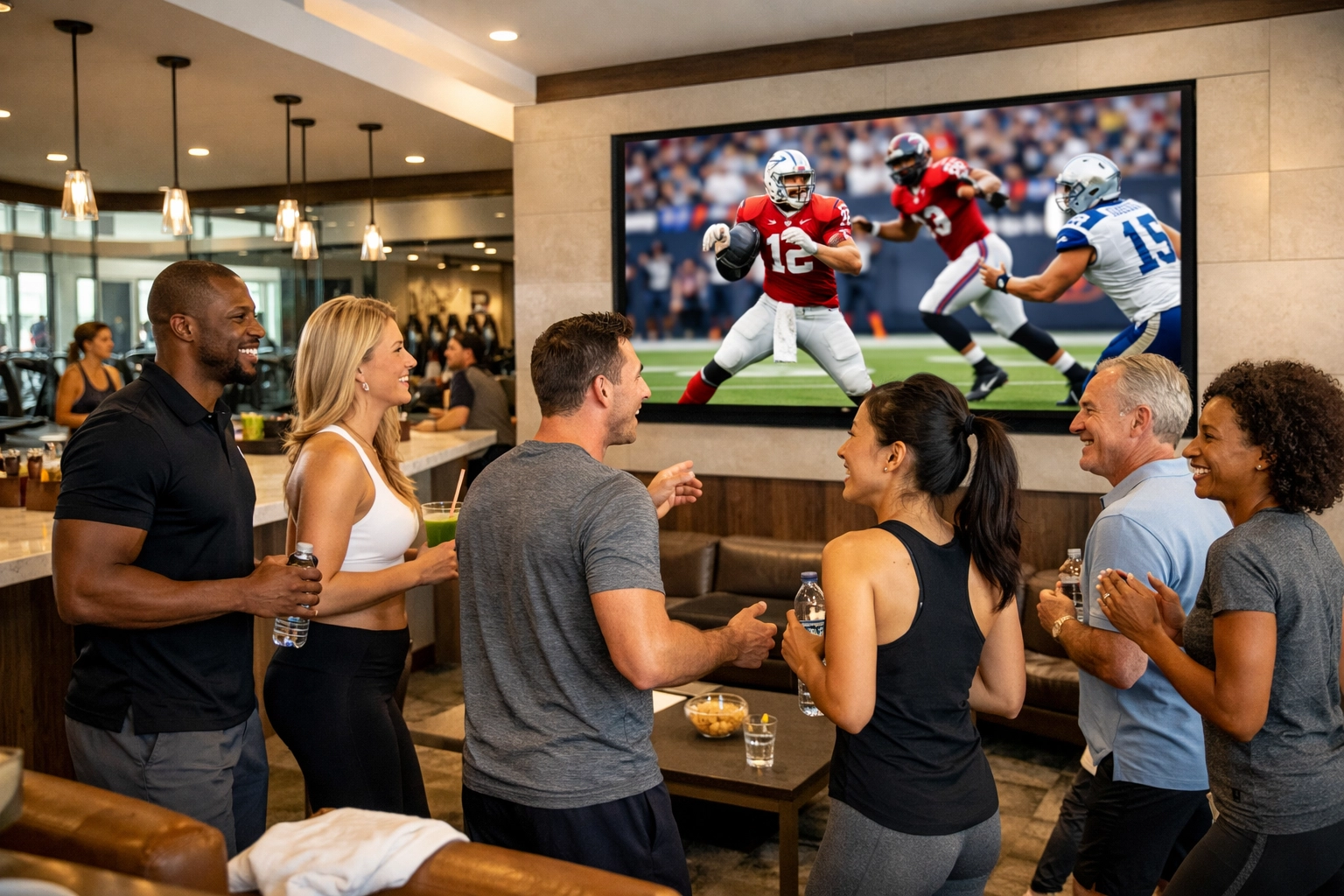
- Fitness Centers and Wellness Facilities: Reaching active consumers in a mindset focused on health and performance allows sports apparel and nutrition brands to align with consumer goals.
- Golf and Bowling Venues: These recreational spaces attract a high-income demographic during extended periods of leisure, providing a premium environment for luxury and automotive brands.
- Transit Hubs and High-Traffic Retail: Strategic placement in areas like New York City ensures that brand messaging remains visible during the daily commute, maintaining top-of-mind awareness.
By placing screens where fans naturally gather, the network bypasses the clutter of traditional advertising and places brands directly into the lifestyle of the consumer.
The Technology Behind the Growth: Programmatic DOOH
The true power of the OOH Sports expansion lies in its technological infrastructure. The platform utilizes programmatic digital out-of-home (pDOOH) technology, which allows for the automated buying and selling of ad inventory. This shift from manual, contract-heavy processes to data-driven automation offers several key benefits for media buyers.
Real-Time Flexibility
Traditional outdoor advertising often requires weeks of lead time and long-term commitments. The OOH Sports programmatic platform allows for real-time campaign adjustments. If a specific team makes a playoff run or a sudden weather event shifts consumer behavior, brands can pivot their creative and targeting instantly.
Geofencing and Mobile Integration
One of the most advanced features of the network is the integration of geofencing and mobile device ID tracking. When a consumer is exposed to an ad on an OOH Sports screen, the platform can capture anonymized mobile device IDs. This enables a sophisticated omnichannel approach where brands can retarget the same audience on their mobile devices and social media feeds later in the day.
Objective and Strategy: Delivering Measurable ROI
In the past, out-of-home advertising was often criticized for a lack of measurable results. OOH Sports has addressed this by focusing on data-driven attribution and brand lift studies. The expansion is supported by a robust framework designed to prove the effectiveness of every impression.
The objective of the network expansion is to move beyond simple "brand awareness" and deliver tangible business outcomes. This is achieved through a three-pillared strategy:
- Audience Segmentation: Using location-based data to ensure ads are shown to the right demographic, primarily focusing on the 21-54 male skew with above-average household income.
- Creative Optimization: Supporting high-definition video and dynamic content that adapts to the specific venue and time of day.
- Closed-Loop Measurement: Partnering with specialized platforms to track purchase intent, brand preference, and actual sales lift.
Proven Results: Analyzing Recent Success Stories
The effectiveness of the OOH Sports network is best demonstrated through the results achieved by major global brands. These case studies highlight how the expanded network delivers significant lifts in key performance indicators.
White Claw: Driving Purchase Consideration
For the launch of its vodka product line, White Claw utilized programmatic DOOH to reach consumers in social environments. The campaign focused on high-dwell-time venues where alcoholic beverage decisions are often made. The results showed a 74% lift in purchase consideration, proving that contextual placement in sports-centric environments directly influences consumer intent. Detailed insights on this campaign can be found at the White Claw case study page.
Mike’s Hard Iced Tea: Enhancing Brand Image
Mike’s Hard Iced Tea leveraged the network to improve brand perception among sports fans. By utilizing the Sportrons technology within the OOH Sports network, the brand achieved a 119% lift in positive brand image. The campaign succeeded by aligning the brand with the high-energy, positive atmosphere of live sports viewing.
Sea-Doo: Increasing Purchase Intent
Even for high-ticket items like personal watercraft, the network delivers. Sea-Doo’s first digital OOH campaign resulted in a 144% increase in purchase consideration. This success was attributed to the ability to target high-income consumers in recreational and fitness environments where outdoor lifestyle messaging resonates most effectively.
OOH Sports vs. Traditional Stadium Ads: A Comparative Analysis
A common question for sports marketers is whether to invest in traditional stadium sponsorships or digital out-of-home networks. While stadium ads offer high prestige, the OOH Sports network provides a more efficient return on investment (ROI).
Traditional stadium ads are often static, expensive, and limited to the duration of the game. In contrast, the OOH Sports expansion offers:
- Lower Entry Costs: Brands do not need multi-million dollar budgets to access a sports-focused audience.
- Granular Targeting: Advertisers can select specific zip codes, venue types, and times of day, reducing wasted impressions.
- Extended Exposure: While a stadium ad is seen for three hours, the OOH Sports network maintains presence across the entire week in multiple locations.
For a deeper look at this comparison, the ROI analysis on programmatic DOOH vs. stadium ads provides a detailed breakdown of the cost-per-thousand (CPM) advantages.
Executing a Successful Campaign on the Expanded Network
For media buyers looking to capitalize on the 25,000-screen expansion, the execution process is streamlined through the OOH Sports marketing portal. Success on the platform generally follows a standardized logistical flow:
- Define the Audience: Identify the specific sports fan demographic based on venue type and geography.
- Select Technology Partners: Utilize integrated DSPs (Demand Side Platforms) like StackAdapt to manage programmatic bidding and inventory selection.
- Creative Deployment: Upload high-resolution assets that are optimized for the specific aspect ratios of the network’s digital screens.
- Monitor and Optimize: Review real-time performance data and adjust bidding strategies or creative rotations to maximize engagement.
- Measure Impact: Conduct a post-campaign brand lift study to quantify the increase in awareness, consideration, and intent.
The Future of Sports Branding
The expansion of the OOH Sports network to 25,000 screens is more than just a growth metric, it is a signal of where the advertising industry is heading. As privacy regulations make digital tracking more difficult and television advertising becomes more cluttered, the physical world remains the most reliable place to reach consumers.
By combining the scale of traditional outdoor advertising with the precision of digital programmatic technology, OOH Sports provides a bridge between the physical and digital worlds. For brands looking to succeed in modern sports branding, the expanded network offers the reach, the relevance, and the results necessary to stand out in a competitive market.
The growth of this network ensures that whether a fan is at a sports bar in Chicago, a fitness center in Los Angeles, or a transit hub in New York, your brand can be a part of their experience. This is the new standard for sports marketing. For more information on how to integrate these strategies into your next campaign, visit the OOH Sports about page or review the latest industry insights on the blog.