
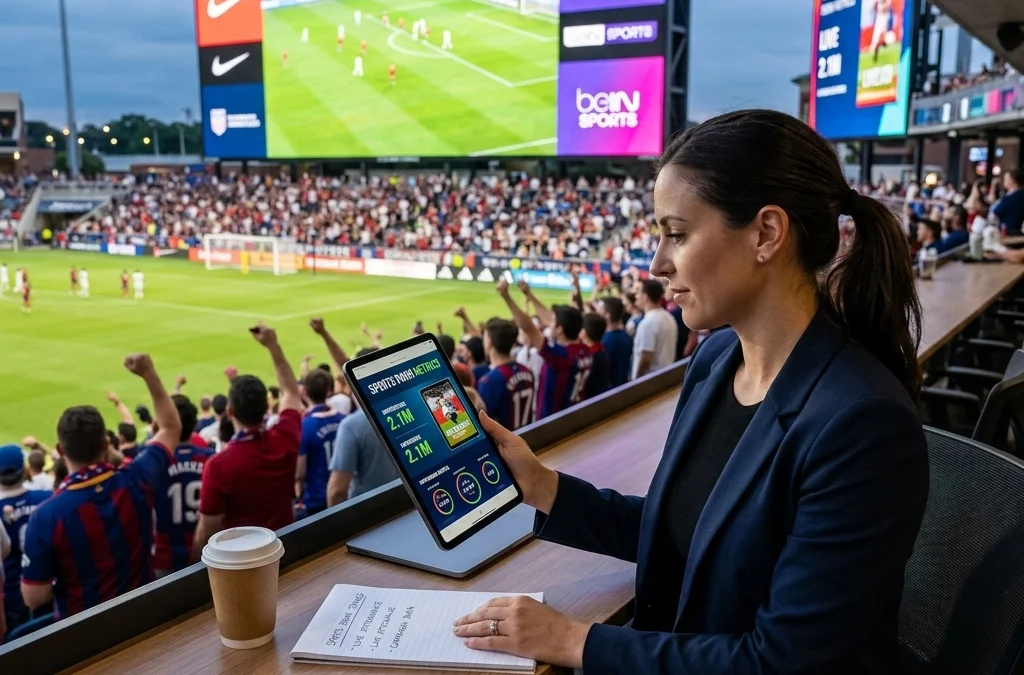
The landscape of sports marketing has undergone a significant transformation. In a world defined by direct-to-fan streaming, hyper-personalization via artificial intelligence, and year-round community engagement, traditional advertising methods often struggle to keep pace. Digital Out-of-Home (DOOH) has emerged as the critical mechanism enabling media planners to execute high-impact strategies at scale. By shifting from a purely location-based buy to a routine-based strategy, brands can now integrate themselves into the daily lives and emotional journeys of sports fans.
The current OOH Sports network encompasses more than 25,000 digital screens strategically placed across sports venues, fan congregation points, and high-traffic transit hubs. This guide outlines the essential components for mastering these digital trends and achieving measurable success in the modern sports environment.
The Strategy: Mapping the Fan Journey
Successful media planning in the sports sector requires a deep understanding of the "Fan Moment Map." This framework divides fan engagement into three distinct phases: pre-game, during-game, and post-game. Each phase requires a different creative approach and messaging strategy to effectively capture attention.
Phase 1: Pre-Game Anticipation (48 Hours to Kickoff)
The pre-game phase is characterized by logistics and rising excitement. Fans are actively seeking information regarding opponent matchups, kickoff times, and ideal viewing locations. Media planners should deploy screens in strategic locations where fans naturally congregate or pass through during this window:
- Transit hubs such as airports, train stations, and major highways.
- Office environments and corporate hubs.
- Partner hotels and hospitality centers.
Effective creative formats for this stage include broadcast schedules, live betting lines, and countdown clocks. These elements provide utility while building anticipation. For example, dynamic countdown timers leading up to a major kickoff can prompt fans to finalize their fantasy sports lineups or purchase game-day supplies.
Phase 2: During-Game Collective Attention
When the game begins, the focus shifts to concentrated energy and communal reaction. For fans not physically present in the stadium, "watch spaces" such as bars and restaurants become the primary touchpoints. This is where dynamic creative optimization (DCO) becomes essential. 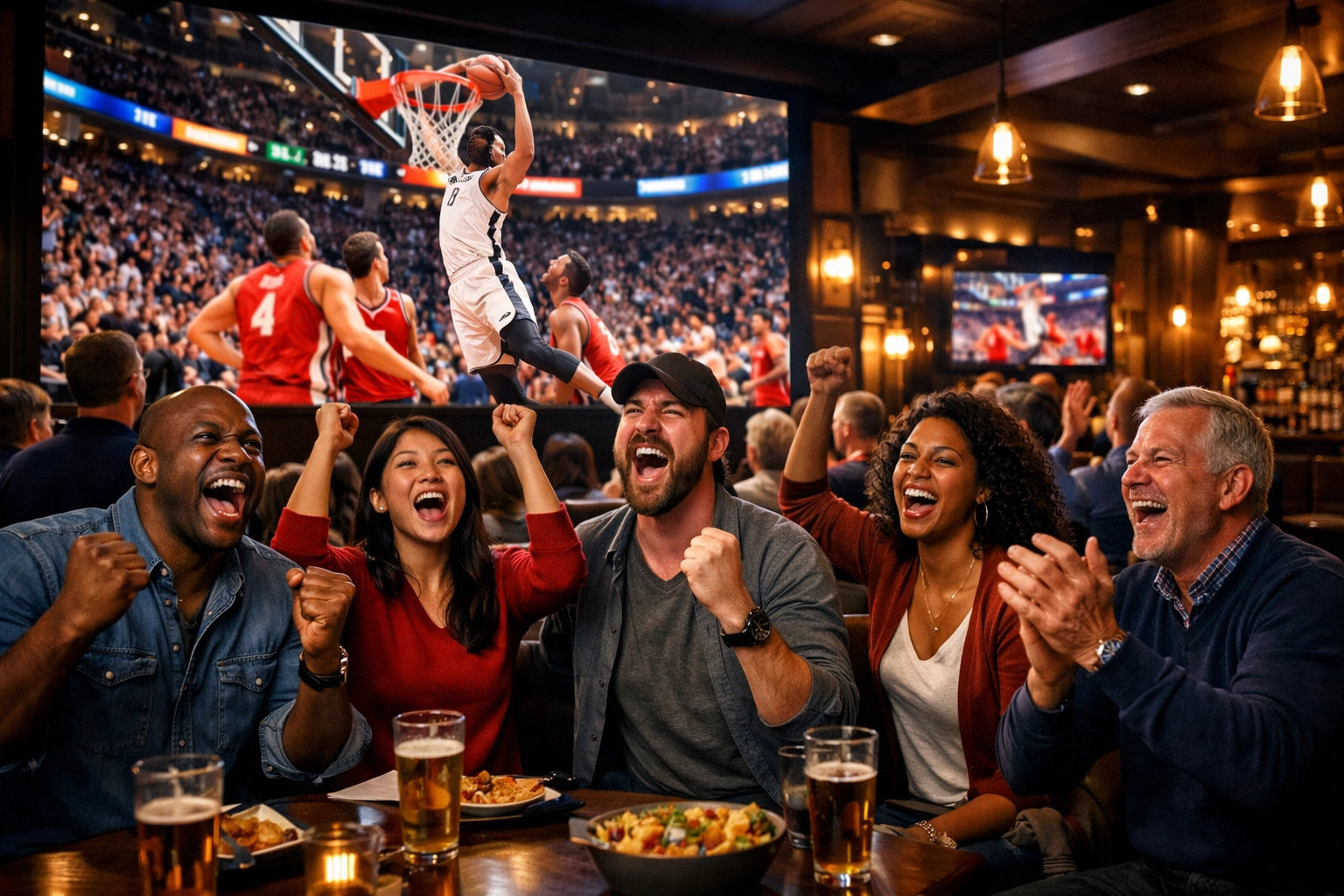
Advertisers can utilize real-time data feeds to ensure messaging reacts to the action on the field. Strategic tactics include:
- Celebrating home team scores with instant congratulatory creative.
- Shifting messaging at halftime to promote food and beverage refills.
- Reacting to live scores and game momentum to maintain relevance.
The priming effect of omnichannel reinforcement is particularly strong during this phase. When a digital urban panel seen during a commute is reinforced by a live trigger during the game, the memory structure of the campaign is significantly strengthened.
Phase 3: Post-Game Celebration and Wind-Down
The fan experience does not end with the final whistle. Shared cultural moments unfold at local bars, city centers, and transit routes as fans head home. Media planners can extend brand presence into these environments to capture the post-game "glow" or provide convenient solutions for the journey home.
Objective and Strategy: Leveraging Extended Windows
Unlike traditional broadcast advertising, which operates within limited 30-second windows, DOOH campaigns accumulate impressions over a much longer duration. The journey begins the moment a fan leaves their home and continues until they return. This extended timeline offers multiple opportunities for reinforcement rather than siloed activations.
Planners should coordinate messaging across "shoulder programming." This includes pre- and post-game highlights, player interviews, and social media reels. By integrating DOOH with connected TV (CTV) and mobile experiences, brands can create a seamless narrative that follows the fan across every device and physical location. More information on these integrated strategies can be found at https://oohsports.com/marketing.
Technology Partners and Execution
The transition to programmatic DOOH has revolutionized how inventory is purchased and managed. Programmatic technology allows advertisers to secure access to high-demand venues and engage audiences with surgical precision.
Dynamic Creative Optimization (DCO)
DCO allows for the automated delivery of ad variations based on external data triggers. In sports, these triggers might include weather conditions, game outcomes, or even local traffic patterns. For instance, an apparel brand might trigger ads for branded rain gear if a stadium experiences a sudden downpour, while a delivery service might increase visibility if a game goes into overtime, signaling a longer night for fans at home.
Strategic Location Targeting
The use of Sportrons and other specialized digital displays allows for high-density targeting in environments where fans are most receptive. Planners should focus on:
- Major Event Enthusiasts: Targeting fans of the FIFA World Cup, Super Bowl, or NBA Finals.
- Loyal Team Supporters: Delivering regional pride messaging in specific home-team markets.
- Venue Attendees: Re-engaging audiences who have recently visited MLB, NFL, or NHL stadiums through mobile retargeting based on device IDs exposed to DOOH screens.
Measurable Results and Impact
Data-driven decision-making is the cornerstone of modern media planning. The effectiveness of sports DOOH is supported by significant industry metrics and case studies. Research indicates that 81% of sports fans feel more positive toward brands that sponsor or support their favorite sports. 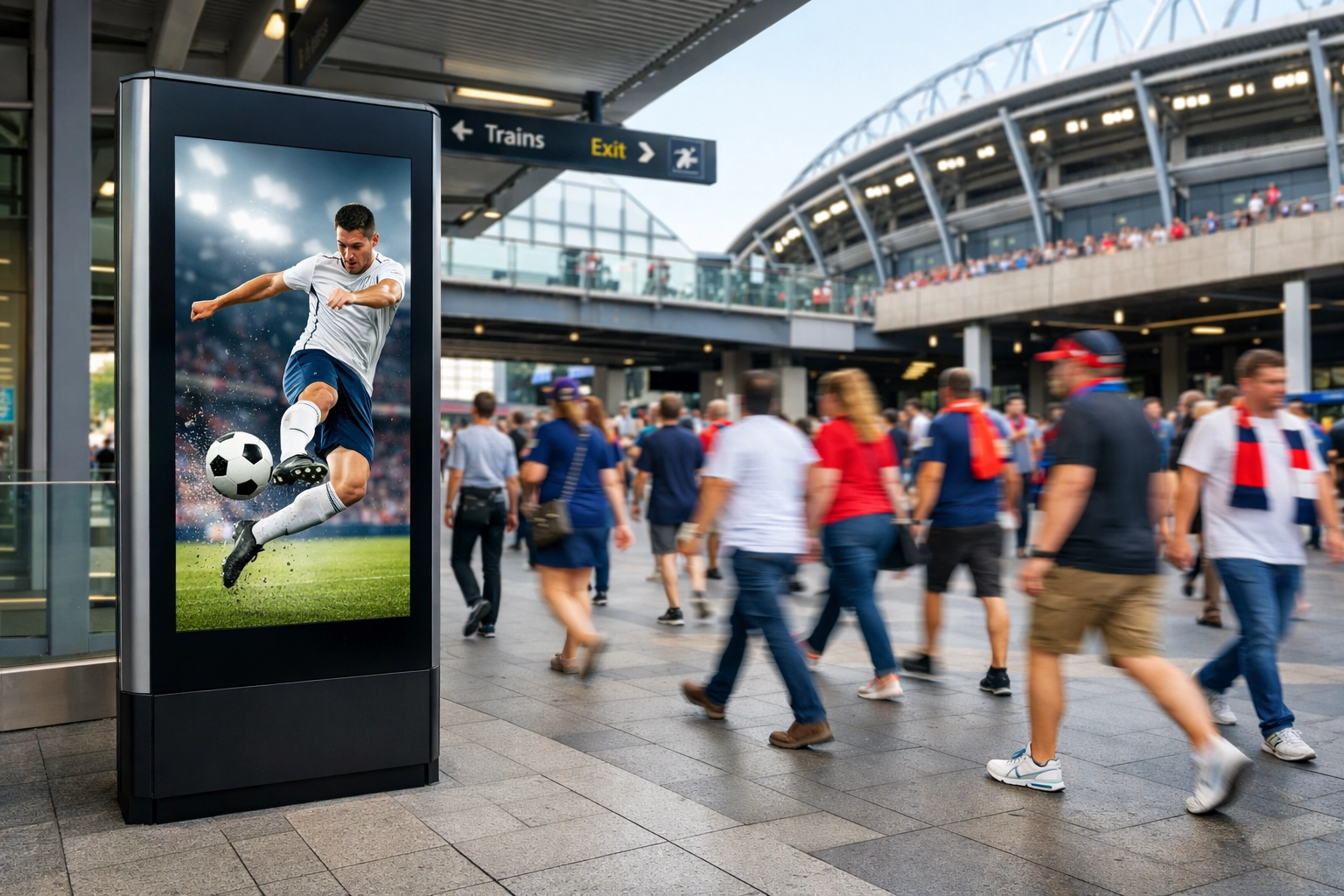
Recent campaigns managed through programmatic channels have demonstrated substantial lifts in brand metrics:
- Purchase Consideration: A campaign for White Claw’s vodka launch utilized programmatic DOOH to achieve a 74% lift in purchase consideration. Detailed logistics of this execution are available at https://oohsports.com/2024/09/21/white-claws-programmatic-digital-out-of-home-campaign-drives-74-lift-in-purchase-consideration-for-vodka-launch.
- Brand Image: AB InBev’s Mike’s Hard Iced Tea saw a 119% lift in positive brand image by leveraging real-time triggers and strategic location placement. The full case study is documented at https://oohsports.com/2024/10/21/ab-inbevs-mikes-hard-iced-tea-sees-a-119-lift-in-positive-brand-image-with-programmatic-dooh-campaign.
- Consumer Intent: Sea-Doo’s inaugural DOOH campaign increased purchase consideration by 144% by targeting high-traffic areas near recreational water sites and sports hubs.
These results illustrate that when DOOH is integrated into a broader media mix, it acts as a powerful catalyst for both brand awareness and bottom-funnel conversions.
Future-Proofing the Media Plan
As the industry moves toward 2030, the sports DOOH market is projected to reach $50 billion. Media planners who adopt these digital trends now will be better positioned to capture their share of this growing market. The focus must remain on utility, relevance, and timing.
Planners are encouraged to move away from static, "one-size-fits-all" creative. Instead, the focus should be on building flexible assets that can be updated instantly via programmatic platforms. This agility ensures that the brand remains a relevant part of the conversation, whether the home team wins in a blowout or loses in a heartbreaker.
Conclusion
Mastering sports DOOH requires a combination of strategic timing, technological fluency, and a deep respect for the fan journey. By leveraging the Fan Moment Map and utilizing programmatic tools, media planners can transform traditional advertising into a dynamic, real-time experience.
For those looking to explore specific venue availability or to start a new campaign, the team at OOH Sports provides the infrastructure and expertise needed to navigate this complex landscape. Visit the contact page to begin the planning process or browse the blog for further industry insights and strategy updates.
By prioritizing data-backed strategies and dynamic execution, brands can ensure their messaging is not just seen, but remembered and acted upon by the most passionate audiences in the world.