
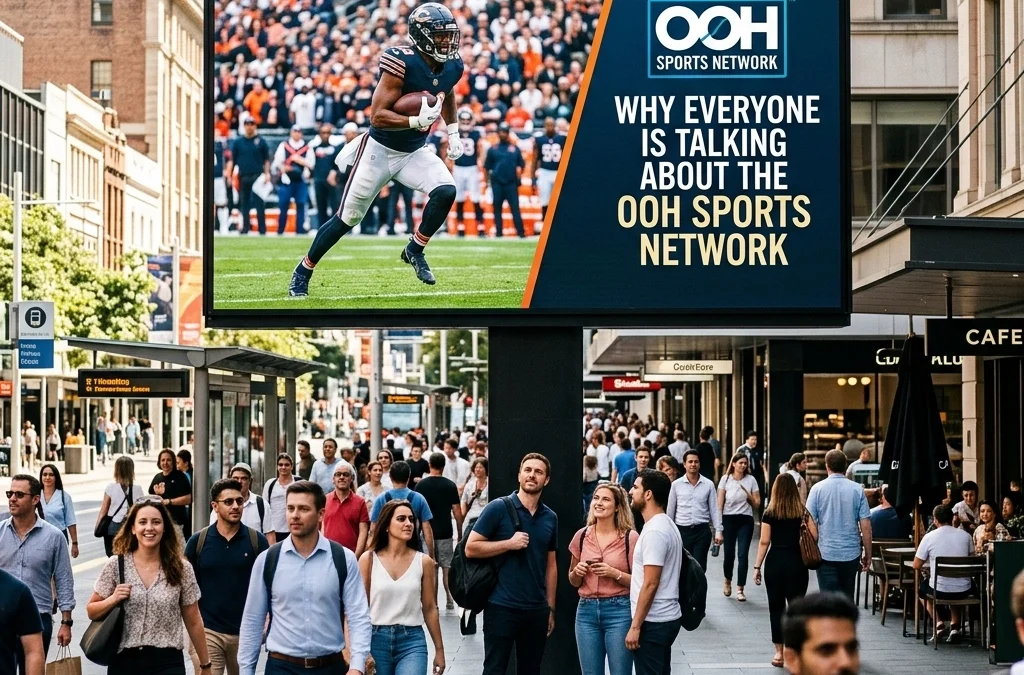
The advertising landscape is experiencing a significant shift as brands move away from saturated digital channels and back toward high-impact, physical environments. At the center of this movement is the OOH Sports Network, which has officially reached a milestone expansion of over 25,000 digital screens. This network now spans stadiums, transit hubs, and fan congregation points, providing a specialized platform for brands to connect with highly engaged audiences.
As traditional digital advertising faces challenges like ad-blocking and consumer fatigue, the out-of-home (OOH) sector is seeing a resurgence. The OOH Sports Network offers a unique value proposition by targeting consumers when they are most receptive: during moments of high emotion and social interaction. This strategic growth represents more than just a numbers game, it reflects a fundamental change in how media buyers approach sports marketing.

The Strategic Objective: Capturing the Fan Journey
The primary objective of the OOH Sports Network is to provide a seamless advertising experience that follows the consumer throughout their entire game-day journey. This is not limited to the time spent inside a stadium. Instead, the strategy encompasses multiple touchpoints.
Research indicates that nearly 6 in 10 adults recall seeing OOH advertisements for major sporting events. More importantly, 90% of those viewers take some form of action after exposure. This high rate of conversion is driven by the network’s ability to place brand messaging in contextually relevant locations. Whether a fan is commuting via a transit hub, grabbing a drink at a sports bar, or walking through a stadium concourse, the network ensures brand visibility remains constant.
The expansion to 25,000 screens allows for a massive reach that traditional broadcast windows often miss. While a 30-second TV spot is limited by time, the OOH Sports Network provides an extended impression window. This ensures that brands can maintain a presence before, during, and after the main event.
Measurable Results: Case Studies in Performance
The success of the OOH Sports Network is documented through various high-profile campaigns that have utilized programmatic digital out-of-home (pDOOH) to achieve specific brand goals. By analyzing data from these campaigns, the effectiveness of the network becomes clear.
For instance, a campaign for White Claw saw significant results when launching a new vodka product. By leveraging programmatic DOOH, the brand achieved a 74% lift in purchase consideration. Detailed information on this execution can be found in the White Claw case study.
Similarly, AB InBev's Mike’s Hard Iced Tea utilized the network to improve brand perception. The campaign resulted in a 119% lift in positive brand image, demonstrating how contextual placement in sports environments can shift consumer sentiment. The full breakdown is available in the Mike's Hard Iced Tea report.
Even brands outside of the beverage industry, such as Sea-Doo, have found success. Their first digital OOH campaign resulted in a 144% increase in purchase consideration. This proves that the network’s audience is not just focused on game-day essentials, but is a broad demographic interested in lifestyle and recreational products. Read more on the Sea-Doo campaign results.

Technology and Programmatic Precision
One of the key reasons media buyers are flocking to the OOH Sports Network is the technological infrastructure. The network utilizes programmatic digital out-of-home (pDOOH) technology, which allows for real-time bidding and precise targeting.
Unlike traditional static billboards, pDOOH enables brands to trigger ads based on specific conditions. This includes weather patterns, live game scores, or specific time slots. Contextual messaging of this nature has been shown to drive a 2.2x increase in brand recall compared to generic creative.
The use of Sportrons technology further enhances this capability. These specialized screens are designed for high-visibility environments, ensuring that the creative content is seen clearly even in crowded or brightly lit areas. The integration with major Demand Side Platforms (DSPs), such as StackAdapt, allows media buyers to manage their OOH spend alongside their other digital channels, creating a truly omnichannel approach.
The Power of Retargeting and Attribution
The OOH Sports Network does not operate in a vacuum. A critical component of the expansion is the ability to bridge the gap between physical impressions and digital conversions. This is achieved through device ID capture and geofencing.
When a consumer is exposed to an ad on the network, their anonymized device ID can be captured. This allows brands to retarget those same individuals later on their mobile devices or home computers. This follow-up messaging reinforces the initial OOH impression and guides the consumer toward a final purchase or brand interaction.
Measurement is also a top priority. Through brand lift studies and attribution modeling, OOH Sports provides advertisers with concrete data on how their campaigns performed. This level of transparency is often lacking in traditional stadium advertising, making the OOH Sports Network a more accountable choice for ROI-focused marketers. Comparisons between these methods are detailed in our analysis of pDOOH vs traditional stadium ads.

Industry Growth and Market Trends
The expansion of the OOH Sports Network comes at a time when the industry is poised for massive growth. Estimates suggest that DOOH sports advertising could reach a market value of $50 billion by 2030. This growth is fueled by several factors:
- Renewed Confidence in Physical Media: As consumers become harder to reach through traditional digital means, the reliability of physical screens in high-traffic areas becomes more valuable.
- Social Engagement: 61% of people who see OOH sports ads engage with the content on social media. This turns a single impression into a broader conversation.
- Community Connection: 42% of consumers discuss sporting events with friends after seeing an OOH ad, creating organic word-of-mouth marketing for the featured brands.
The network’s footprint is strategically designed to capitalize on these trends. By focusing on fan congregation points, the network ensures that the ads are part of the social experience of sports, rather than an interruption.
Strategy for Media Buyers and Brands
For brands looking to enter this space, the strategy should focus on three main areas: context, timing, and integration.
Contextual Relevance: Creative content should reflect the environment. If the ad is appearing in a transit hub near a stadium, the messaging should acknowledge the excitement of the upcoming game. This local and situational relevance is what drives the 2.2x recall lift mentioned previously.
Dynamic Timing: Using programmatic triggers allows brands to be agile. If a particular team wins a major game, brands can immediately update their creative to congratulate the team or offer a promotion. This real-time interaction is highly valued by sports fans.
Omnichannel Integration: OOH should not be a standalone tactic. By linking OOH impressions with digital retargeting, brands can create a cohesive narrative that stays with the consumer throughout the day.

Why Now Is the Time to Act
With 25,000 screens now active, the OOH Sports Network offers the scale required for national campaigns while maintaining the precision needed for local activations. The network provides access to a demographic that is active, social, and ready to take action.
The move toward $50 billion in industry value indicates that the window for early-mover advantage is narrowing. Brands that establish their presence on the network now will benefit from established data baselines and proven attribution models as the sector continues to evolve. Strategies for capturing this market share are outlined in our guide to DOOH sports advertising strategies.
OOH Sports remains committed to expanding this footprint and refining the technology that powers it. The goal is to ensure that every screen provides value not just to the advertiser, but to the fan experience as well. For brands looking to make a lasting impact, the network offers a clear path to high-visibility, high-engagement marketing.
For more information on the network or to explore potential partnerships, please visit our contact page or learn more about our business.
