
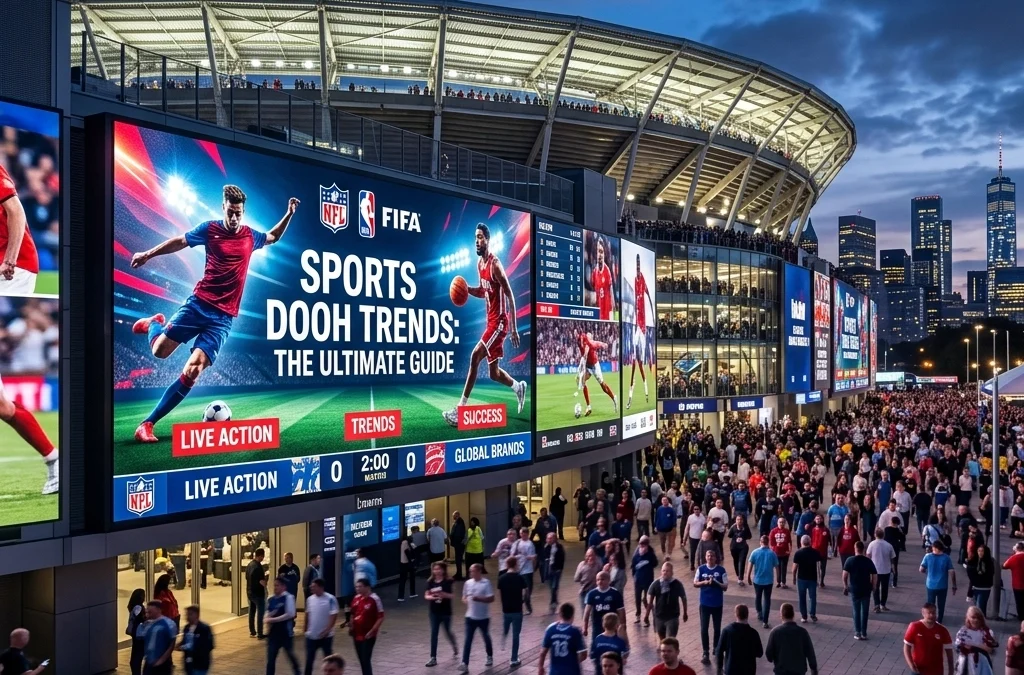
Digital Out-of-Home (DOOH) advertising has transitioned from a supporting medium to a primary driver of engagement in the sports marketing world. As physical and digital spaces merge, brands are finding more sophisticated ways to connect with fans before, during, and after the game. This guide explores the latest trends, strategies, and technological shifts that are defining the modern sports advertising landscape.
The Infrastructure of Modern Sports Advertising
The physical footprint of digital sports advertising is expanding at a rapid pace. The OOH Sports network now features a robust ecosystem of over 25,000 digital screens. These screens are not limited to the interior of stadiums. They are strategically placed in high-traffic areas where fans naturally congregate, including transit hubs, airports, hotels, and sports bars.
This expansion has transformed the medium into a performance-based channel. Unlike traditional static billboards, modern digital screens offer the flexibility to change creative content in an instant. This agility allows advertisers to respond to live game events, weather changes, or even inventory shifts. The move toward a more comprehensive network ensures that brands can maintain a consistent presence throughout the entire fan journey.
Market Growth and the $50 Billion Horizon
The financial outlook for the industry suggests a massive shift in how marketing budgets are allocated. Industry projections indicate that DOOH sports advertising will hit $50 billion by 2030. This growth is largely driven by consumer digital fatigue. As audiences become increasingly adept at ignoring online banners or skipping digital video ads, the physical presence of DOOH provides a high-impact alternative that cannot be blocked or ignored.
Confidence in physical media is returning because it functions as a high-performance channel with measurable outcomes. Brands are moving away from general awareness campaigns toward data-driven executions that focus on conversion and brand lift. The scale of the network allows for a reach that rivals national television but with the added benefit of localized, contextual relevance.

Extended Impression Windows: Capturing the Full Journey
One of the most significant trends in sports marketing is the extension of the engagement window. Historically, brands focused almost exclusively on the 30-second broadcast spots or the three hours of game time. Today, the strategy has shifted to capture the entire fan journey.
The journey begins long before the first whistle. Fans traveling to major sporting events pass through airports and train stations, check into hotels, and visit local restaurants. By utilizing DOOH across these various touchpoints, advertisers can build a narrative that follows the consumer. This multi-touch approach creates a cumulative effect on brand recall.
For instance, a fan might see an ad for a new beverage at the airport upon arrival, encounter it again on a digital screen near their hotel, and finally see it on Sportrons inside the venue. This repetition across different environments reinforces the message without feeling intrusive. This extended window ensures that the brand remains top-of-mind during peak emotional moments of the fan experience.
Programmatic DOOH and Real-Time Context
The rise of programmatic digital out-of-home (pDOOH) has fundamentally changed how campaigns are executed. Programmatic technology allows for automated buying and placement of ads based on specific triggers. In the world of sports, these triggers can be highly dynamic.
Advertisers are now using real-time match data to influence their creative. A sports betting brand might launch a campaign that updates the odds every few minutes directly on a digital screen. This type of real-time sports betting DOOH campaign can be launched and scaled in under 24 hours, allowing for incredible responsiveness.
Contextual relevance is the primary benefit here. An ad can change its messaging based on whether the home team is winning or losing. It can trigger a "celebration" creative the moment a goal is scored. This level of synchronization between the live event and the advertising content creates a seamless experience for the viewer, making the ad feel like a part of the event rather than an interruption.
Mega-Events as Catalysts for Innovation
Global sporting events serve as the ultimate testing ground for new DOOH technologies. Tournaments like the World Cup or major continental championships draw millions of spectators and billions of viewers worldwide. These events create a concentrated period of high demand for advertising inventory.
During these mega-events, the reach of DOOH is unparalleled. Research indicates that nearly six in ten fans recall seeing out-of-home advertising around major sporting events. Even more impressive is the fact that more than 90 percent of those fans take a follow-up action after seeing the ad. This might include searching for the brand on a mobile device, visiting a retail location, or making a purchase.
The high concentration of people in fan zones and city centers during these tournaments makes DOOH an essential tool for brands that are not official sponsors. It allows for "ambush marketing" or "proximity marketing" strategies where a brand can capture the excitement of the event without the high cost of official sponsorship.

Data-Driven Decision Making and Third-Party Integration
The era of "spray and pray" advertising is over. Modern sports DOOH relies heavily on third-party audience data to ensure precision. By integrating data from mobile apps, social media, and sports betting platforms, marketers can identify where their specific target audience is likely to be at any given time.
This data allows for a more nuanced approach to audience segmentation. Instead of just targeting "sports fans," brands can target "high-intent soccer fans who also enjoy luxury travel." This precision reduces waste and increases the efficiency of the spend.
Furthermore, the integration of device ID tracking allows for better attribution. Advertisers can track how many people who were exposed to a digital screen eventually visited a website or a physical store. This level of measurement brings DOOH closer to the reporting standards of online advertising, providing the transparency that modern marketing departments require.
Quantifiable Impact: Results from the Field
The success of these trends is best illustrated through measurable data. Several recent campaigns have demonstrated the power of programmatic DOOH in the sports space.
A campaign for White Claw’s vodka launch utilized programmatic DOOH to drive a 74 percent lift in purchase consideration. This result was achieved by targeting consumers at relevant social touchpoints where the product was likely to be consumed.
Similarly, AB InBev's Mike’s Hard Iced Tea saw a 119 percent lift in positive brand image through a campaign that focused on high-energy sports environments. By aligning the brand with the positive emotions of the fan experience, the campaign successfully moved the needle on brand perception.
Even brands outside the traditional beverage category have found success. Sea-Doo launched its first digital OOH campaign and reported a 144 percent increase in purchase consideration. These figures highlight that when DOOH is combined with programmatic precision and high-quality creative, the impact is significant and measurable.

Strategic Implementation for Success
To succeed in this evolving landscape, brands must adopt a strategic approach that prioritizes flexibility and data. The following steps are essential for a successful sports DOOH execution:
- Early Planning: While programmatic buying allows for speed, the best inventory around major events is often reserved well in advance. Planning should begin months before the target event.
- Audience Mapping: Use third-party data to map out the fan journey. Identify the specific locations where the target audience will spend their time before and after the game.
- Creative Variation: Develop multiple versions of creative that can be triggered by different game scenarios. This ensures that the messaging always feels fresh and relevant.
- Omnichannel Integration: DOOH should not exist in a vacuum. It should be paired with social media, mobile retargeting, and search to create a cohesive brand experience.
- Measurement and Attribution: Set clear KPIs before the campaign begins. Utilize brand lift studies and foot traffic attribution to measure the actual impact on the business.
The Future of Sports DOOH
The future of the medium lies in deeper integration and more immersive experiences. As screens become more interactive and augmented reality (AR) components are integrated into physical displays, the line between the digital and physical worlds will continue to blur.
For brands looking to capture their share of the growing sports market, staying informed on these trends is the first step. The ability to reach a highly engaged, emotional audience at scale is a unique advantage of the sports environment. By leveraging the power of DOOH, programmatic technology, and real-time data, advertisers can create campaigns that not only capture attention but drive significant business results.
The transition toward a more digital, automated, and data-centric out-of-home landscape is not just a trend. It is the new standard for excellence in sports marketing. Companies that embrace these changes and invest in high-quality DOOH placements will be well-positioned to succeed in an increasingly competitive marketplace. For those ready to start their journey, the contact page provides a direct line to experts who can help navigate this complex but rewarding field.