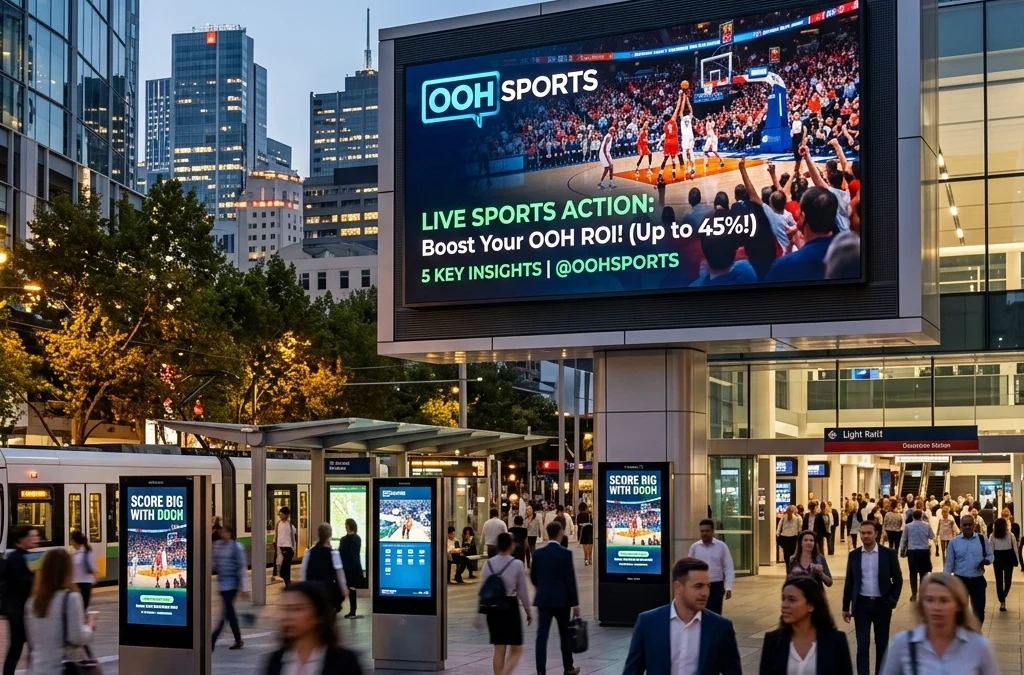
The landscape of sports advertising is undergoing a fundamental transformation. As traditional television viewership fragments and stadium sponsorships face increasing scrutiny regarding their price tags, digital out-of-home (DOOH) advertising has emerged as a high-performance alternative. The ability to reach fans at scale, with the precision of digital targeting and the physical impact of a billboard, is no longer a luxury. It is a necessity for brands looking to maximize return on investment.
Data indicates that the sports DOOH sector is on a trajectory to reach massive global scale. To capture a share of this growth, marketers must move beyond static displays and embrace the technological shifts currently redefining the medium. These five industry insights provide a roadmap for boosting campaign ROI through strategic execution and advanced technology.
1. Programmatic Agility and Real-Time Optimization
Programmatic DOOH allows advertisers to move away from rigid, long-term contracts and toward a flexible, data-driven buying model. This agility is particularly valuable in the sports industry, where context changes by the minute. Instead of committing to a single creative for a month, programmatic platforms enable brands to trigger ads based on live game scores, weather conditions, or local fan sentiment.
Strategy and Execution
The core strategy involves using a Demand Side Platform (DSP) to set specific triggers. For example, a sports betting brand can launch campaigns that convert in under 24 hours by syncing ad displays with real-time odds shifts. This level of responsiveness ensures that the message is always relevant to the current state of the game.
Measurable Tactics
- Contextual Triggers: Ads appear only when specific conditions are met, such as a home team victory or a specific temperature range.
- Dayparting: Focusing spend on the hours immediately preceding and following a major sporting event to capture peak fan traffic.
- Budget Fluidity: Reallocating spend mid-campaign from underperforming locations to high-traffic hubs without manual intervention.
By utilizing these programmatic methods, brands avoid the waste associated with traditional outdoor advertising. The result is a more efficient use of the media budget and a higher likelihood of capturing the attention of a highly engaged audience. More information on these real-time strategies can be found at oohsports.com.

2. Advanced Attribution and Foot Traffic Analysis
One of the historical challenges of out-of-home advertising was the difficulty of proving direct impact. Modern DOOH has solved this through sophisticated attribution modeling. By leveraging anonymized mobile device IDs, advertisers can now track the journey of a fan from the moment they see a screen near a stadium to the moment they walk into a retail location or visit a brand's website.
Objective and Results
The objective is to move past "vanity metrics" like estimated impressions and focus on "hard metrics" like purchase consideration and foot traffic lift. For instance, a campaign for Sea-Doo demonstrated how digital OOH could increase purchase consideration by 144 percent by targeting specific outdoor enthusiasts. This type of data-backed success proves that DOOH is a performance channel, not just a brand awareness tool.
Measurement Process
- Exposed vs. Control Groups: Comparing the behavior of people who saw the ad versus a similar demographic that did not.
- Conversion Windows: Tracking actions taken within a set timeframe after ad exposure, such as 24 or 48 hours.
- Online-to-Offline Sync: Correlating ad plays with spikes in web traffic or app downloads in the same geographic area.
For brands like White Claw, programmatic campaigns have driven a 74 percent lift in purchase consideration, demonstrating that the right measurement framework can validate even the most ambitious marketing goals. Detailed analysis of these results is available at oohsports.com/2024/09/21/white-claws-programmatic-digital-out-of-home-campaign-drives-74-lift-in-purchase-consideration-for-vodka-launch.
3. Omnichannel Synergy with Mobile Integration
DOOH should never exist in a vacuum. The most successful campaigns treat the digital screen as one touchpoint in a broader omnichannel strategy. When a fan sees a high-impact ad on a large-format screen outside a stadium, and then receives a related notification or social media ad on their phone, the brand message is reinforced through multiple channels.
Technology Partners and Integration
Utilizing a DSP like StackAdapt allows for the seamless integration of DOOH into omnichannel campaigns. This technology enables marketers to retarget mobile devices that were in the vicinity of a DOOH screen. This "one-two punch" approach ensures that the brand remains top-of-mind throughout the fan's entire journey, from transit to the arena and back home.
Key Benefits of Omnichannel DOOH
- Increased Frequency: Multiple touchpoints lead to better brand recall without the annoyance of repetitive digital pop-ups.
- Enhanced Precision: Using geofencing to target the stadium perimeter ensures that the mobile retargeting is reaching the exact same audience that saw the outdoor screens.
- Consistency: A unified creative message across screens and mobile devices builds a stronger brand identity.
For a deeper look at how omnichannel adoption is driving the industry forward, marketers can explore the capabilities of modern DSPs at oohsports.com/2025/02/21/spotlight-on-stackadapt-dsp-driving-programmatic-dooh-adoption-in-omnichannel-campaigns.

4. AI-Powered Analytics and Creative Optimization
Artificial Intelligence is revolutionizing how DOOH campaigns are analyzed and optimized. AI-powered analytics can process vast amounts of data in seconds, identifying patterns that human planners might miss. This allows for real-time adjustments to creative elements, ensuring the most effective visual is always on display.
Strategy and Technology
AI tools can analyze which colors, fonts, or messages are resonating most with specific fan bases. If a specific creative is underperforming in a certain zip code, the AI can automatically swap it for a different version. This removes the guesswork from campaign management and focuses entirely on what the data proves is working.
Impact of AI on ROI
- Automated Insights: Identifying the most effective times of day for engagement without manual data crunching.
- Predictive Modeling: Using historical data to forecast campaign performance and adjust budgets accordingly.
- Creative Relevance: Ensuring that the ad creative matches the demographic profile of the crowd in real-time.
By stopping the guesswork and relying on AI-powered analytics, brands can significantly improve campaign success rates. Further insights on these analytics are provided at oohsports.com/2025/11/21/stop-wasting-time-on-guesswork-7-ai-powered-dooh-analytics-that-prove-campaign-success.

5. Capturing Market Share Through Strategic Scaling
The sports DOOH market is expanding rapidly. Forecasts suggest that sports-related digital advertising will reach 50 billion by 2030. To capture a share of this massive growth, brands must scale their efforts strategically rather than just spending more. This means moving away from expensive, singular sponsorships and toward a network-based approach.
Strategy: Perimeter Targeting vs. Sponsorship
Many brands are finding that traditional stadium sponsorships, which can cost millions, are becoming less efficient than targeted DOOH campaigns. By placing ads on digital screens around the perimeter of stadiums and in transit hubs where fans congregate, brands can achieve similar visibility for a fraction of the cost. This "smart scaling" allows smaller and mid-sized brands to compete with industry giants on the same stage.
Tactics for Capturing Share
- Geographic Focus: Prioritizing high-value sports markets like New York City or Los Angeles during peak seasons.
- Fan-Centric Content: Focusing on the fan experience rather than just the brand name to build authentic connections.
- Competitive Intelligence: Analyzing where competitors are spending and finding untapped "white space" in the DOOH landscape.
Strategic scaling is not about having the biggest budget; it is about having the smartest placement. Brands that adopt this mindset will be better positioned to capitalize on the 50 billion dollar opportunity. Explore strategies for capturing market share at oohsports.com/2025/03/29/dooh-sports-advertising-will-hit-50-billion-by-2030-7-strategies-to-capture-your-share.
Conclusion
The evolution of digital out-of-home advertising has provided marketers with a powerful set of tools to drive ROI. From the flexibility of programmatic buying to the precision of AI-driven analytics, the barriers to entry and the risks associated with OOH are falling. By integrating these five insights into a cohesive strategy, brands can ensure their message is heard by the right fans at the right time.
Success in the modern sports marketing era requires a shift in perspective. It demands a move away from static, broad-reach tactics and a move toward dynamic, measurable, and fan-centric campaigns. Whether it is through real-time betting updates or sophisticated omnichannel retargeting, the potential for growth in DOOH is immense. The brands that embrace these insights today will be the ones leading the market tomorrow.
For more information on how to optimize your sports advertising strategy, visit oohsports.com.