
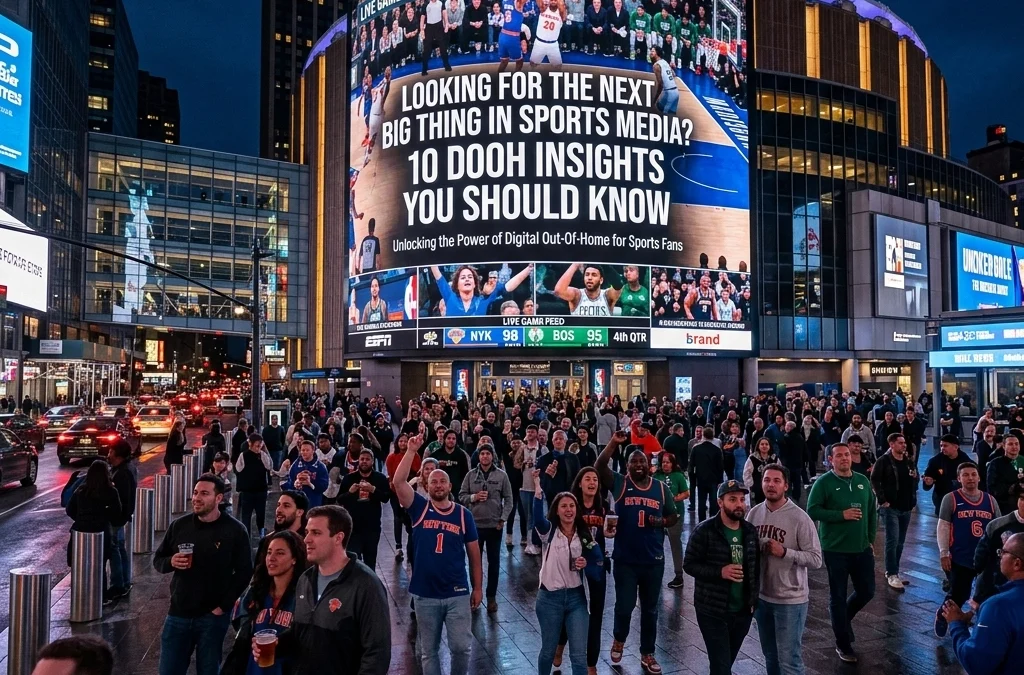
The world of sports media is moving faster than a breakaway highlight reel. For years, the conversation was dominated by television rights and social media impressions. But if you have spent any time around a stadium or a busy downtown hub lately, you have probably noticed a massive shift. Digital Out of Home (DOOH) advertising is no longer just a background player. It has become a primary driver of how brands connect with fans in the physical world.
At OOH Sports, we are seeing a fundamental change in how advertisers approach game day. It is no longer about just putting a logo on a billboard. It is about catching the right person at the right time with a message that actually matters to their current experience. Whether you are a brand manager, a sports marketer, or a partner looking to maximize your reach, understanding these shifts is essential.
Here are 10 DOOH insights that are currently redefining the sports media landscape.
1. Live Data is the New Creative Director
The days of static, "set it and forget it" billboards are over. One of the most powerful insights in the current market is the rise of dynamic creative. Modern DOOH technology allows ads to change based on live game data. Imagine a digital screen outside a stadium that displays a celebratory message the moment the home team scores a touchdown. Or perhaps a countdown to kickoff that builds anticipation throughout the afternoon.
When creative assets are triggered by real-time scores, player stats, or even the weather, the relevance of the ad sky-rockets. This isn't just about being flashy. It is about being helpful and contextual. Fans are more likely to engage with a brand that feels like it is part of the "now" rather than a pre-recorded message from three weeks ago.

2. The Power of "Super Bowl" Reach Without the Super Bowl Price Tag
Everyone knows the Super Bowl is the pinnacle of sports advertising, but the price of entry is staggering. One of the most eye-opening insights from recent industry research is how DOOH stacks up against the big game. Studies have shown that a well-placed, month-long DOOH campaign in the top 25 U.S. markets can deliver 7.5 times more reach than a single 30-second Super Bowl commercial.
Even more impressive is the value proposition. When you look at the CPM (cost per thousand impressions), DOOH can provide 10 times better value. You are reaching nearly a billion impressions across the country for a fraction of the cost of one television spot. This level of efficiency is why brands are shifting more of their budgets toward digital outdoor formats. You can learn more about how we approach these strategies on our marketing page.
3. High Action Rates and Incredible Ad Recall
Why does DOOH work so well in sports? It comes down to the psychology of the fan. When people are out at a game, they are in an active, heightened state of mind. They aren't leaning back on a couch, they are leaning forward into an experience. This translates to massive brand recall.
Research indicates that DOOH has an 86 percent ad recall rate, which is higher than almost any other major media format. But it doesn't stop at just remembering the brand. About 76 percent of consumers report taking an action after seeing a DOOH ad, and 74 percent of mobile users have used their devices to look up a product or make a purchase immediately after seeing a digital screen. This "see it and act on it" behavior is a goldmine for sports advertisers.
4. Interactive Experiences Bridging the Physical and Digital
DOOH is no longer a one-way conversation. With the integration of QR codes, touch-sensitive screens, and augmented reality triggers, digital screens are becoming portals to digital commerce. A fan can scan a code on a screen while waiting for a shuttle and receive an instant discount for the team store or enter a contest to win upgraded seats.
This interaction allows brands to collect valuable first-party data in a world where third-party cookies are disappearing. It bridges the gap between seeing an ad in the physical world and completing a transaction on a smartphone.
5. TVOOH and Multi-Screen Synchronization
Television and Out-of-Home are becoming best friends. We call this TVOOH. This strategy involves synchronizing digital outdoor screens with live broadcast moments. When a specific commercial air on the stadium big screen or the local broadcast, the surrounding DOOH screens in the area can trigger the same creative simultaneously.
This creates a "surround sound" effect for the brand. The message is reinforced across multiple touchpoints, making it feel inescapable in the best way possible. By aligning these screens, brands ensure they are the dominant voice in the fan's environment.
6. The Rise of Programmatic Buying
The way we buy and sell these ads has changed. Programmatic DOOH allows advertisers to use automated platforms to buy ad space based on specific conditions. This means you can bid on screens only when your target audience is present, or only during the three hours leading up to a major rivalry game.
This level of precision is what led to major successes for brands like White Claw. In their recent campaign, they used programmatic DOOH to drive a 74 percent lift in purchase consideration. You can check out the full details in this case study.

7. Advanced Audience Measurement and Attribution
One of the biggest hurdles for outdoor advertising used to be measurement. How do you know how many people actually saw the sign? That problem has been solved. Modern DOOH utilizes anonymized mobile location data, sensors, and even AI to track viewership numbers, dwell times, and demographic makeup in real-time.
This allows for actual attribution. We can now see if a person who was exposed to a DOOH ad later visited a retail location or made a purchase on a brand's website. This data-driven approach is a far cry from the "estimates" of the past. For example, Mike's Hard Iced Tea saw a 119 percent lift in positive brand image by using these precise targeting methods. See the results here: AB InBev Case Study.
8. AI is Revolutionizing Creative Optimization
Artificial Intelligence is doing more than just generating text. In the DOOH space, AI is being used for Dynamic Creative Optimization (DCO). This means the system can automatically iterate and adjust ads based on what is performing best. If an ad featuring a specific player is getting more engagement than another, the AI can shift the rotation to favor the winning creative.
AI also helps in processing vast amounts of contextual data. It can adjust a campaign based on trending social media topics or the general sentiment of a crowd during a game. This level of agility is what keeps brands relevant in the fast-moving world of sports.

9. Reaching the "Ad-Free" Audience
A major challenge for modern marketers is the rise of ad-free streaming and ad-blockers. Many sports fans are moving away from traditional cable and toward subscription services where they don't see commercials. DOOH is the perfect solution to this problem.
You cannot "skip" a digital screen in a stadium or a billboard on the way to the arena. It exists in the physical world where fans are living their lives. This makes DOOH one of the few remaining ways to reach a mass audience that has largely opted out of digital and television ads. Sea-Doo leveraged this physical presence to increase their purchase consideration by 144 percent during their first campaign. Read more about it here.
10. Omnichannel Synergy is the Final Goal
The final and perhaps most important insight is that DOOH does not live on an island. It is most effective when integrated into a broader omnichannel campaign. When a fan sees a high-impact digital screen at the game, receives a retargeted ad on their social feed that evening, and sees a follow-up offer in their inbox the next day, the brand becomes part of their routine.
At OOH Sports, we focus on making sure our Sportrons and digital displays work in harmony with the rest of your marketing mix. It is about creating a seamless journey for the consumer from the moment they leave their house to the moment they head home after the final whistle.
Why This Matters Right Now
The digital out-of-home market now accounts for over 36 percent of total OOH revenue, and that number is climbing every year. Major global sporting events are acting as a catalyst for this growth, pushing cities and venues to upgrade their infrastructure to include more high-tech digital signage.
Whether you are looking to dominate a local market or make a splash on a national stage, these insights provide the roadmap. The technology is here, the fans are ready, and the data proves it works. If you are curious about how these trends can apply to your specific brand, we would love to chat. You can reach out to us on our contact page or learn more about what we do about us.
The next big thing in sports media isn't just on a screen in your pocket. It is on the massive screens in the world around you. By embracing dynamic creative, real-time data, and programmatic precision, you can turn every game day into a major win for your brand.
For more insights into the world of advertising and sports, be sure to keep an eye on our blog. There is always something new happening in this space, and we are here to help you navigate it.