
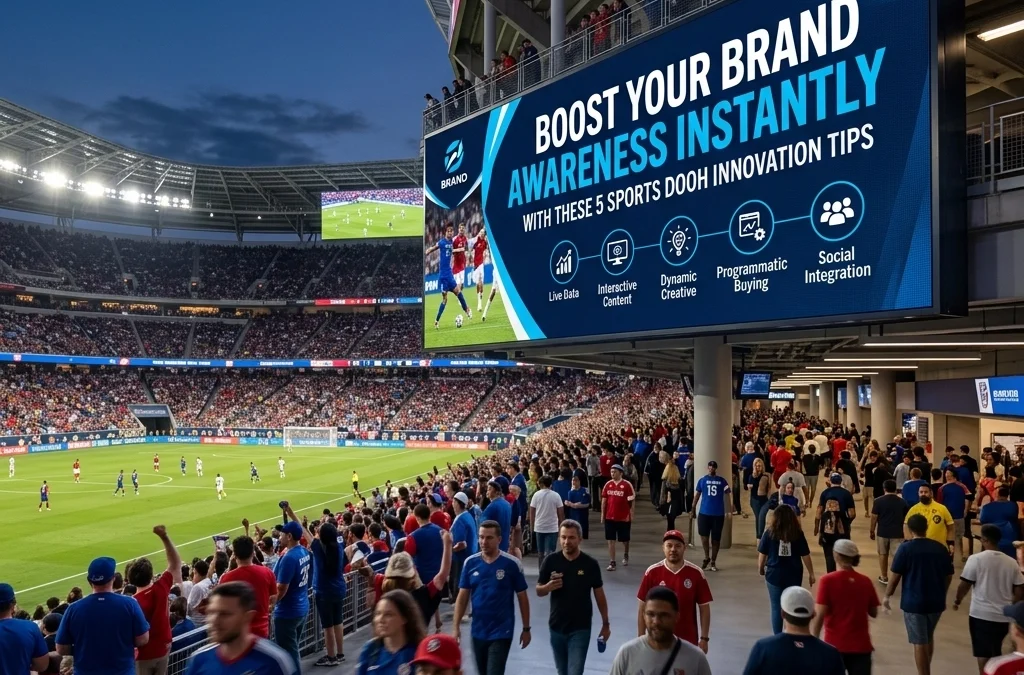
The landscape of sports marketing is undergoing a significant transformation. As traditional advertising methods face increasing fragmentation, Digital Out of Home (DOOH) advertising has emerged as a powerhouse for brands looking to connect with passionate audiences. The intersection of sports and digital signage offers a unique opportunity to capture attention when fans are at their most engaged. With the industry projected to reach massive valuations in the coming years, understanding how to innovate within this space is no longer optional for brand managers and media buyers.
To stay ahead, advertisers must move beyond static placements and embrace the technological advancements that make DOOH a precision tool. By focusing on data-driven strategies and real-time execution, brands can achieve measurable lifts in awareness and purchase consideration. The following five innovation tips outline how to leverage OOH Sports and modern DOOH technology to maximize brand impact.
1. Implement Real-Time Dynamic Creative Optimization (DCO)
One of the most effective ways to boost brand awareness is through Dynamic Creative Optimization (DCO). This technology allows advertisers to change creative content in real-time based on external data triggers. In the context of sports marketing, these triggers can include live game scores, player statistics, weather conditions, or even the atmosphere within a stadium.
When a brand uses DCO, the messaging remains relevant to the exact moment the consumer sees the screen. For example, a beverage brand might trigger an advertisement for a refreshing drink when the local temperature exceeds a certain threshold, or a sports apparel brand might display rain gear if a storm begins during an outdoor game. This level of relevance ensures that the advertisement does not just blend into the background but instead serves as a timely suggestion.
The effectiveness of this approach is backed by significant data. Programmatic DOOH campaigns that utilize these types of triggers have shown a high success rate in driving consumer action. For instance, campaigns focusing on specific product launches have seen substantial increases in purchase consideration by aligning creative with consumer context. More details on the technical benefits of this approach can be found at programmatic DOOH vs traditional stadium ads.

2. Deploy Synchronized Multi-Format Campaigns
Innovation in sports DOOH is not limited to a single screen. To truly boost brand awareness, a campaign should follow the fan throughout their entire journey. This involves synchronizing messaging across various formats, including digital billboards on major highways, transit screens in subways and buses, and digital displays within airports or near the sports venue.
A synchronized campaign creates a narrative progression. The journey might begin with a high-impact billboard that introduces the brand message to fans driving toward the city. As fans move into transit hubs, smaller, more detailed screens reinforce the message. Finally, as they approach the stadium or enter nearby sports bars, the creative becomes highly specific to the game about to take place.
This multi-format approach ensures high frequency and reach without causing ad fatigue. By varying the format and the context, the brand remains a constant but non-intrusive part of the fan experience. Research into high-traffic urban environments, such as those described in the look at NYC holiday shopping and OOH, highlights how multiple touchpoints contribute to a much stronger brand recall compared to single-format campaigns.
3. Activate Media Based on Movement Patterns
Modern DOOH relies heavily on location intelligence and behavioral data. Rather than simply placing ads near a stadium and hoping for the best, innovative brands analyze the movement patterns of their target audience. This allows for audience-led targeting where ads are activated on screens at the exact times and locations where sports enthusiasts are most likely to be present.
Data shows that sports fans follow specific routines. They may visit local gyms in the afternoon, frequent sports pubs in the evening, or utilize specific transit corridors during game days. By utilizing sportrons and other specialized digital assets, advertisers can ensure their creative is live when the audience density is at its peak.
This strategy is particularly effective for brands that are not official sponsors but want to capture the energy of a major event. By targeting the areas surrounding a venue or the paths fans take to get there, brands can achieve "ambush" style visibility that rivals official sponsorships. A notable example of this strategy in action can be seen in how certain brands capitalized on the NYC Marathon, using strategic DOOH to dominate the conversation without an official partnership.

4. Leverage FOMO with Show-Stopping Game Moments
The "Fear Of Missing Out" (FOMO) is a powerful psychological driver in sports. Innovations in DOOH allow brands to tap into this by broadcasting live updates and major highlights on large-format digital screens in high-traffic areas. When a major play happens, or a game goes into overtime, the digital screen can reflect that excitement instantly.
For media buyers, this means purchasing inventory that allows for "moment marketing." If a local team wins a championship, the creative can switch to a celebratory message within seconds of the final whistle. This creates a deep emotional connection between the brand and the fan. The brand becomes part of the celebration, rather than just an advertiser.
The impact of this strategy is measurable in brand sentiment. Campaigns that align themselves with these high-emotion moments often see a significant lift in positive brand image. For example, beverage brands have seen upwards of a 119% lift in brand image by using programmatic DOOH to stay relevant during key cultural and sporting moments. Detailed results of such campaigns are available in the Mike's Hard Iced Tea case study.
5. Align DOOH Messaging with Streaming Schedules
The modern fan is a multi-screen consumer. They may be watching a game on a mobile device while traveling, or streaming it via a Connected TV (CTV) at a sports bar. Innovation in DOOH involves aligning outdoor messaging with these streaming schedules and digital habits to create an omnichannel experience.
By coordinating DOOH with mobile and digital spend, brands can retarget consumers who have been exposed to a digital billboard. For instance, if a fan passes a digital screen featuring a specific product, that brand can then serve a related ad to the fan's mobile device later that day. This "omnichannel sequencing" reinforces the message and has been shown to dramatically increase purchase consideration.
Using advanced Demand Side Platforms (DSPs) to manage these campaigns allows for seamless integration between outdoor and digital environments. Strategies involving StackAdapt DSP show how programmatic adoption is making it easier for brands to maintain a unified voice across all screens, whether they are in the living room or on the street. This coordination was a key factor in the success of campaigns for brands like Sea-Doo, which saw a 144% increase in purchase consideration by integrating DOOH into their broader marketing mix, as noted in the Sea-Doo case study.

Strategic Implementation and ROI
To successfully implement these five tips, brand managers must focus on the data. The transition from traditional out of home to digital has made advertising more accountable. Through the use of device IDs and brand lift studies, it is now possible to quantify exactly how much an OOH campaign contributed to store visits, online searches, or sales.
The first step for any brand is to define the objective. Whether the goal is to drive awareness for a new product launch or to increase market share in a specific region, DOOH provides the flexibility to scale. Advertisers should look for partners who offer comprehensive marketing support and a clear roadmap for execution.
As the industry moves toward 2030, the brands that find success will be those that view DOOH not as a static backdrop, but as a dynamic, interactive medium. By using DCO, multi-format synchronization, movement data, moment marketing, and omnichannel alignment, brands can capture the attention of sports fans in ways that were previously impossible.
For more information on how to start your next campaign or to view further examples of successful executions, visit the OOH Sports blog or check out our latest case studies. To discuss a specific strategy for your brand, you can reach out via the contact page.
