
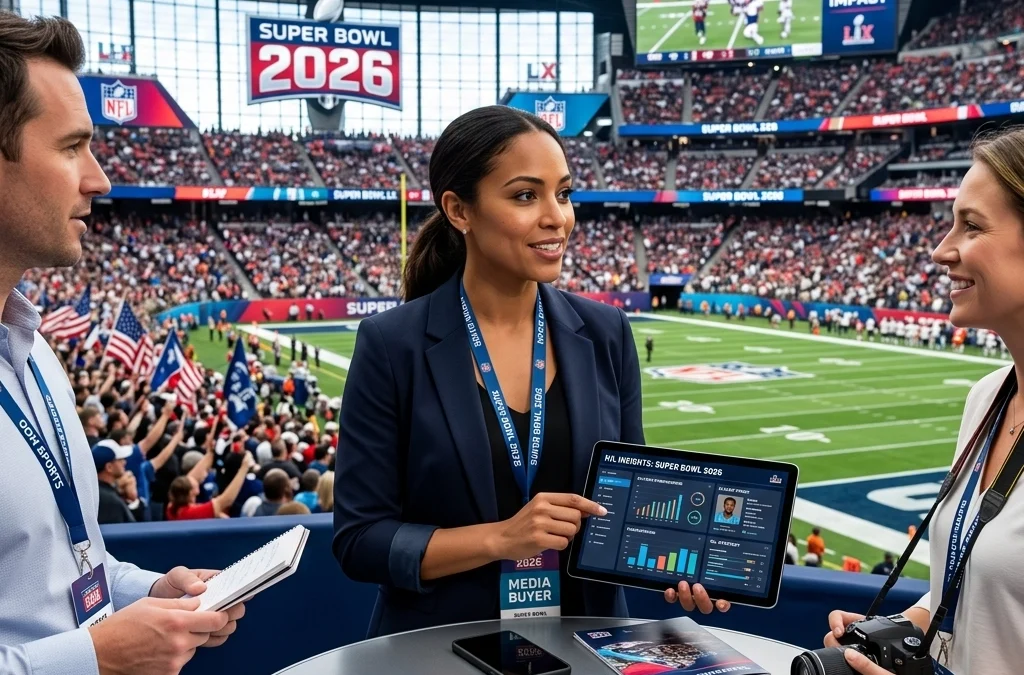
The landscape of sports advertising underwent a massive transformation during Super Bowl LX in February 2026. While traditional television spots reached record costs of approximately 8 million dollars for a 30-second window, a more agile strategy emerged as the clear winner for media buyers. Name, Image, and Likeness (NIL) partnerships provided a path to authentic engagement that linear television simply could not match. By leveraging the voices of over 20,000 student-athletes, brands found a way to bypass the clutter and speak directly to fans in a language they trust.
This guide explores the specific tactics and strategic frameworks that defined success during the 2026 Big Game cycle. For media buyers looking to maximize ROI, understanding the mechanics of the OOH Sports NIL platform is no longer optional. It is the foundation of a modern omnichannel campaign.
The Shift from Celebrity to Authenticity
In previous years, brands prioritized high-priced professional athlete endorsements. However, the 2026 data shows a significant shift toward the "authentic voice" of the student-athlete. These influencers maintain a level of trust with their peers and local communities that professional superstars often lack. Media buyers who utilized the OOH Sports network of 20,000 athletes were able to tap into micro-communities with surgical precision.
The objective is simple: move away from polished, corporate messaging and embrace the raw, energetic content that student-athletes produce naturally. This approach resonates particularly well with Gen Z and Millennial demographics, who are notorious for ignoring traditional advertising. By placing brand messages within the organic social feeds of thousands of athletes, media buyers achieved a saturation level that a single television spot cannot replicate.

Phase 1: Pre-Game Narrative Equity
Success during the Super Bowl does not happen on game day alone. The most successful media buyers in 2026 began their NIL activations months in advance. This period is known as the Pre-Game Positioning phase. During this time, the goal is to build "narrative equity."
By launching campaigns in mid-January, brands were able to secure lower costs-per-click and build a warm audience. Student-athletes shared "Road to the Championship" content, training updates, and behind-the-scenes glimpses into their lives. When the brand is integrated naturally into these stories, it becomes part of the athlete’s journey rather than an intrusive ad. This early engagement ensures that by the time the Super Bowl kicks off, the audience already has a positive association with the brand.
Media buyers can learn more about these early-stage strategies on the OOH Sports marketing page.
Phase 2: Game-Day Real-Time Activation
The Super Bowl is no longer a single-screen experience. Statistics from 2026 show that over 70 percent of viewers engage with a second screen during the broadcast. This is where the NIL strategy delivers its highest value. While a traditional commercial is locked in months in advance, NIL athletes can react to the game in real-time.
Whether it is a spectacular touchdown, a controversial officiating call, or a viral halftime moment, student-athletes provide immediate commentary. This high-velocity content stream allows brands to be part of the live conversation. For media buyers, this means the ability to pivot and capitalize on cultural moments as they happen. The OOH Sports platform enables this "Digital Blitz" by coordinating thousands of voices to post simultaneously, creating a brand takeover of social feeds.
To see the impact of these real-time movements, check out the following video:
https://www.youtube.com/watch?v=l6J-0zileKE

Phase 3: Post-Game Saturation and Conversion
The final phase involves maintaining momentum after the trophy is raised. Many brands make the mistake of stopping their efforts once the game ends. However, the 2026 cycle proved that post-game saturation is critical for converting casual engagement into long-term customer loyalty.
In the days following the event, NIL athletes shared recap content, "victory celebration" posts, and product-focused calls to action. Because the audience was already primed during the pre-game and game-day phases, the conversion rates for these post-game pushes were significantly higher than standard influencer campaigns. Media buyers utilized these moments to drive traffic to landing pages and digital storefronts, capitalizing on the residual excitement of the sports season.
The Power of 20,000 Voices
The scale of the OOH Sports platform is a primary differentiator for media buyers. Managing individual NIL deals is a logistical nightmare. However, by using a centralized platform, buyers can activate over 20,000 student-athletes with a single creative brief.
This scale allows for geographic and demographic targeting that was previously impossible. A brand can choose to activate only athletes in specific regions, or athletes who play specific sports that align with the brand’s identity. This level of granular control ensures that the media spend is never wasted on uninterested audiences.
For more information on the athletes and the platform itself, visit the About OOH Sports section.

Integration with Programmatic DOOH
One of the most innovative tactics used in 2026 was the integration of NIL content with programmatic Digital Out-of-Home (DOOH) advertising. Media buyers took the high-performing social media content created by student-athletes and pushed it to digital billboards and Sportrons in real-time.
This omnichannel approach creates a closed-loop experience for the consumer. A fan might see a student-athlete talk about a product on TikTok, then see that same athlete and product featured on a digital billboard near their local stadium. This repetition reinforces brand recall and lends an air of legitimacy to the campaign. The use of programmatic technology allows these updates to happen instantly, ensuring that the DOOH creative is always relevant to the current game situation.
Detailed results of these omnichannel efforts can be found in our case studies.
Measuring Success with Data
In the past, sports marketing was often criticized for a lack of clear attribution. The 2026 NIL strategy changed that perception by providing media buyers with a wealth of data. Because every NIL post is digital, buyers can track engagement, sentiment, click-through rates, and direct conversions.
The OOH Sports platform provides a comprehensive dashboard where media buyers can see exactly how their budget is performing across the 20,000-athlete network. This data-driven approach allows for mid-campaign optimizations. If certain types of content or specific athlete segments are over-performing, the buyer can shift resources to those areas in real-time. This level of agility is something that traditional television advertising simply cannot provide.

Why Media Buyers Prefer the NIL Approach
The feedback from the 2026 Super Bowl cycle was clear. Media buyers preferred the NIL approach for three main reasons:
- Cost Efficiency: While an 8 million dollar TV spot is out of reach for many, an NIL campaign can be scaled to fit almost any budget while still reaching millions of engaged fans.
- Speed to Market: Creative for NIL campaigns can be produced and approved in days, not months. This allows brands to stay relevant to current trends and news cycles.
- Trust and Reliability: Student-athletes are viewed as authentic members of their communities. Their endorsements carry more weight than a scripted celebrity appearance.
By focusing on these core advantages, media buyers were able to deliver unprecedented results for their clients during the most competitive advertising window of the year.
Logistics and Execution Processes
Executing a campaign of this magnitude requires a streamlined process. The OOH Sports workflow is designed to handle the complexities of NIL compliance and athlete management. The process typically follows a series of logical steps:
- Targeting: Identifying the specific athlete segments that align with the brand’s target demographic.
- Onboarding: Distributing creative briefs and brand guidelines to the selected athletes through the platform.
- Content Creation: Athletes generate original, authentic content that fits their personal brand while meeting the campaign objectives.
- Review and Approval: The brand or agency reviews the content to ensure compliance and quality.
- Distribution: Content is scheduled for release during the strategic phases (Pre, During, and Post-game).
- Measurement: Real-time tracking of performance metrics and attribution data.
This structured methodology ensures that even with 20,000 different creators, the brand message remains consistent and impactful.

Conclusion: Looking Toward the Future
The 2026 Super Bowl proved that the future of sports marketing is decentralized, digital, and athlete-led. The old model of "interruption advertising" via expensive TV spots is being replaced by a "participation model" where brands become part of the organic conversation through NIL partnerships.
Media buyers who embrace this shift and leverage the power of the OOH Sports platform will continue to see superior results. With over 20,000 authentic voices at their disposal, the possibilities for creative, high-impact campaigns are limitless. As the industry moves toward the 2027 season, the lessons learned from the 2026 NIL "Digital Blitz" will serve as the blueprint for success.
For media buyers ready to start planning their next big play, the resources and technology are available now to make it a reality. Authenticity is the new currency in advertising, and student-athletes are the most valuable mint in the world of sports.