
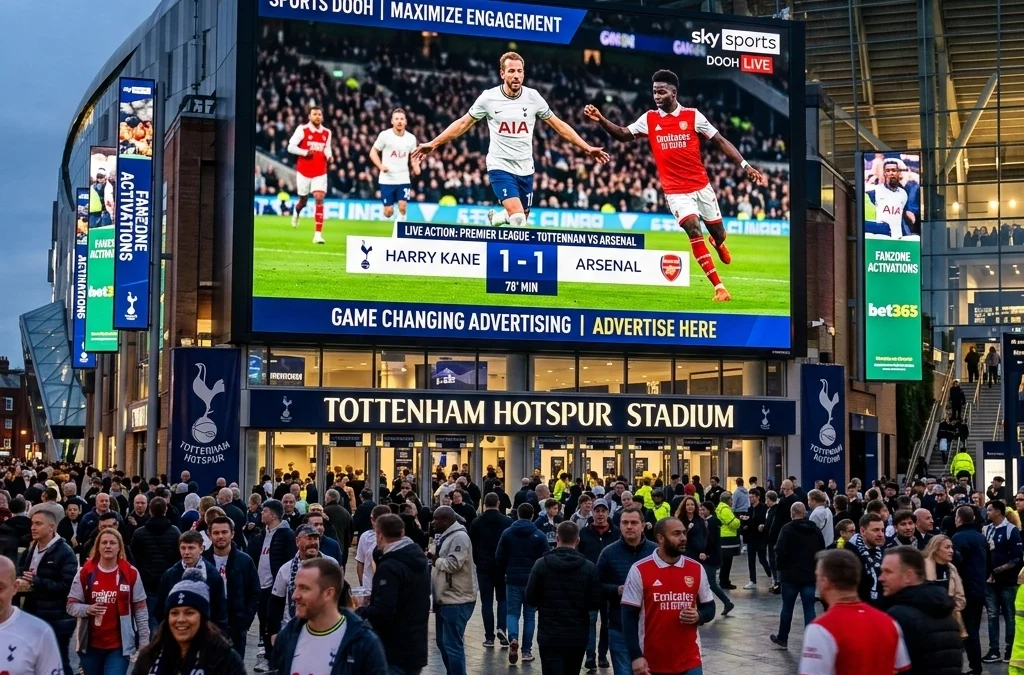
Digital Out-of-Home (DOOH) advertising has transitioned from a supporting media channel to a primary driver of sports marketing innovation. For media buyers and brand managers, the challenge is no longer just finding a screen. The challenge is reaching fans where they live, work, and play, especially since 99 percent of the fan base is typically outside the stadium during any given event. This guide examines the strategies, technologies, and execution phases necessary to master the sports DOOH landscape.
The Evolution of Sports Marketing
Traditional sports marketing often relied on static stadium signage or expensive television spots. While these remain relevant, they are often limited by physical boundaries or high entry costs. Modern sports marketing leverages DOOH as a connective tissue that follows the fan throughout their entire day.
By utilizing screens in transit hubs, gyms, sports bars, and retail environments, advertisers can maintain a consistent brand presence. This approach moves beyond the "big game" moment and focuses on the total fan journey. The goal is to capture attention during the routines that lead up to and follow the sporting event itself.

Strategy: Routine-Based Targeting
Success in sports DOOH begins with understanding the movement of the audience. Fans do not exist in a vacuum. They commute to work, visit the grocery store, and gather at local venues to watch the game. Routine-based targeting involves placing digital assets in locations where these activities occur.
Objective and Strategy
The primary objective is to create a "priming effect." When a consumer sees a brand on a digital urban panel during their morning commute and later sees a related advertisement on social media or TV, the brand recall is significantly higher.
Strategically, this requires a shift from buying specific "boards" to buying "audiences." Instead of selecting a single billboard near a stadium, media buyers use programmatic platforms to bid on screens that high-density groups of sports fans are likely to pass by. This ensures that the messaging is delivered in a contextually relevant environment.
The Three Pillar Framework for DOOH Success
To achieve a high return on investment, a campaign must adhere to three core principles:
- Contextual Relevance: The creative content must reflect the location and the mindset of the viewer. An ad in a gym should focus on performance and energy, while an ad in a sports bar should focus on social engagement and celebration.
- Data-Driven Decision Making: Programmatic triggers allow ads to display only when certain conditions are met. This reduces media waste and ensures the budget is spent on the most impactful moments.
- Omnichannel Integration: DOOH should not be a silo. It works best when it reinforces the messaging found on mobile devices and social platforms.

Caption: A strategic overview of how digital screens integrate into the urban fan environment.
Phase 1: Pre-Game Anticipation
The pre-game phase is about building excitement and intent. This is the period where fans are planning their viewing experience, purchasing snacks, or looking for team apparel.
Execution Tactics
During this phase, brands utilize countdown clocks and "tune-in" reminders. If a brand is a sponsor of a specific event, they can use DOOH to drive awareness of the upcoming broadcast. For retail brands, this is the time to trigger ads in grocery stores or liquor stores, focusing on game-day essentials.
A notable example of effective pre-game strategy is how brands utilize the sportrons network to reach fans in specialized environments before the first whistle blows. By establishing a presence early, a brand becomes part of the pre-game ritual rather than an interruption during the game.
Phase 2: Game-Time Participation
When the game starts, the strategy shifts from anticipation to active participation. This is where Dynamic Creative Optimization (DCO) becomes the most valuable tool in the advertiser's arsenal.
Technology and Innovation
DCO allows advertisements to change in real-time based on live data feeds. Some common triggers include:
- Live Scores: The creative updates automatically to reflect the current score of a game.
- Game Moments: If a specific player scores a touchdown or hits a home run, the ad can pivot to celebrate that specific event.
- Weather Triggers: If it starts raining at the stadium, an apparel brand can instantly switch to promoting waterproof gear in the surrounding city area.
- Crowd Sentiment: Social media feeds can be used to trigger ads that mirror the current mood of the fan base.
This level of responsiveness turns a passive screen into a dynamic participant in the sports narrative. It makes the brand feel "in the moment" with the fans.

Caption: Real-time dynamic creative updating based on live sports data feeds.
Phase 3: Post-Game Engagement
The post-game phase is often overlooked, but it is a critical window for conversion and loyalty. After the game ends, fans are often in a high-emotion state, whether they are celebrating a win or discussing a loss.
Measuring Impact
In the post-game phase, brands can shift their messaging to "congratulations" or "better luck next time" themes. This is also the ideal time to deploy retargeting strategies. By using device IDs exposed to the DOOH screens, brands can serve follow-up ads on the mobile devices of those same fans the following day.
This approach was effectively utilized in a study regarding White Claw's programmatic DOOH campaign, which saw a 74 percent lift in purchase consideration. By maintaining a presence across the full lifecycle of a launch or event, the brand remained top-of-mind through the entire consumer decision-making process.
Programmatic DOOH vs. Traditional Stadium Ads
A frequent question for brand managers is whether to invest in traditional stadium sponsorships or programmatic DOOH. While stadium ads offer high prestige, programmatic DOOH often delivers better ROI through flexibility and targeting.
Traditional ads are fixed and expensive. Programmatic DOOH, however, allows for "burst" spending. An advertiser can choose to spend their entire budget only during the four hours surrounding a major match, rather than paying for a month-long static placement. This efficiency is explored in detail in the analysis of programmatic DOOH vs. traditional stadium ads.
Key Advantages of Programmatic:
- Flexibility: Pause, start, or change creative in seconds.
- Efficiency: Pay only for the impressions delivered during peak fan activity.
- Granularity: Target specific zip codes or types of venues rather than a broad geographic area.

Caption: A comparison showing the reach of stadium-only advertising versus a distributed DOOH network.
Industry Trends and Future Outlook
The sports DOOH sector is on a massive growth trajectory. Industry experts suggest the market is moving toward a $50 billion valuation by the end of the decade. This growth is driven by better data integration and the increasing availability of premium digital inventory.
Brands like Nike have demonstrated that you do not even need to be an official sponsor to dominate the conversation. By placing ads strategically along the route of events like the NYC Marathon, they created a dominant visual presence. You can read more about this "ambush" marketing strategy in the article detailing Nike's NYC Marathon execution.
To capture a share of this growing market, brands must adopt a "digital first" mindset for their outdoor placements. This includes leveraging specialized DSPs that understand the nuances of the sports audience. For more on the technical side of these partnerships, the spotlight on StackAdapt offers insights into how omnichannel campaigns are managed.
Results: What Success Looks Like
When these strategies are executed correctly, the results are measurable and significant. Data from various campaigns shows:
- Brand Image: A 119 percent lift in positive brand image for campaigns that used programmatic triggers to align with fan sentiment, as seen in the Mike's Hard Iced Tea case study.
- Purchase Consideration: A 144 percent increase in purchase consideration for brands that used routine-based targeting to reach fans in lifestyle environments, such as the Sea-Doo campaign.
- Foot Traffic: Significant increases in store visits when DOOH was placed near retail locations during high-intent pre-game windows.
Conclusion and Implementation
Mastering sports DOOH requires a blend of creative agility and technical precision. By moving through the pre-game, game-time, and post-game phases with data-backed strategies, brands can move beyond simple awareness and drive actual consumer behavior.
For those looking to begin or optimize their sports marketing journey, the first step is to identify the specific audience routines and the digital touchpoints that align with them. Whether it is a local campaign or a national rollout, the principles remain the same: be contextual, use data, and stay dynamic.
To learn more about implementing these strategies for your next campaign, you can explore the OOH Sports marketing resources or review our latest case studies to see these principles in action. For further inquiries or to start a project, visit the contact page.