
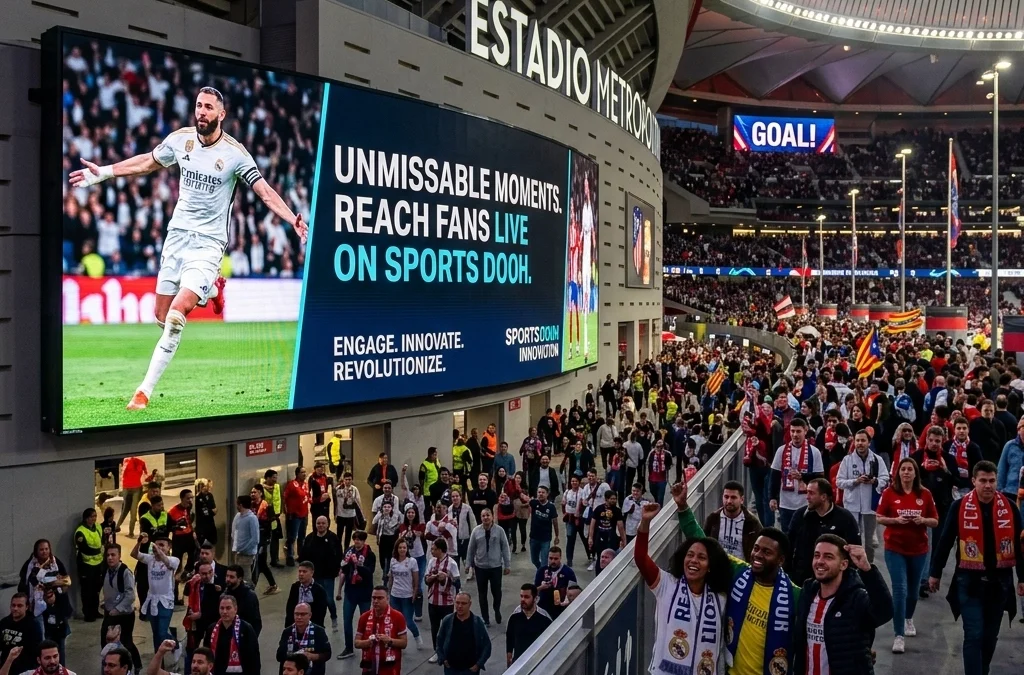
The landscape of sports marketing is undergoing a significant transformation. For decades, reaching sports fans meant securing expensive television spots or purchasing static billboards near stadiums. While these methods provided reach, they lacked the precision and agility required in a digital age. Today, Digital Out-of-Home (DOOH) innovation is redefining how brand managers and media buyers connect with audiences. By blending the high impact of traditional outdoor advertising with the data-driven capabilities of digital marketing, sports DOOH has become an essential tool for modern campaigns.
The shift is driven by a move from location-based buying to routine-based, data-driven strategies. Instead of merely placing an ad on a highway, brands now use Sportrons and other specialized digital displays to engage fans throughout their entire daily journey. This approach ensures that a brand message is not just seen, but remains relevant to the context of the fan’s experience.
The Power of Real-Time Dynamic Content
One of the most impactful innovations in sports DOOH is the ability to use dynamic creative triggers. Static billboards are limited by their inability to change based on what is happening on the field. In contrast, programmatic DOOH allows ads to update in real time.
When a major game is in progress, digital screens can display live scores, countdown clocks to kickoff, or even betting odds that shift as the game evolves. This level of contextual relevance transforms a standard advertisement into a valuable source of information. Research indicates that 81 percent of consumers feel more positive toward brands that sponsor the sports they love. When those brands provide real-time updates during high-stakes moments, that positive association is amplified.
For instance, a beverage brand can trigger specific creative content to play only when a home team scores a goal or wins a championship. This synchronization between the physical world and the digital display creates a sense of shared community. It moves the brand from being a spectator to being a participant in the fan experience.

Engaging Fans Throughout the Entire Journey
A common misconception in sports marketing is that the audience only exists inside the stadium or in front of a television. In reality, the fan journey begins hours before the game and continues long after the final whistle. Innovation in DOOH allows brands to reach fans at multiple touchpoints during this cycle.
The journey often starts with the morning commute, moves to retail locations where fans purchase team gear or snacks, and extends to sports bars and public viewing areas. By placing digital displays in these high-traffic everyday spaces, brands maintain a constant presence. Data suggests that 99 percent of fan attention is actually found in these everyday environments rather than inside the venue itself.
Strategic activation across these touchpoints ensures that a campaign is not just a single moment of contact but a continuous narrative. Whether a fan is riding the subway or walking through a downtown plaza, DOOH screens serve as reminders of the upcoming game and the brands supporting it. This strategy is particularly effective for regional targeting, allowing media buyers to focus on specific neighborhoods where fan density is highest.
Programmatic Targeting and Media Efficiency
The introduction of programmatic technology into the out-of-home space has changed the way media is purchased. Media buyers no longer have to commit to long-term contracts for a single location. Instead, they can use programmatic platforms to buy impressions across a wide network of screens, optimizing for the times and places where fans are most likely to be present.
Programmatic DOOH utilizes real-world movement data and device IDs to understand audience patterns. If data shows a high concentration of sports enthusiasts moving through a specific transit hub at 5:00 PM on a Friday, the system can automatically allocate budget to bid on those screens. This precision reduces wasted spend and ensures that the message reaches the intended demographic.
This flexibility also allows for rapid pivots. If a game is postponed or a specific player becomes the center of a national conversation, brand managers can update their creative assets across an entire national network within minutes. This agility was previously impossible in the outdoor advertising industry.

Omnichannel Reinforcement and the Priming Effect
Sports DOOH does not exist in a vacuum. Its true power is realized when it is integrated into a broader omnichannel strategy. There is a documented "priming effect" that occurs when fans see a brand on a large-format outdoor screen before encountering the same brand on social media or television.
When a fan sees a high-impact DOOH display during their commute, they are more likely to engage with a mobile ad from the same brand later in the day. This cross-channel reinforcement makes every advertising dollar more efficient. Many modern DOOH executions now include QR codes or call-to-action prompts that bridge the gap between the physical and digital worlds. A fan can scan a code on a digital screen to enter a contest, download an app, or access an exclusive discount, providing a seamless transition from an outdoor impression to a measurable digital conversion.
Using DOOH alongside television is particularly effective. While TV provides the reach of the game broadcast, DOOH provides the frequency and local presence that keeps the brand top-of-mind during the rest of the fan's day.
Measuring Results and Brand Lift
One of the primary concerns for media buyers has historically been the measurement of out-of-home advertising. However, innovations in data tracking and attribution have made DOOH as measurable as many online channels. By using brand lift studies and analyzing exposed device IDs, companies can now quantify the direct impact of their campaigns.
The results are often significant. For example, a programmatic DOOH campaign for White Claw saw a 74 percent lift in purchase consideration. Similarly, other brands have seen triple-digit increases in purchase intent by utilizing strategic DOOH placements during high-interest sports periods.
Measurement tools allow brand managers to track:
- Brand awareness and recall
- Purchase consideration and intent
- Foot traffic to retail locations
- Website and app conversions following exposure
These metrics provide the concrete evidence needed to justify marketing spend and refine future strategies. For a deeper look at how these technologies are applied in real-world scenarios, reviewing a case study can provide valuable insights into the mechanics of a successful execution.

Strategic Execution and Creative Best Practices
To maximize the impact of sports DOOH innovation, brand managers must focus on creative execution. Because the medium is visual and often consumed on the move, simplicity is key. The most effective ads use bold imagery, minimal text, and clear branding.
Since the goal is to reach fans, the creative should speak their language. Using team colors, local slang, or references to iconic stadium moments helps the ad feel like a natural part of the environment. When the creative is combined with the technological triggers mentioned earlier, such as live score updates, the ad becomes part of the game day ritual.
Collaboration with specialized technology partners is also vital. Working with platforms that understand the nuances of the sports audience ensures that the technical aspects of the campaign, such as geofencing and dynamic data feeds, are handled with precision.
The Future of Fan Engagement
The innovation in sports DOOH is not just a temporary trend, it represents a fundamental change in the advertising ecosystem. As screens become more interactive and data becomes more granular, the ability to personalize the fan experience will only grow.
Future developments may include more advanced augmented reality (AR) integrations, where fans can use their smartphones to interact with a DOOH screen in 3D. We may also see even deeper integration with wearable technology, allowing ads to trigger based on the physical proximity of a fan to a specific display.
For now, the focus for media buyers and brand managers should be on leveraging the tools currently available. By utilizing programmatic buying, dynamic content, and robust measurement, brands can reach fans in ways that are more impactful and memorable than ever before. The era of static, one-size-fits-all sports marketing is over. The future belongs to those who use DOOH innovation to meet fans where they are, in the moments that matter most.

To stay updated on the latest trends and strategies in the industry, visit the OOH Sports blog for regular insights and analysis on the evolving world of advertising. Understanding these shifts is the first step toward creating campaigns that resonate with fans forever.