
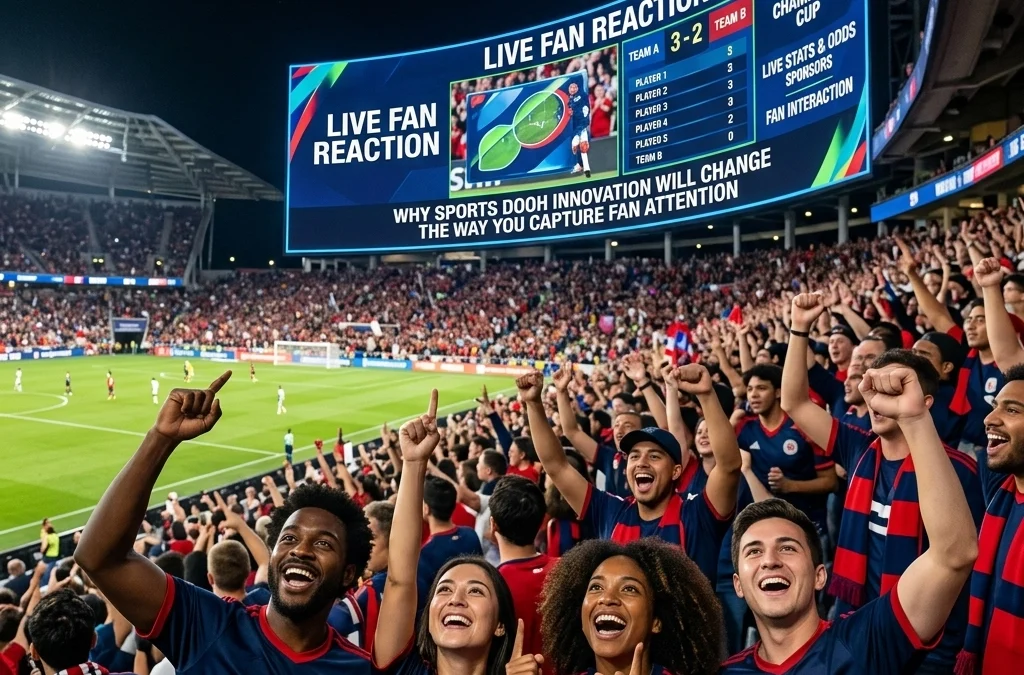
The landscape of sports marketing is moving away from static, one-size-fits-all messaging. In a world where fan attention is split between live action, social media feeds, and mobile notifications, capturing a meaningful moment requires a more sophisticated approach. Digital Out-of-Home (DOOH) innovation has emerged as the primary solution for brands looking to break through the noise. By combining the physical scale of traditional billboards with the agility of digital advertising, sports DOOH offers a unique opportunity to connect with fans throughout their entire journey.
The Strategic Shift from Static to Dynamic Engagement
Traditional sports advertising has historically relied on fixed assets such as stadium signage or standard billboards. While these methods provide visibility, they lack the ability to adapt to the fluid nature of a sporting event. The innovation within sports DOOH allows for dynamic creative execution. This means that advertisements are no longer frozen in time. Instead, they can react to live data, game scores, and environmental triggers.
For media buyers and brand managers, the objective is to move from passive viewing to active engagement. When an advertisement reflects the current state of a game, it transitions from a commercial interruption to a relevant piece of information. This strategic shift is fundamental to capturing the attention of a modern audience that values real-time updates and contextually relevant content.

Strategy: Leveraging the 360-Degree Fan Journey
A common misconception in sports marketing is that the target audience is only found inside the stadium. In reality, the vast majority of fans consume sports outside the venue. The fan journey begins hours before the game and continues long after the final whistle. It encompasses the morning commute, the visit to a local sports bar, the trip to a retail store for team gear, and the transit back home.
Innovation in DOOH allows brands to activate across all these touchpoints. By placing high-impact digital screens in transit hubs, urban centers, and retail corridors, a brand can maintain a consistent presence. For instance, the use of Sportrons allows for specialized placements that target fans where they live, work, and play. This multi-touchpoint strategy ensures that the brand remains top-of-mind, creating a cumulative effect that is much more powerful than a single stadium placement.
Objective and Technology: The Power of Programmatic DOOH
The backbone of modern sports DOOH innovation is programmatic technology. Programmatic DOOH (pDOOH) automates the buying and selling of ad space, allowing for unprecedented precision in targeting. Unlike traditional methods where a spot is purchased weeks in advance, pDOOH allows for real-time bidding and execution based on specific parameters.
Media buyers can set triggers that determine when and where an ad appears. These triggers can include:
- Live game scores and play-by-play updates.
- Weather conditions (e.g., promoting rain gear during a sudden downpour).
- Time of day to capture specific commuting peaks.
- Team performance metrics to capitalize on fan excitement following a victory.
This level of control ensures that marketing budgets are used efficiently. By focusing spend on the moments that matter most, brands can achieve a higher return on investment. A detailed comparison of these methods can be found in this analysis of programmatic DOOH vs traditional stadium ads.

Technology Partners and Implementation
Successful execution of a sports DOOH campaign requires collaboration with specialized technology partners. These partners provide the data feeds and platforms necessary to synchronize creative assets with live events. The integration of Application Programming Interfaces (APIs) allows the DOOH network to pull live statistics directly from the field.
The process typically involves a centralized Demand Side Platform (DSP) where media buyers manage their campaigns. Through this interface, the creative is uploaded and the rules for deployment are established. When the predetermined criteria are met, the content is instantly pushed to the digital screens. This seamless execution eliminates the lead times associated with physical vinyl installations and allows for a "live" advertising experience that matches the intensity of the sport itself.
Omnichannel Reinforcement and the Priming Effect
Innovation in DOOH does not exist in isolation. It is most effective when used as a catalyst for a broader omnichannel strategy. There is a documented "priming effect" associated with large-format digital screens. When a fan sees a bold, high-resolution ad on their way to a game, it creates a mental anchor. When that same fan later encounters a mobile ad or a social media post from the same brand, the likelihood of engagement increases significantly.
This bridge between the physical and digital worlds is often facilitated through interactive elements. The inclusion of QR codes or specific calls-to-action on DOOH screens encourages fans to take immediate action on their smartphones. This synergy ensures that the brand message is reinforced across multiple channels, leading to higher brand recall and preference.

Results: Measuring Success through Data and Attribution
One of the most significant advancements in sports DOOH innovation is the ability to measure outcomes with high precision. Historically, out-of-home advertising was difficult to track. Today, the use of anonymized mobile location data and device IDs allows for sophisticated attribution modeling.
Brand managers can now measure:
- Foot Traffic Attribution: Determining how many people visited a retail location after being exposed to a DOOH ad.
- Brand Lift: Measuring changes in brand awareness and perception through post-campaign surveys.
- Online Conversions: Tracking website visits or app downloads that occur after exposure.
- Audience Reach: Quantifying the exact number of impressions based on real-time pedestrian and vehicle traffic data.
These metrics provide the accountability that modern media buyers demand. By reviewing case studies, it becomes clear that data-driven DOOH campaigns consistently outperform traditional static placements in terms of audience engagement and conversion.
Creating a Value-Added Fan Experience
Innovation in this space is not just about selling a product. It is about enhancing the fan experience. Digital screens that provide utility, such as wayfinding, live news, or social media aggregators, are viewed more favorably by the public. When a brand provides valuable information alongside its messaging, it builds a positive association with the fan base.
For example, a digital screen at a transit hub that displays the latest scores and upcoming schedules provides a service to the fan. The brand that sponsors that screen is seen as a facilitator of the sports experience rather than just an advertiser. This subtle shift in perception is key to long-term brand loyalty in the competitive sports landscape.

Strategy for Future-Proofing Sports Marketing
As the technology continues to evolve, the integration of artificial intelligence (AI) and machine learning will further refine how fan attention is captured. AI can analyze vast amounts of historical data to predict when fans are most likely to be receptive to specific messages. This allows for even more granular targeting and creative optimization.
Media buyers who adopt these innovations now will be better positioned to navigate the changing media environment. The ability to be agile, data-driven, and contextually relevant is no longer an advantage, it is a requirement. By utilizing the tools and strategies provided by OOH Sports, brands can ensure their message is delivered with impact and precision.
Conclusion: The New Standard of Attention
The transition to innovative sports DOOH represents the new standard in capturing fan attention. By moving beyond the stadium walls and embracing the power of real-time, programmatic execution, brands can create meaningful connections that resonate with fans on a deeper level. The combination of scale, agility, and measurable results makes DOOH an indispensable part of any modern sports marketing strategy.
For those looking to explore these strategies further, the marketing resources available provide a comprehensive guide to navigating this dynamic industry. Capturing attention in the sports world requires more than just a large screen. It requires the right technology, the right timing, and a deep understanding of the fan journey. Through constant innovation, sports DOOH is making that connection more achievable than ever before.