
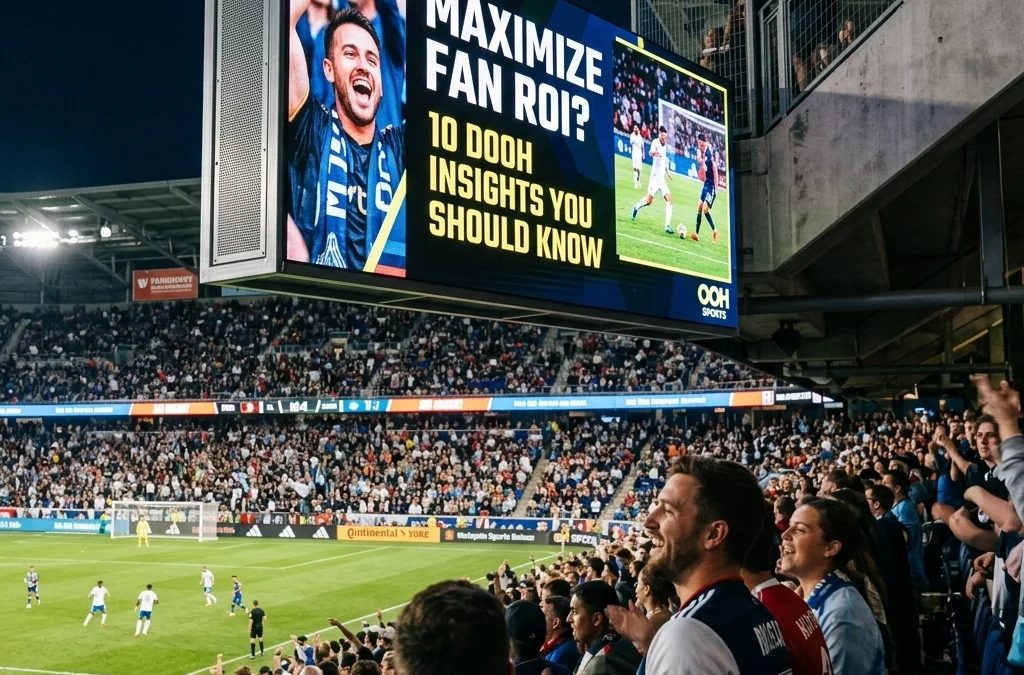
In the world of sports marketing, the quest for the ultimate Return on Investment (ROI) often feels like chasing a championship trophy. Brands pour millions into sponsorships, hoping to catch the eyes of passionate fans. However, the traditional methods of static billboards and fixed signage are quickly becoming relics of a different era. As digital transformation sweeps through every stadium and transit hub, Digital Out-of-Home (DOOH) advertising has emerged as the heavy hitter in the marketing lineup.
If you are looking to maximize how every dollar connects with a fan, you need more than just a presence at the game. You need insights that drive action. At OOH Sports, we focus on bridging the gap between high-impact visuals and measurable results. Whether you are a brand manager or a media buyer, understanding these ten DOOH insights will change the way you view fan engagement.
1. Dynamic Creative and Real-Time Integration
The most significant advantage of DOOH in a sports setting is the ability to change the play while the game is still going. Dynamic creative allows advertisements to update in real-time based on live game data. Imagine a display that switches to a celebratory discount code the second the home team scores a touchdown or a buzzer-beating three-pointer.
This isn't just about being flashy; it is about relevance. When an ad reflects the current mood of the stadium, it stops being an interruption and starts being part of the experience. Real-time integration ensures that your messaging is never out of sync with the fan's emotions. By leveraging tools like Sportrons, advertisers can automate these triggers, ensuring that the ROI is boosted through sheer contextual timing.
2. The Rise of Interactive Capabilities
Engagement is the precursor to ROI. Traditional ads are a one-way conversation, but DOOH is turning into a dialogue. Modern screens are increasingly equipped with interactive elements, such as QR codes that lead to instant prize entries or AR experiences that let fans "wear" team gear virtually.
Interactive capabilities provide something static ads never could: trackable engagement metrics. When a fan scans a code on a digital screen, you gain a direct data point. This move from passive viewing to active participation is a game-changer for brands looking to prove the value of their spend. It creates a bridge between the physical world of the stadium and the digital world of the fan’s smartphone.

3. TVOOH: Synchronized Multi-Screen Experiences
We often think of "out-of-home" and "at-home" as two different worlds, but TVOOH (Television Out-of-Home) is blurring those lines. This insight focuses on synchronized multi-screen experiences. When a fan sees a brand on the stadium’s perimeter boards and then sees a corresponding ad on their mobile device or the broadcast screen, the "surround sound" effect takes hold.
This synchronization significantly boosts brand recall. Consistency across screens ensures that the message sticks, making it much more likely that a fan will remember the brand long after the final whistle. It is about creating a cohesive narrative that follows the fan from the concourse to the couch.
4. Programmatic Precision and Scalability
The era of manual bookings and long lead times for physical banners is fading. Programmatic DOOH (pDOOH) allows advertisers to buy inventory with the same precision they find in digital display ads. You can target specific times, locations, and even demographic clusters with incredible accuracy.
In the sports world, momentum shifts rapidly. Programmatic buying allows brands to scale their presence up or down based on these shifts. If a particular game is garnering massive social media buzz, programmatic platforms allow you to increase your exposure instantly. This flexibility ensures that you aren't wasting budget on empty stadiums or low-interest windows. For a deeper dive into how this compares to old-school methods, check out our guide on programmatic DOOH vs. traditional stadium ads.

5. Contextual Relevance and Environmental Triggers
Why show an ad for a hot coffee when it is 90 degrees in the stands? Contextual relevance is one of the most powerful tools in the DOOH arsenal. Advertisers can now use environmental triggers, such as weather, traffic patterns, or even the local "vibe" of a neighborhood, to determine which creative to display.
If it starts to rain during a game, a smart DOOH campaign can immediately switch to promoting team-branded umbrellas or indoor hospitality zones. This level of helpfulness builds brand affinity. Fans appreciate brands that seem to understand their immediate needs, which naturally leads to higher conversion rates and a healthier ROI.
6. Advanced Audience Measurement
One of the biggest hurdles in OOH history has been measurement. How many people actually looked at that board? Thanks to modern sensors, mobile location data, and sophisticated analytics, that question is finally being answered. Advanced audience measurement now provides real-time data on viewership, dwell times, and even the demographic makeup of the crowd.
This data allows for clear attribution paths. We are seeing incredible results in the industry, including:
- An average 22% increase in foot traffic for brands using targeted DOOH.
- A 13% uplift in mobile website traffic during and after game-day activations.
- Precise monitoring of QR code engagement to see exactly which locations are performing best.
To see how these metrics are applied in the real world, you can explore our marketing strategies page.

7. Omnichannel Synergy with Mobile and Social
DOOH does not exist in a vacuum. The most successful campaigns are those that use high-impact digital displays as a launchpad for broader omnichannel efforts. A massive digital display in a high-traffic stadium area can prompt fans to share a specific hashtag, engage with an AR filter on social media, or enter a contest via mobile.
When DOOH is integrated with mobile retargeting, the ROI potential skyrockets. If a fan's device is detected near a digital board, they can be served a follow-up ad on their social media feed later that day. This keeps the brand top-of-mind and provides a seamless path to purchase. It is the ultimate way to ensure the fan's journey doesn't end when they leave the stadium.
8. Efficiency vs. Traditional Static Signage
When evaluating ROI, efficiency is just as important as impact. Programmatic DOOH is inherently more efficient than traditional static signage. Static signs require physical production, shipping, and manual installation, all of which eat into your marketing budget. Furthermore, a static sign is "always on," even when the stadium is empty or the target audience isn't present.
DOOH allows multiple brands to share a single high-quality space, reducing the entry cost for smaller advertisers while allowing major brands to dominate specific high-value time slots. By ensuring there is zero "wasted spend," DOOH provides a much cleaner ROI profile. To understand the full scope of winning over fans in the stadium environment, our guide to stadium perimeter branding is a great resource.

9. Data-Driven Triggers and Personalization
Personalization is no longer reserved for email marketing. Data-driven triggers allow DOOH ads to feel personally relevant to large groups of fans simultaneously. By leveraging social trends, live scores, and even sentiment analysis of fans on-site, ads can be tailored to the collective experience of the crowd.
Research has shown that contextually triggered content generates a 32% higher brain response compared to generic ads. When a fan feels like an ad "gets them" or "gets the moment," their cognitive engagement increases. This higher level of attention is a direct driver of ROI, as it moves the fan from passive awareness to emotional connection.
10. Mid-Flight Campaign Optimization
In the past, once a billboard was up, it was up. If the creative wasn't working, you were stuck with it for the duration of the flight. DOOH changes that. Advertisers can now perform mid-flight campaign optimization. By looking at real-time performance data, brands can swap out underperforming creatives, adjust the frequency of ads in specific locations, or pivot their strategy based on real-world conditions.
This agile approach is what high-level media buyers use to ensure they are getting the most out of every campaign. There is no reason to wait until a campaign is over to see if it worked. With DOOH, you can fix it while it's still running. For more on these "behind the curtain" tactics, you might find our article on industry secrets revealed particularly insightful.
The Future of Fan ROI
The shift from static to digital isn't just a trend; it is a fundamental change in how sports marketing operates. By focusing on these ten insights, brands can stop guessing and start measuring. The goal is simple: be in the right place, at the right time, with the right message.
At OOH Sports, we believe that the stadium of the future is an interactive, data-rich environment where every screen is an opportunity to build a lasting relationship with a fan. As technology continues to evolve, the brands that embrace dynamic, programmatic, and measurable DOOH will be the ones that walk away with the best ROI.
If you are ready to take your fan engagement to the next level, or if you simply want to learn more about how digital out-of-home can transform your next campaign, we invite you to explore our about page or reach out to us at contact. The game is changing( is your brand ready to play?)