
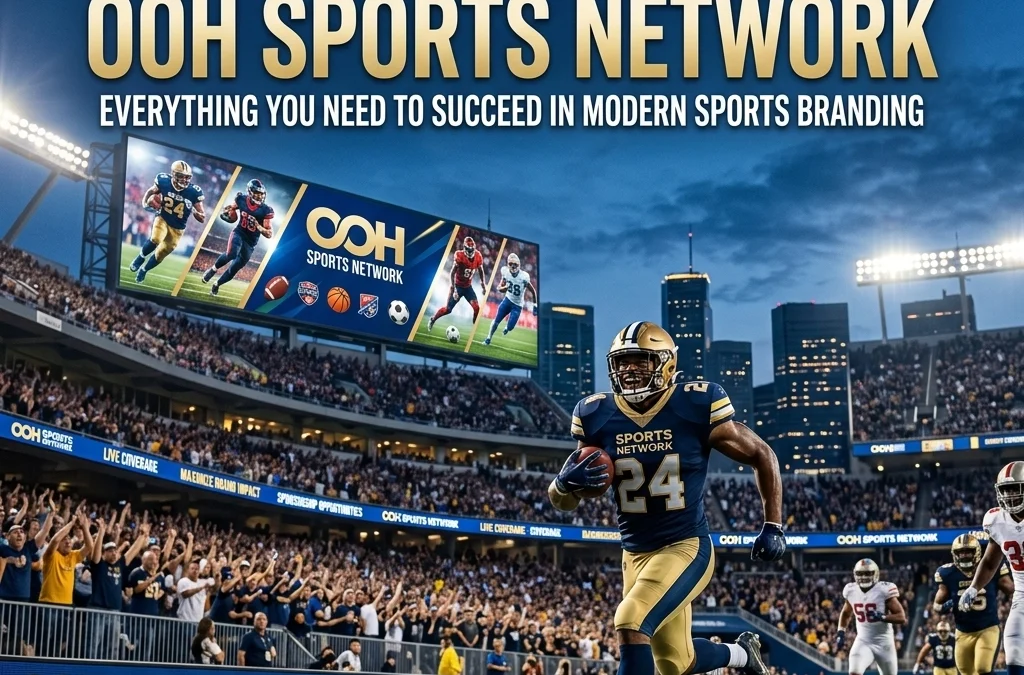
The advertising landscape is experiencing a significant shift as traditional media gives way to dynamic, digital ecosystems. OOH Sports, a leader in the digital out-of-home (DOOH) sector, has announced a major expansion of its infrastructure. This growth milestone solidifies the company position as a primary provider for media buyers and brands looking to capture the attention of sports fans. By increasing the density of the Sporttron Digital Network, the organization offers unprecedented access to high-traffic environments where fan engagement is at its peak.
The Foundation of the Sporttron Digital Network
At the core of this expansion is the Sporttron Digital Network. This system is designed to bridge the gap between static brand awareness and active fan participation. Unlike traditional billboards that remain unchanged for weeks, the OOH Sports network utilizes high-definition digital screens capable of delivering real-time content.

The infrastructure expansion focuses on key metropolitan areas and major sports corridors. This strategic growth ensures that brand messages are not only seen but are also delivered in high-definition quality that matches the premium nature of the sports they surround. The objective is to provide a seamless branding experience that follows the fan from the moment they leave their home until they reach their seat in the stadium.
Strategic Placement and the Fan Journey
Success in modern sports branding is determined by placement precision. OOH Sports has identified high-traffic zones where fans spend significant amounts of idle time. These zones include transit hubs, official fan zones, and the critical last mile leading to stadium gates.

By placing screens in airports, train stations, and rideshare drop-off points, the network captures fans during the initial phase of their journey. As fans approach the venue, the density of the screens increases, creating an omnipresent brand environment. This strategy relies on the principle of the fan journey, ensuring that a brand is the first and last thing a consumer sees during a major sporting event.
Detailed analysis of foot traffic patterns allows for the optimization of ad delivery. Screens are positioned to maximize dwell time, particularly in areas like security lines or ticket queues, where fans are most likely to engage with digital content. This focus on the stadium perimeter is essential for brands that want to win over fans before they even enter the venue. For more insight on this approach, media buyers often look to stadium perimeter branding guides to refine their tactics.
Programmatic DOOH and Real-Time Capabilities
The most significant advantage of the OOH Sports network is its programmatic capability. Programmatic DOOH (pDOOH) allows for the automated buying and selling of ad inventory, much like online advertising but for physical screens. This technology enables media buyers to bid on impressions in real-time, ensuring that budgets are spent efficiently.

Beyond simple automation, the network supports dynamic triggers. These triggers allow creative content to change automatically based on external data feeds. Examples of these capabilities include:
- Game Momentum: Updating creative to reflect a live score or a specific player milestone.
- Weather Conditions: Triggering specific ads for rain gear or cold beverages based on local weather reports.
- Time of Day: Shifting messaging from pre-game excitement to post-game celebrations.
- Traffic Congestion: Increasing ad frequency when transit delays lead to higher dwell times in specific areas.
This level of agility transforms OOH from a passive medium into an active participant in the sporting event. It allows brands to react to the unpredictability of sports, maintaining relevance regardless of the outcome on the field.
Maximizing ROI through Data-Driven Decisions
A common challenge in traditional advertising is the measurement of impact. OOH Sports addresses this by integrating sophisticated data management tools. By leveraging device ID tracking and location-based analytics, the network provides media buyers with clear metrics regarding reach and frequency.
When comparing programmatic DOOH vs. traditional stadium sponsorships, the data consistently points toward a higher return on investment for digital networks. Traditional static signage often suffers from "banner blindness," whereas the movement and brightness of digital screens attract and hold attention.
The use of brand lift studies and attribution modeling allows companies to see exactly how their OOH spend correlates with website visits or product purchases. This analytical approach moves sports branding away from gut feelings and toward a results-oriented methodology.

Integration of NIL and Athlete Branding
The modernization of the OOH Sports network also accommodates the rise of Name, Image, and Likeness (NIL) branding. As athletes become independent brands, the network provides a platform for localized and personalized campaigns. Brands can now deploy creative featuring specific athletes in the markets where those athletes have the highest influence.
This hyper-local targeting is a core component of the OOH Sports marketing strategy. It allows for a more authentic connection between the fan, the athlete, and the sponsoring brand. The ability to swap creative instantly means that an NIL campaign can be scaled up or down based on the athlete's performance or public presence, providing a level of safety and flexibility previously unavailable in out-of-home media.
The Future of Sports Advertising
The expansion of the OOH Sports network represents a commitment to the future of the industry. By focusing on high-definition infrastructure, programmatic flexibility, and strategic geographic placement, the company provides a robust solution for the modern media buyer.
As the network continues to grow, the focus remains on simple, effective, and impactful communication. The goal is to provide a platform where technology meets the passion of sports, allowing brands to become an integral part of the fan experience. For those looking to understand the mechanics of this evolution, the OOH Sports about page provides a deeper look into the mission and vision of the organization.
The shift toward digital ecosystems in sports branding is not just a trend but a fundamental change in how audiences consume media. OOH Sports is positioned at the forefront of this change, offering the tools and the reach necessary for brands to succeed in an increasingly competitive market. Through data-driven insights and a rapidly expanding physical footprint, the network ensures that the connection between brands and fans remains stronger than ever.