
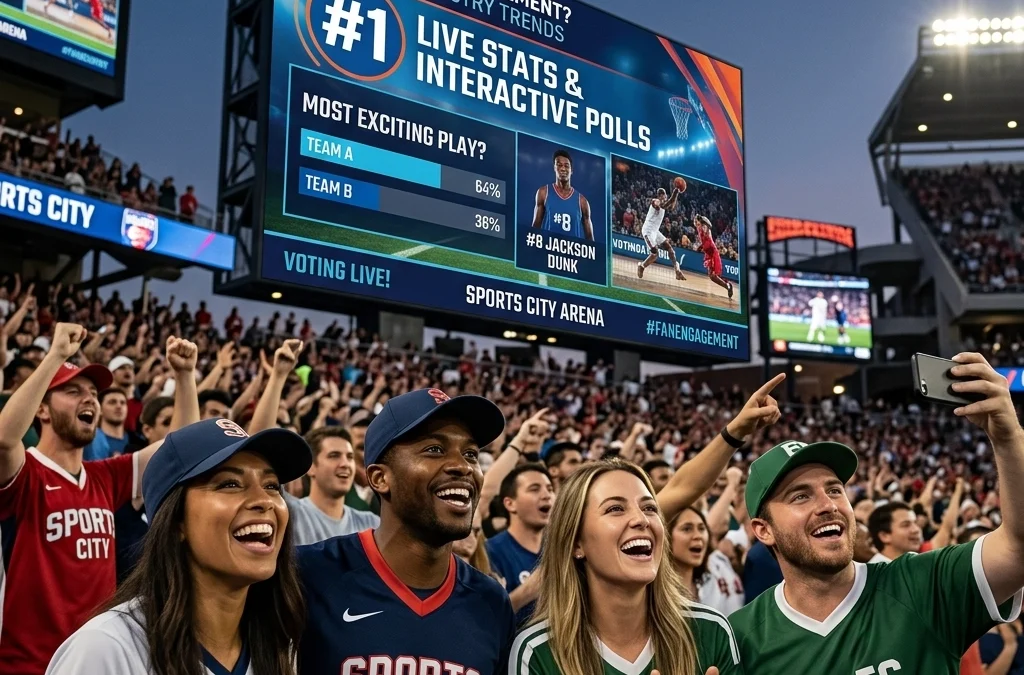
The way fans consume sports has changed forever. It is no longer enough to just put a logo on a wall and hope someone notices. Today, fans are multi-tasking, checking stats on their phones while watching the game, and looking for experiences that feel personal and exciting. If you are a brand or a marketer, you have probably noticed that traditional advertising is not hitting quite like it used to. This is where Digital Out-of-Home (DOOH) advertising steps in to save the day.
At OOH Sports, we see how the landscape is shifting every single day. We are moving away from static images and toward high-tech, data-driven stories that stop people in their tracks. Whether you are looking to boost brand awareness or drive actual sales, staying ahead of the curve is the only way to win.
Here are the 10 DOOH industry trends you need to know if you want to master fan engagement.
1. Dynamic Creative and Real-Time Data Integration
The biggest trend in sports advertising right now is context. Static ads are becoming a thing of the past because they cannot react to what is happening on the field. Dynamic creative allows your ad to change based on real-time data. Imagine a billboard that updates the score of the big game every five minutes. Or even better, an ad that triggers a celebratory message the second your local team scores a touchdown.
This type of "in-the-moment" advertising makes your brand feel like a fellow fan. It shows that you are watching the game right along with the audience. When an ad reflects the current reality, it captures attention much more effectively than a generic message. It transforms a simple screen into a live scoreboard, and that is a powerful way to build a connection.
2. Creative Innovation: 3D and Anamorphic Displays
Have you seen those billboards where a giant basketball seems to fly out over the street? That is anamorphic 3D. These "forced perspective" displays are designed to create an illusion of depth that tricks the eye. This is not just a gimmick, it is a content goldmine.
These displays are highly "Instagrammable." When fans see something that cool, they pull out their phones, take a video, and share it on social media. Suddenly, your local outdoor ad is reaching millions of people globally. A great example of this type of creative impact can be seen in how Nike engaged fans during the NYC Marathon, using smart placement and bold visuals to dominate the conversation without even being an official sponsor.

3. Programmatic Precision and Scalability
In the past, buying outdoor advertising was a manual process that involved lots of phone calls and long lead times. Now, Programmatic DOOH (pDOOH) is changing the game. It allows brands to buy ad space automatically based on specific triggers like weather, time of day, or even game results.
This means you can be more efficient with your budget. If you only want your ads to show up in sports bars when it is raining (because you know more people will be inside watching the game), you can do that. This precision is exactly how White Claw achieved a 74% lift in purchase consideration for their vodka launch. By using data to find the right moments, they maximized their impact without wasting a single cent.
4. Hyper-Local Targeting in "Everyday Fan Spaces"
While the stadium is the heart of the action, fans spend most of their time in "everyday fan spaces." This includes sports bars, gyms, transit hubs, and retail centers. One of the growing trends is reaching fans where they live their daily lives.
By using geo-fencing and hyper-local targeting, brands can reach a specific audience in a specific neighborhood. If there is a local rivalry game happening, you can run ads tailored specifically to that city. This builds a sense of community. At OOH Sports, we specialize in placing your message in these high-traffic areas where fans are already in a "sports mindset." This relevance is what turns a viewer into a customer.
5. The Rise of Interactive Capabilities
Engagement is a two-way street. Modern DOOH screens are no longer just for looking, they are for doing. We are seeing a massive increase in the use of QR codes and touch-sensitive interfaces.
A fan might see an ad for a new jersey, scan a QR code on the screen, and be taken directly to a checkout page on their phone. Or they might scan a code to enter a contest to win tickets to the next home game. This bridges the gap between the physical world and the digital world. It allows brands to collect valuable first-party data while providing immediate value to the fan. It is a win-win for everyone involved.

6. TVOOH: Synchronized Multi-Screen Experiences
TV Out-of-Home (TVOOH) is a trend where outdoor screens are synchronized with broadcast television. This creates a surround-sound effect for your marketing. If a fan is at a bar watching the game on a big TV, and your ad appears on a digital screen right next to it at the exact same time, the message reinforcement is incredibly strong.
This synchronization is especially powerful during high-emotion moments, like a championship trophy presentation or a critical penalty kick. When the whole room is focused on one event, having your brand present across multiple screens ensures you are part of that collective memory. Using specialized Sportrons technology can help manage these multi-screen environments to ensure the timing is perfect.
7. Omnichannel Synergy with Mobile and Social
DOOH does not live on an island. It works best when it is part of a larger omnichannel strategy. The goal is to create a cohesive narrative that follows the fan from the street to their sofa.
Research shows that about 74% of consumers take action on their mobile devices after seeing a DOOH ad. Maybe they search for the brand, visit the website, or follow a social media page. Brands are now using device ID tracking to retarget people who have passed by their billboards. For example, Sea-Doo saw a 144% increase in purchase consideration by integrating DOOH into their broader marketing funnel. It is about keeping the conversation going even after the fan has walked away from the screen.
8. Video Content Over Static Imagery
While a good photo can tell a story, video captures the eye much faster. In a busy environment like a stadium or a crowded city center, motion is your best friend. The human eye is naturally drawn to movement.
We are seeing a shift toward short-form, high-impact video content specifically designed for outdoor screens. These are not just repurposed TV commercials. They are silent, bold, and fast-paced videos that get the point across in five to ten seconds. This trend is helping brands like AB InBev's Mike's Hard Iced Tea see massive lifts in brand image by creating content that feels energetic and modern.

9. Advanced Data-Driven Measurement
One of the old knocks against outdoor advertising was that it was hard to measure. Those days are gone. Today, we have sophisticated tools to track exactly how many people saw an ad and, more importantly, what they did next.
We use foot traffic studies, brand lift surveys, and attribution modeling to prove the ROI of a campaign. We can tell you if people who saw your ad actually visited your store or downloaded your app. This level of transparency is making DOOH a much more attractive option for data-driven marketers. It allows for constant optimization. If one creative version is performing better than another, we can make the switch instantly.
10. Sustainability and Eco-Friendly Technology
Finally, we cannot ignore the push for sustainability. Both brands and consumers are looking for greener ways to do business. The DOOH industry is responding by moving toward energy-efficient LED screens and using recycled materials for installations.
In some cities, digital screens are even being powered by solar energy or integrated with air-purification technology. As a brand, being associated with eco-friendly advertising can boost your reputation and appeal to the growing number of environmentally conscious fans. It shows that you care about the community as much as you care about the game.
Summary: Bringing It All Together
Fan engagement is no longer a mystery. It is a science that combines great creative, smart timing, and the right technology. By focusing on these ten trends, you can ensure that your brand is not just seen, but remembered.
Whether it is the 3D visuals that get people talking on social media or the programmatic precision that hits the right fan at the right moment, the tools are there for you to succeed. At OOH Sports, we are dedicated to helping our partners navigate these trends to build deeper connections with the fans who matter most.
If you are ready to take your advertising to the next level and see how these trends can work for your specific brand, we would love to chat. You can learn more about us or reach out directly to start planning your next big win. The game is changing, and it is time to make sure your brand is in the starting lineup.