
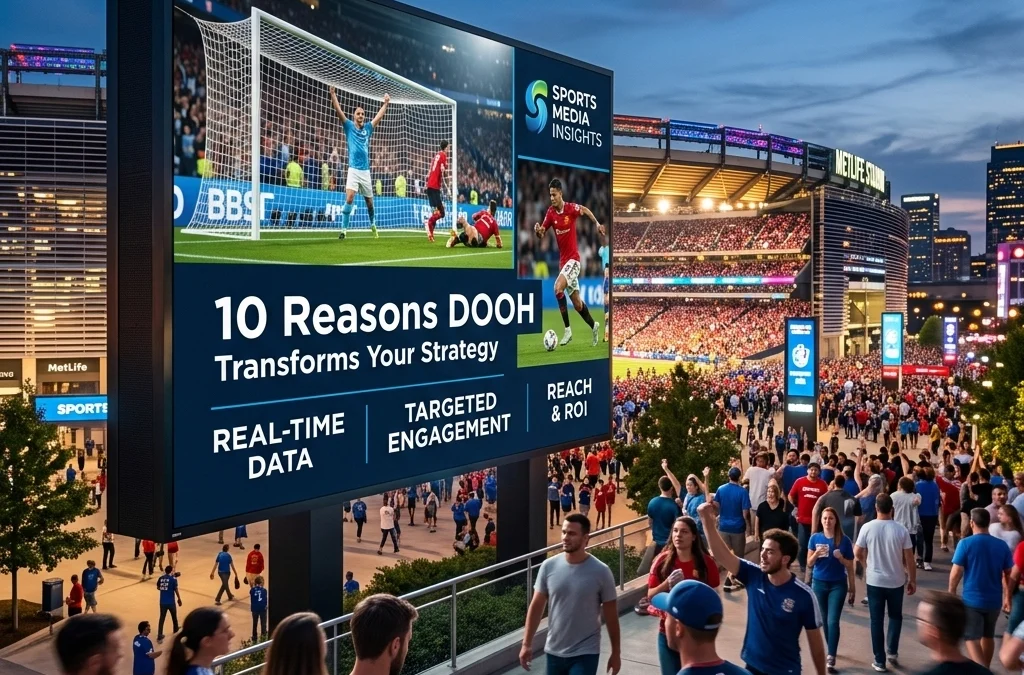
The landscape of sports media is undergoing a significant transformation. As traditional television viewership fragments and digital ad fatigue sets in, brands are searching for more impactful ways to connect with fans. Digital Out-of-Home (DOOH) advertising has emerged as a cornerstone of modern sports marketing, offering a unique blend of high-impact visuals and data-driven precision. By integrating modern DOOH insights into a media strategy, companies can bridge the gap between the physical and digital worlds, reaching fans exactly where they live, work, and play.
1. Capturing the 99 Percent Outside the Stadium
A common misconception in sports marketing is that the most valuable audience is found inside the arena. In reality, the vast majority of a team’s fanbase, approximately 99 percent, is located outside the stadium during any given game. Modern DOOH insights allow brands to transition from a location-based strategy to a routine-based strategy.
By placing ads in transit hubs, office buildings, and retail centers, brands can intercept fans during their daily commutes and errands. This approach ensures that the brand remains top of mind throughout the day, not just during the few hours of the game. For more details on how this compares to traditional methods, readers can explore programmatic DOOH vs. traditional stadium ads.
2. Dynamic Messaging Across Game Phases
Fan needs and emotional states shift dramatically throughout the lifecycle of a sporting event. A modern DOOH strategy accounts for these shifts by delivering phase-specific content.
- Pre-game: Focus on anticipation, logistics, and hype.
- In-game: Deliver real-time updates, scores, and live odds.
- Post-game: Capitalize on the win with celebratory content or provide relevant offers for the commute home.
This chronological approach ensures that the messaging is always contextually relevant, which significantly increases the likelihood of engagement.

3. The Power of the Priming Effect
The concept of the "priming effect" is a critical insight for omnichannel campaigns. Research indicates that when a consumer sees a DOOH ad, it reinforces and amplifies the impact of ads seen on other channels, such as television or social media.
For instance, a fan who sees a short, impactful DOOH clip during their morning commute is more likely to pay attention to a longer television commercial from the same brand later that evening. This synergy creates a stronger memory structure in the consumer's mind, making the overall media spend much more efficient.
4. Real-Time Data and Creative Optimization
One of the most powerful aspects of modern DOOH is the ability to use real-time data triggers. This is known as Dynamic Creative Optimization (DCO). Campaigns can be programmed to change based on external factors without manual intervention.
If the home team scores a touchdown, screens across the city can immediately reflect that excitement. If the weather changes suddenly at a golf tournament, ads can shift to promote umbrellas or rain gear. This level of agility was previously impossible in out-of-home advertising but is now a standard requirement for brands looking to maximize their impact.
5. High Consumer Favorability and Non-Intrusiveness
In an era of ad-blockers and "skip ad" buttons, DOOH stands out as a non-intrusive medium. Studies show that approximately 73 percent of consumers view DOOH ads favorably. Unlike mobile pop-ups or interrupted video streams, DOOH screens are a natural part of the urban environment.
Fans encounter these messages during decision-making moments, such as when they are deciding where to eat after a game or which beverage to purchase at a convenience store. This high level of acceptance leads to better brand sentiment and higher trust.
6. Programmatic Flexibility and Scalability
The shift toward programmatic DOOH has revolutionized how sports media is bought and sold. Programmatic technology allows for high levels of flexibility, enabling brands to pause, pivot, or scale campaigns in real time.
This is particularly useful in sports, where seasons can be unpredictable. If a team unexpectedly makes a deep playoff run, a brand can quickly ramp up its presence in that specific market. Conversely, if an event is canceled or postponed, the budget can be instantly reallocated. This efficiency is a primary driver behind the projection that DOOH sports advertising will hit 50 billion dollars by 2030.
7. Targeted Precision with Third-Party Data
Modern DOOH is no longer a "spray and pray" medium. By layering third-party audience data, brands can identify exactly where their target fans are located. This includes using anonymized device ID data to understand the movement patterns of specific audience segments, such as frequent stadium-goers or sports betting enthusiasts.
By combining DOOH placements with these data insights, brands can ensure that their creative is being shown on the screens most likely to be seen by their ideal customer. This precision targeting reduces waste and improves the overall return on investment.

8. Measurable Brand Lift and Attribution
One of the biggest hurdles for traditional out-of-home advertising was the difficulty of measurement. Today, modern DOOH insights provide clear metrics for success. Brand lift studies and attribution modeling can now quantify the impact of a campaign on purchase consideration and brand image.
For example, a recent White Claw programmatic campaign saw a 74 percent lift in purchase consideration. Similarly, Mike’s Hard Iced Tea achieved a 119 percent lift in positive brand image through a targeted DOOH strategy. These results prove that DOOH is a powerful driver of measurable business outcomes.
9. Year-Round Fan Engagement
While many sports campaigns focus heavily on the duration of the season, DOOH provides a cost-effective way to maintain fan engagement year-round. Modern insights help brands identify "hot spots" where fans congregate even during the off-season.
By maintaining a consistent presence in these locations, brands can move casual fans further up the "fandom tier," turning occasional viewers into loyal brand advocates. This long-term approach to community engagement is essential for building sustainable brand equity in the competitive sports market.
10. Future-Proofing for 2026 and Beyond
As we move toward 2026, the integration of AI and hyper-personalization will become even more prevalent. Modern DOOH insights are the foundation for these future technologies. Brands that adopt DOOH now are positioning themselves to take advantage of upcoming trends like direct-to-fan streaming and AI-driven creative adjustments.
Staying ahead of the curve requires an understanding of how these technologies work together to create a seamless fan journey. For those interested in how these strategies are applied in real-world scenarios, reviewing a case study can provide valuable perspective.
Strategic Execution and Partnership
Implementing these insights requires a structured approach to strategy and execution. A typical high-performing DOOH campaign follows a specific framework:
Objective and Strategy
The first step involves defining clear KPIs, such as brand awareness, foot traffic, or purchase intent. The strategy must align with the specific habits of the target sports audience.
Technology Partners
Successful campaigns often utilize specialized Demand-Side Platforms (DSPs) to manage programmatic buys. For instance, StackAdapt has been instrumental in driving DOOH adoption by providing the tools necessary for omnichannel integration.
Creative Execution
Creative assets must be optimized for the out-of-home environment. This means using bold visuals, minimal text, and high-contrast colors. The use of dynamic triggers, such as live score updates, adds a layer of relevance that static ads cannot match.
Measurement and Analysis
Post-campaign analysis is crucial. By examining exposed vs. unexposed groups, brands can determine the true impact of the DOOH placements on consumer behavior.

Summary of Impact
The evidence is clear: modern DOOH insights are no longer an optional add-on for sports media strategies; they are a necessity. By capturing fan attention in the physical world, leveraging real-time data, and ensuring omnichannel synergy, brands can achieve levels of engagement and ROI that were previously out of reach.
Whether the goal is to drive awareness for a new product launch, like Sea-Doo’s first DOOH campaign, or to dominate a high-traffic market during a major event, the strategic use of digital out-of-home advertising is the key to winning in the modern sports landscape. For more information on policies and services, visitors can consult the About page or the Terms of Service.