
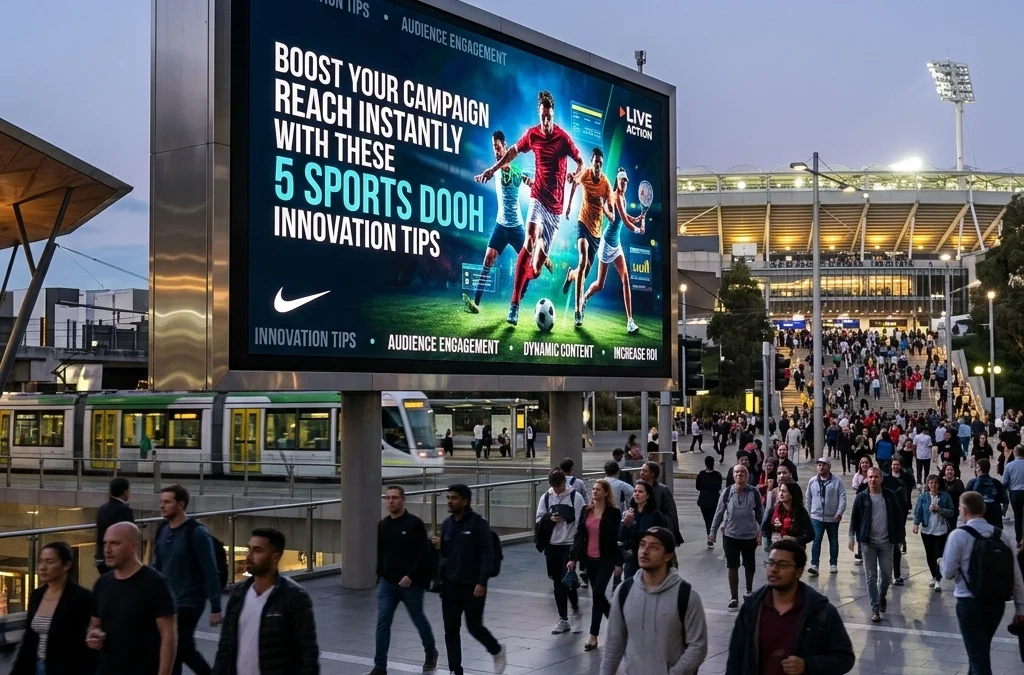
Digital Out-of-Home (DOOH) advertising has undergone a massive transformation, especially within the sports industry. Gone are the days of static posters that remain unchanged for months. Today, the intersection of sports and digital signage offers a dynamic playground for brand managers and media buyers looking to capture the attention of highly engaged fans.
As the market for sports advertising continues to expand, staying ahead of the curve requires more than just high-quality graphics. It requires innovation. With projections suggesting that DOOH sports advertising will reach significant global milestones by the end of the decade, understanding how to leverage new technologies is essential for maintaining a competitive edge.
The following five tips outline how to boost campaign reach and effectiveness using the latest innovations in sports DOOH.
1. Implement Dynamic Creative with Real-Time Data
The most effective sports campaigns are those that feel relevant to the current moment. Dynamic creative allows advertisements to change in real-time based on external data feeds. In the context of sports, this means displays can automatically update to show live scores, player statistics, or game countdowns.
When a brand aligns its messaging with the live action of a game, it taps into the emotional state of the audience. For example, a sports apparel brand might trigger a specific creative featuring a star athlete immediately after they score a touchdown or a goal. This level of responsiveness creates a sense of urgency and connection that static media cannot replicate.
Technology now allows for real-time sports betting DOOH campaigns that update odds as the game progresses. This ensures that the content remains useful to the viewer until the final whistle. By using Data Content Optimization (DCO), brands can ensure that their message is never out of date, maximizing the relevance of every impression served.

2. Leverage Programmatic Precision and Triggers
Programmatic DOOH (pDOOH) has revolutionized how media is bought and sold. Instead of manual negotiations for specific loops, programmatic platforms allow for automated, data-driven placements. This innovation is particularly powerful for sports marketing because it allows for precision targeting based on specific "triggers."
Triggers can include:
- Weather Conditions: Promoting cold beverages on a hot game day or rain gear when a storm is forecasted near a stadium.
- Game Results: Launching "victory" creatives in a specific city immediately following a home team win.
- Traffic and Proximity: Increasing ad frequency on digital billboards leading toward a stadium in the two hours before kickoff.
- Audience Demographics: Using anonymized mobile location data to identify when a high concentration of sports enthusiasts is present in a specific area.
By utilizing a specialized DSP for programmatic DOOH, brand managers can ensure their budget is spent only when the most ideal conditions are met. This reduces waste and ensures that the reach of the campaign is concentrated on the most valuable moments.
3. Synchronize Across Multiple Screens (TVOOH)
In the modern media landscape, fans are rarely looking at just one screen. They are watching the game on a stadium jumbotron, checking stats on their phones, and looking at digital displays as they move through the venue. The concept of TVOOH (Television Out-of-Home) involves synchronizing outdoor digital displays with live broadcast events.
This multi-screen approach creates a "surround sound" effect for the brand. When a viewer sees an ad on a street-level digital screen while walking to a sports bar, and then sees the same brand on the TV inside the bar, the cognitive recall of that brand increases significantly.
Strategic synchronization was famously used in campaigns where a brand capitalized on major sporting events without being an official sponsor. For instance, Nike successfully navigated the NYC Marathon landscape by blanketing the city with DOOH assets that resonated with runners and spectators alike, proving that smart placement and timing can rival even the most expensive official partnerships.

4. Bridge Physical and Digital with Interactive Elements
Innovation in DOOH is not just about what the fan sees, but what the fan does. Modern digital screens can act as portals to a brand's digital ecosystem. By incorporating QR codes, NFC technology, or augmented reality (AR) triggers, DOOH moves from an awareness tool to a conversion tool.
In sports environments, fans are often looking for ways to engage. An interactive DOOH campaign might offer:
- Exclusive Discounts: Scanning a code on a stadium perimeter screen to receive a limited-time offer on team merchandise.
- Gamification: Using a mobile phone to play a quick digital game on a large-scale screen during half-time.
- Instant Access: Providing a direct link to a landing page where fans can enter a sweepstakes or sign up for a newsletter.
Case studies have shown that adding these interactive layers can lead to dramatic shifts in consumer behavior. For instance, Sea-Doo’s first digital OOH campaign resulted in a 144 percent increase in purchase consideration by effectively reaching the right audience at the right time. Moving the needle on purchase intent is a primary goal for brand managers, and interactive DOOH provides the bridge to get there.

5. Focus on Strategic High-Traffic Placement and Design
While technology is vital, the fundamentals of location and visual design still dictate the success of a sports DOOH campaign. Capturing reach instantly requires being where the fans are, not just where the screens are available. This involves identifying "choke points" in the fan journey, such as transit hubs, stadium entrance gates, and popular pre-game entertainment districts.
However, being in the right place is only half the battle. The creative must be designed for the DOOH environment. High-contrast colors, minimal text, and bold imagery are necessary to capture attention in the 1.5 to 3 seconds a person typically glances at a screen.
Common errors, such as using overcrowded designs or failing to account for viewing angles, can diminish the impact of a campaign. Learning how to avoid common sports DOOH mistakes is a critical step for any media buyer. By combining strategic stadium perimeter targeting with high-impact visuals, brands can ensure their message cuts through the noise of a crowded sporting event.

Measuring Success: The Power of Data
The ultimate innovation in sports DOOH is the ability to measure results with the same granularity as online advertising. Through the use of device ID passback and brand lift studies, brands can now track exactly how their DOOH spend influences consumer action.
Research into programmatic DOOH campaigns has revealed impressive statistics:
- Brand Image: Some campaigns, like those for Mike's Hard Iced Tea, have seen a 119 percent lift in positive brand image.
- Purchase Consideration: Brands like White Claw have achieved a 74 percent lift in purchase consideration by using targeted programmatic DOOH for new product launches.
These results prove that DOOH is no longer just a "top-of-funnel" awareness play. It is a full-funnel solution that can drive measurable ROI. For more detailed insights into how these strategies translate to real-world success, exploring a case study can provide the necessary data to justify increased investment in the medium.
Conclusion
Boosting campaign reach in the sports sector requires a shift from traditional outdoor advertising to a more innovative, tech-forward approach. By implementing dynamic creative, leveraging programmatic triggers, synchronizing multi-screen experiences, fostering interactivity, and focusing on strategic design, brand managers can create campaigns that do more than just exist in the background. They can create campaigns that fans actively engage with and remember.
As the industry moves forward, the brands that embrace these innovations will be the ones that win the battle for attention in the high-stakes arena of sports marketing. For those ready to take the next step in their advertising journey, reaching out to experts through a contact page is the best way to begin building a custom strategy tailored to specific campaign goals.