
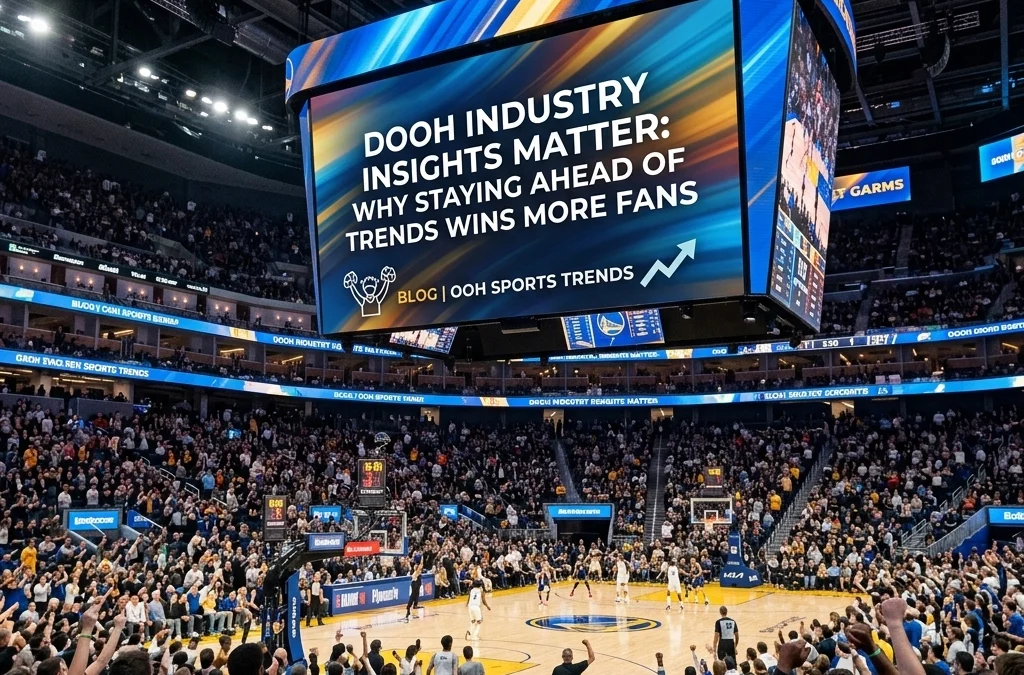

Digital out-of-home (DOOH) advertising has transitioned from an experimental medium to a fundamental component of the modern marketing mix. This shift signifies that for brands, rights holders, and media owners, staying ahead of industry trends is no longer a luxury. It is a strategic requirement. Understanding the trajectory of the DOOH landscape is the primary way to capture attention, secure advertising budgets, and build lasting connections with fans.
The following insights provide a roadmap for navigating the evolving world of digital sports advertising. By focusing on emerging technologies and data-driven strategies, organizations can ensure their messages resonate in the right places at the most impactful moments.
The Strategic Importance of Industry Insights
The global DOOH market is experiencing a period of significant expansion. Market forecasts indicate that revenues are set to grow substantially over the coming decade, driven by increased urbanization and the digital transformation of physical spaces. In many leading markets, digital displays are projected to represent the majority of all out-of-home advertising spend in the near future.
When a brand or media owner understands these macro signals, they gain a competitive edge. They can lock in premium locations before the market becomes saturated, price inventory accurately as programmatic demand increases, and design campaigns that feel contemporary and relevant. Ultimately, staying informed allows for the creation of experiences that win more fans and drive repeat business.
The Rise of Programmatic DOOH (pDOOH)
Historically, purchasing a billboard involved long lead times and rigid, static contracts. The introduction of programmatic buying has revolutionized this process, allowing for the dynamic purchase of screen time in a manner similar to online advertising.
Programmatic DOOH enables campaigns to be triggered by real-time conditions such as weather, time of day, location, or live sports scores. This flexibility ensures that the right message reaches the audience when it is most relevant. For example, a beverage brand might trigger an ad for a cold drink when the local temperature rises, or a sports apparel company might display a victory message immediately after a major game.

The benefits of pDOOH are clear. Brands achieve smarter reach with less waste, while media owners see higher fill rates across their networks. Most importantly, fans see content that makes sense in the moment, enhancing their overall experience rather than interrupting it. For a deeper look at how this compares to traditional methods, the analysis of programmatic DOOH vs. traditional stadium ads offers valuable perspective on delivering better ROI.
Smart Infrastructure and the Impact of 5G
The rollout of 5G technology and the growth of smart city initiatives are acting as major catalysts for DOOH innovation. New transit hubs, stadiums, and mixed-use developments are being designed with digital integration at their core.
High-speed 5G connectivity enables the delivery of high-quality video, live data feeds, and synchronized content across vast networks of screens. In a sports context, this means fans in a stadium or a nearby transit hub can experience 4K video highlights and real-time statistics that are perfectly synced with the action on the field.
These technological advancements turn every screen into a potential engagement point. By utilizing specialized hardware like Sportrons, advertisers can deliver high-impact visuals that stand out in high-traffic environments. This level of synchronization creates a unified brand presence that follows the fan journey from the city center to the stadium seat.
Retail Media Networks and Point-of-Sale Influence
Retail DOOH is expanding rapidly as large retailers and stadium concourses transform into media networks. Digital screens are now common in high-intent environments, allowing brands to refresh offers and messaging in near real-time.
This trend is particularly effective because it reaches consumers at the exact point of decision. Whether a fan is purchasing a snack at a stadium kiosk or browsing a retail store near the venue, DOOH provides a final nudge toward a purchase. Research into retail media spend suggests that this segment will continue to grow as brands seek closer access to high-intent audiences and better sales attribution.

Moving Beyond "Dumb Reach" with Better Data
DOOH is no longer a medium of unmeasurable impressions. Modern networks utilize sensors, mobile location data, and geolocation to provide precise estimates of who saw an advertisement and what actions they took next.
Measurement frameworks now focus on key performance indicators such as dwell time, store visits, and sales lift. This data allows marketers to justify DOOH expenditures using the same language as digital advertising. By linking exposure to a digital screen with a subsequent action, brands can prove the effectiveness of their campaigns.
Case studies provide empirical evidence of this success. For instance, a campaign for White Claw demonstrated a significant lift in purchase consideration, while a similar initiative for Sea-Doo saw an even higher increase in brand interest. These results highlight the power of combining high-visibility screens with data-driven targeting.

Contextual Creative and the Role of AI
As the industry matures, the demand for hyper-localized and contextual creative is rising. Fans are more likely to engage with content that feels tailored to their specific location or situation. Generative AI is playing an increasingly important role here, allowing for the automatic production of thousands of localized versions of an ad at scale.
Instead of a generic national message, a brand can deploy creative that mentions a local team, a specific neighborhood, or current local events. This ensures the content remains fresh and engaging throughout an entire sports season without the massive production costs typically associated with high-volume creative updates.
How Staying Ahead Wins More Fans
Whether an organization is a brand, a media owner, or a sports property, turning industry insights into action produces concrete results.
For Brands and Advertisers
Staying current with trends allows brands to appear exactly where their fans are, including urban centers, transit hubs, and entertainment venues. By utilizing data-driven triggers, brands can respond to live events, making the advertising feel like part of the fan experience. Integrating DOOH with mobile and social channels through platforms like StackAdapt ensures a surround-sound marketing approach that builds brand preference.
For Media Owners and Sports Properties
For those operating screens in arenas or city streets, insights help in designing future-proof inventory. Making screens programmatically accessible opens up a wider pool of global demand. By offering clear metrics and high-quality placements, media owners can command premium pricing and build long-term partnerships with top-tier brands. More information on these strategies can be found in the case study section of the OOH Sports website.
For the Fans
The ultimate beneficiary of a well-informed DOOH strategy is the fan. When advertisers use insights correctly, content becomes more timely, local, and useful. In a sports environment, real-time creative can amplify the emotion of a goal or a victory, enhancing the atmosphere rather than detracting from it.

Practical Steps for Implementation
To turn DOOH insights into a competitive advantage, consider the following steps:
- Follow Industry Standards: Align with measurement frameworks provided by organizations like the IAB to ensure that campaign data is viewed as credible and professional.
- Focus on Strategic Metrics: Move beyond simple impressions. Track business-critical outcomes like store visits, brand lift, and sales increases.
- Adopt a Test-and-Learn Culture: Start with smaller programmatic pilots to test contextual triggers. Analyze the results and refine the strategy before scaling.
- Invest in Flexible Technology: Ensure that digital screens and content management systems are compatible with modern data feeds and programmatic platforms.
DOOH is evolving rapidly from static displays into a data-driven, contextually aware storytelling canvas. Organizations that view industry insights as a strategic asset will be the ones to capture the most attention and deliver the most value to their fans. By staying ahead of the curve, the transition from simple advertising to impactful fan engagement becomes seamless. For more information on how to leverage these trends, visit the OOH Sports blog for ongoing updates and analysis.