
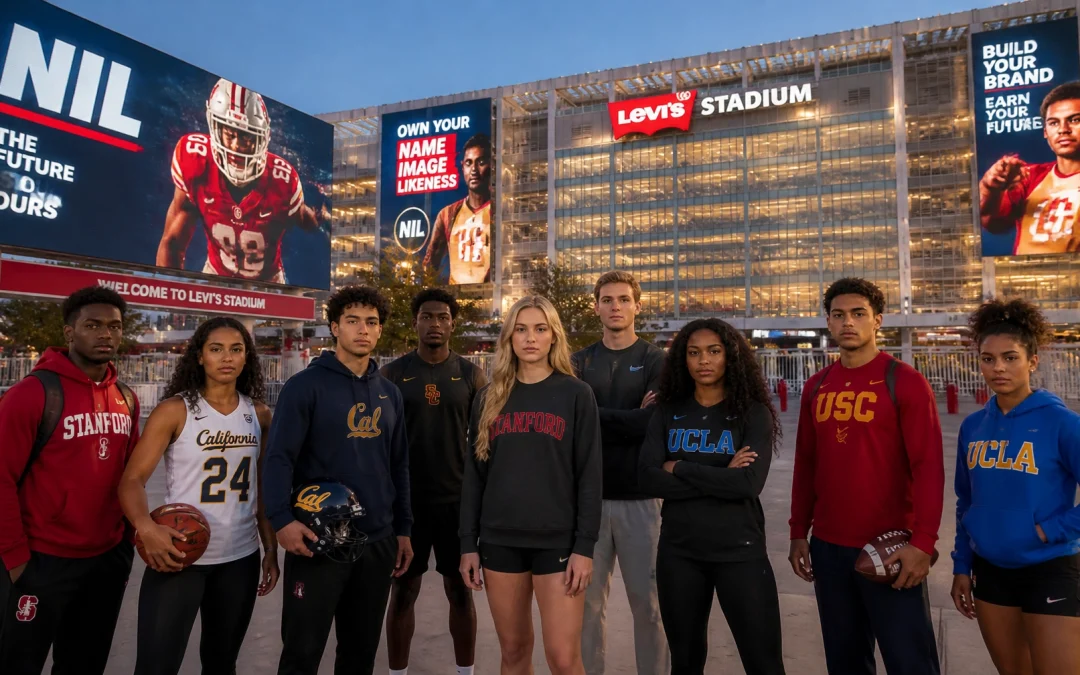
The sports marketing landscape is undergoing a significant transformation as the industry prepares for Super Bowl LX in 2026. Hosted at Levi’s Stadium in Santa Clara, California, this event represents more than a single championship game. It serves as a focal point for a massive convergence of fan attention, brand investment, and the rapidly maturing Name, Image, and Likeness (NIL) ecosystem. For media buyers and brand managers, the challenge is no longer just securing a spot during the broadcast. The priority has shifted toward capturing the authentic attention of fans through the voices they trust most: student-athletes.
OOH Sports provides the infrastructure to bridge the gap between digital out-of-home (DOOH) advertising and the power of over 20,000 authentic student-athlete voices. By integrating these two powerful channels, brands can create a cohesive narrative that resonates both on the streets of the San Francisco Bay Area and across digital platforms.
Objective & Strategy
The primary objective of an NIL-integrated campaign during the 2026 Super Bowl is to cut through the high-volume noise of traditional advertising. During the week leading up to the game, the Bay Area will experience an influx of hundreds of thousands of visitors. Traditional stadium advertising is often locked into multi-year contracts, leaving many brands searching for alternative ways to establish a presence.
The strategy developed by OOH Sports focuses on three core pillars:
- Authenticity at Scale: Leveraging a network of 20,000 student-athletes to generate peer-to-peer trust.
- Hyper-Local Dominance: Deploying digital assets within a 10-mile radius of Levi’s Stadium and key fan zones.
- Omnichannel Synchronization: Ensuring that the messaging seen on a digital billboard is reinforced by the social media content of an athlete the consumer follows.
This approach moves beyond simple celebrity endorsements. It utilizes the "creator-style" influence of mid-tier and local athletes who maintain higher engagement rates than many professional counterparts. For media planners, this means more efficient spending and higher brand resonance.

The Power of NIL: 20,000 Authentic Voices
The NIL movement has evolved from a regulatory change into a robust marketing category. As noted in recent industry analysis, DOOH sports advertising is projected to reach $50 billion by 2030. A significant portion of this growth is driven by the ability to personalize and localize content.
With a network of 20,000 student-athletes, OOH Sports enables brands to execute "roster-wide" deals or target specific demographics. These athletes are more than just faces on a screen. They are influencers with deep ties to their respective communities. When a brand partners with an athlete, it inherits the credibility that the athlete has built with their audience.
Diversification of Sports
The 2026 NIL strategy is not limited to football. Data indicates that women’s basketball, gymnastics, volleyball, and soccer athletes often see higher engagement rates and a stronger lifestyle connection with fans. By diversifying the "voices" in a campaign, a brand can reach a wider variety of fan segments, from the casual observer to the die-hard enthusiast.
Community Integration
Student-athletes are often seen as local heroes. In the context of the Super Bowl, featuring athletes from Northern California universities on digital screens throughout Santa Clara and San Jose creates a sense of community support. This localized approach often leads to higher positive brand image ratings compared to generic national creative.

Strategic Execution: Integrating DOOH and NIL
The execution of an NIL campaign for Super Bowl 2026 involves a sophisticated technical stack. OOH Sports, as part of the Sports Media Inc. family, utilizes programmatic technology to place creative content across a vast network of digital video boards.
The 10-Mile Perimeter Strategy
A key tactic for media buyers is the "perimeter play." OOH Sports provides access to every digital video advertising board within a 10-mile radius of the sports venue. This includes:
- Transit Hubs: Targeting fans as they arrive at San Jose International Airport or use the Caltrain.
- Retail Centers: Engaging shoppers in high-traffic areas like Santana Row or Westfield Valley Fair.
- Major Arteries: Placing ads on the highways leading directly to Levi’s Stadium, such as US-101 and CA-237.
This saturation ensures that the brand remains top-of-mind for the duration of the fan's journey. When these physical placements feature the same student-athletes who are posting about the brand on social media, the impact is multiplied.
Technology Partners and Platform Integration
OOH Sports collaborates with leading Demand-Side Platforms (DSPs) to ensure seamless programmatic execution. This allows media buyers to adjust creative in real-time, targeting specific times of day or reacting to events as they unfold during the Super Bowl week. The use of specialized platforms ensures that every impression is tracked and every device ID exposed to the ad can be retargeted later.
For a deeper dive into how programmatic execution compares to traditional methods, refer to the analysis on Programmatic DOOH vs. Traditional Stadium Ads.
https://www.youtube.com/watch?v=l6J-0zileKE
Quantitative Results and Measurement
Success in the modern advertising era is defined by data. OOH Sports focuses on measurable outcomes to validate the effectiveness of NIL and DOOH integration. By utilizing brand lift studies and attribution modeling, campaigns are assessed based on their ability to move the needle on key performance indicators (KPIs).
Case Study Metrics
In previous campaigns involving similar high-stakes sports environments, the following results were observed:
- Purchase Consideration: A programmatic DOOH campaign for a major beverage brand saw a 74% lift in purchase consideration.
- Brand Preference: The integration of authentic voices led to a 119% increase in positive brand image for a national retail client.
- Audience Retargeting: By capturing device IDs within the 10-mile perimeter, brands achieved a 144% increase in online engagement through follow-up digital ads.
These metrics demonstrate that the combination of physical presence (DOOH) and digital trust (NIL) creates a more effective conversion funnel than either channel used in isolation.

Technical Logistics of a Super Bowl Campaign
Planning for Super Bowl 2026 requires early action. The logistics of coordinating 20,000 voices with a localized DOOH network involve several critical steps:
- Audience Identification: Utilizing data to determine which student-athletes align best with the brand’s target demographic.
- Creative Synchronization: Developing high-resolution assets for Sportrons and other digital screens that mirror the style of the athlete’s social content.
- Geofencing: Setting up the 10-mile digital perimeter around Santa Clara to ensure maximum frequency and reach.
- Deployment: Using programmatic tools to launch the campaign across the San Francisco Bay Area digital network simultaneously.
- Measurement: Initiating brand lift studies from day one to track the shift in consumer sentiment.
Conclusion
The 2026 Super Bowl represents a unique opportunity for media buyers to utilize the full potential of NIL marketing. By leveraging the 20,000 authentic voices within the OOH Sports network and anchoring them with a strategic digital out-of-home presence, brands can achieve a level of resonance that traditional commercials cannot replicate.
The focus remains on logistics, targeting, and measurable results. As the industry moves toward 2026, the brands that succeed will be those that embrace the "revolution in sports marketing" by telling their stories through the athletes who define the game.