
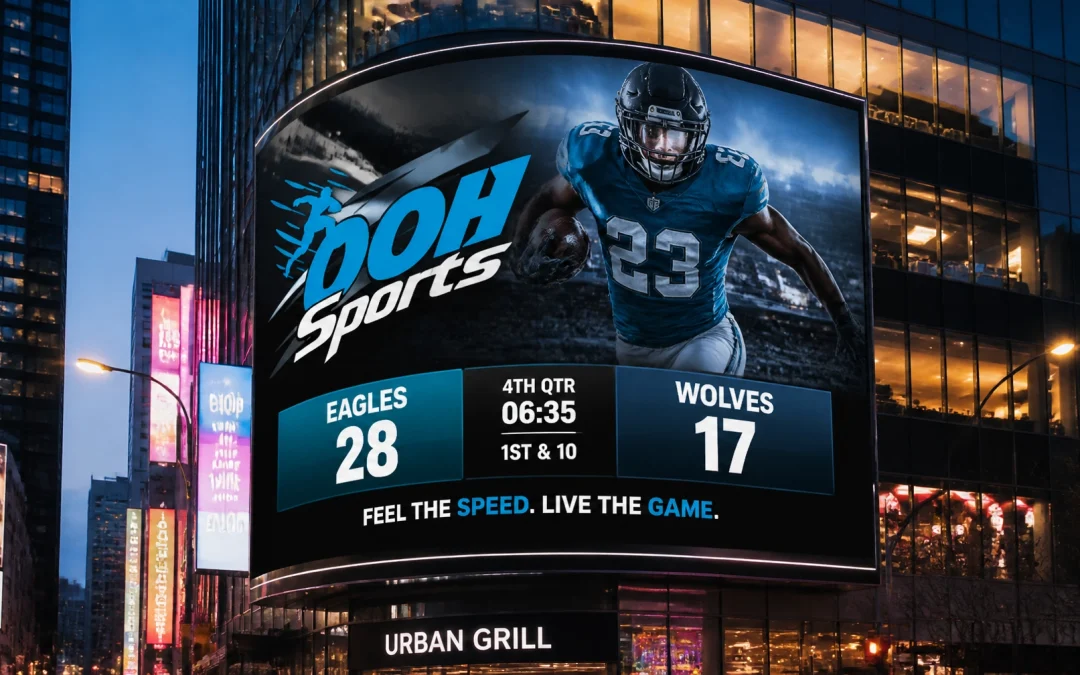
Sports marketing has historically centered on the field of play. Brands once fought exclusively for jersey real estate, stadium naming rights, or a 30 second television spot during the big game. However, a significant shift in audience behavior is expanding the playing field. While a stadium might hold 50,000 fans, there are millions more engaging with the game in the surrounding city, at local bars, on transit, and in retail environments.
Digital Out of Home (DOOH) advertising has emerged as the primary tool to capture this distributed audience. By leveraging a network of digital screens, brands can reach fans at every stage of their game-day journey, from the morning commute to the post-game celebration. This guide explores the strategies, technology, and measurement tactics required to dominate the sports media landscape outside the arena.
Mapping the Fan Journey Outside the Arena
To execute a successful sports DOOH campaign, a brand must first understand that fan engagement is not a single event but a journey. This journey begins hours, sometimes days, before the opening whistle and continues long after the final score is recorded.
The pre-game phase is defined by anticipation and preparation. Fans are often found in transit hubs, supermarkets, or convenience stores stocking up on supplies. Strategically placed Sportrons and digital billboards in these areas allow brands to intercept fans when they are in a high-intent purchasing mindset.
During the game, the focus shifts to social environments. Only a small percentage of a team's global fan base is physically present in the stadium. The vast majority are at sports bars, casual dining restaurants, or fan zones. These locations offer high dwell times, where digital screens serve as a secondary or even primary point of focus.
The post-game phase is often overlooked but remains critical for brand reinforcement. Whether a fan is celebrating a win or dissecting a loss, they are likely moving back through transit networks or toward entertainment districts. Messaging that reacts to the game's outcome can create a lasting emotional connection between the brand and the fan experience.
Strategic Placement and Targeting
Effective DOOH is about being in the right place at the right time. For sports marketers, this means moving beyond broad awareness and into hyper-local relevance.

Environment Selection
The environment in which a screen is located dictates the audience's mindset.
- Sports Bars and Pubs: Ideal for beverage, betting, and apparel brands. The context is inherently sports-focused, and the audience is already primed for engagement.
- Transit Hubs: Subways and train stations near stadiums are bottlenecks where thousands of fans congregate. High-frequency messaging here ensures maximum reach.
- Retail and Grocery: Screens in these locations are perfect for CPG brands looking to influence last-minute "game day" snack and drink purchases.
- Gyms and Health Clubs: These venues reach the active fan base, making them suitable for health, wellness, and fitness apparel brands.
Perimeter Targeting
One of the most effective tactics in sports DOOH is geofencing the area surrounding a venue. By establishing a 10 mile perimeter around a stadium, advertisers can ensure their message is seen by everyone traveling toward the event. This strategy effectively turns the entire city into an extension of the stadium's branding, often at a fraction of the cost of official sponsorship. This approach is part of why DOOH sports advertising is projected to reach significant growth by 2030.

Creative Best Practices for Sports DOOH
Creative for DOOH requires a different mindset than social media or television. Because the audience is often in motion, the message must be immediate and legible.
Simplicity is Paramount
The most successful DOOH ads often contain seven words or fewer. A single, bold headline paired with a clear call to action is more effective than a complex narrative. The goal is to communicate the core message in under three seconds.
High Contrast and Legibility
Outdoor environments are subject to varying light conditions. Using high-contrast colors (e.g., black text on a yellow background or white text on a dark blue background) ensures that the ad remains visible even in direct sunlight. Sans-serif fonts are generally preferred for their clarity at a distance.
The Power of Motion
Motion is a powerful tool for grabbing attention, but it must be used subtly. A scoreboard ticking up, a subtle glint on a product, or a simple transition can draw the eye without distracting from the main message. Brands should avoid long, cinematic videos that require a full 30 seconds of attention, as most DOOH exposures are much shorter.
Contextual Relevance and QR Codes
In environments with higher dwell times, such as transit platforms or bars, including a QR code can bridge the gap between physical exposure and digital conversion. This is particularly effective for real-time sports betting campaigns where a fan can scan a code to place a bet or download an app instantly.

Technology and Programmatic Triggers
The true innovation in sports DOOH lies in programmatic execution. Programmatic DOOH (pDOOH) allows advertisers to automate the buying process and trigger ads based on real-world data.
Real-Time Data Feeds
Digital screens can be integrated with live sports APIs to display real-time scores, countdowns to kickoff, or updated betting odds. This dynamic content makes the advertisement feel like a part of the event rather than an interruption. If a specific player scores or a team wins in the final seconds, the creative can update instantly to reflect that moment, creating a "live" feel that traditional static billboards cannot match.
Audience and Environmental Triggers
Beyond sports scores, pDOOH can respond to other variables. For example, a beverage brand might trigger an ad for a cold drink when the local temperature rises above 80 degrees. Alternatively, a rideshare app might increase its presence on screens near a stadium the moment the game ends and fans begin looking for transportation.
Efficiency and Flexibility
Programmatic buying allows media planners to shift budgets in real-time. If a campaign is performing exceptionally well in one city but underperforming in another, funds can be reallocated instantly. This level of control ensures that every dollar spent is optimized for maximum impact. Detailed comparisons show that programmatic DOOH often delivers better ROI than traditional stadium ads due to this inherent flexibility.
Measurement and Quantifying Success
For a long time, the primary criticism of out-of-home advertising was the difficulty of measurement. Today, sophisticated data sets allow brands to track the entire funnel with precision.

Brand Lift Studies
By surveying consumers who were exposed to the DOOH screens versus a control group of those who were not, brands can measure increases in awareness, ad recall, and purchase consideration. These studies provide a clear picture of how the campaign has shifted public perception.
Footfall Attribution
Using anonymized mobile location data, advertisers can track whether individuals who saw a DOOH ad later visited a specific retail location, bar, or dealership. This creates a direct link between the physical advertisement and a real-world action.
Digital Conversion and App Installs
By analyzing device IDs exposed to the campaign, brands can measure "digital lift." This includes increases in website visits, app downloads, or online purchases following exposure. High-profile campaigns for brands like White Claw and AB InBev have demonstrated significant results through these methods. For instance, a programmatic DOOH campaign for White Claw saw a 74% lift in purchase consideration, while Mike's Hard Iced Tea experienced a 119% lift in positive brand image.
Strategy Summary
To succeed in the sports DOOH space, media buyers and brand managers should follow a logical sequence of steps:
- Define the Objective: Is the goal broad awareness or a specific action like an app install?
- Select the Right Environments: Choose locations that align with the fan's journey outside the arena.
- Optimize Creative for the Medium: Focus on simplicity, high contrast, and immediate legibility.
- Leverage Programmatic Triggers: Use live data to make the campaign feel timely and relevant.
- Implement Robust Measurement: Use brand lift and footfall attribution to prove ROI and refine future strategies.
By moving outside the stadium walls, brands can connect with fans in the moments that matter most, creating a comprehensive marketing strategy that is as dynamic as the sports world itself.