
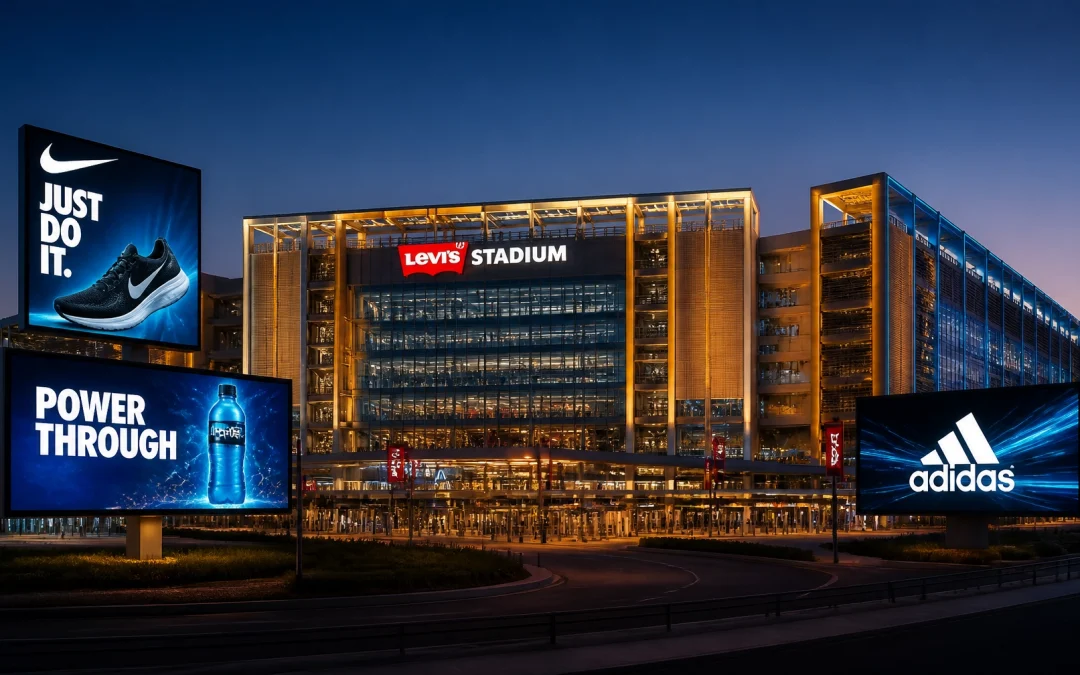
Super Bowl LX is set to descend upon Levi's Stadium in Santa Clara on February 8, 2026. As the San Francisco Bay Area prepares to host the 60th edition of the most-watched sporting event in America, the competition for consumer attention is reaching an all-time high. For brands and media buyers, this event represents more than just a championship football game. It is a massive regional takeover where every touchpoint, from the airport arrival gate to the stadium concourse, serves as a high-value canvas for storytelling.
OOH Sports, a division of the Sports Media Inc. family, is positioning advertisers to dominate this landscape. With 40 years of leadership in sports marketing, the team understands that successful campaign execution during a championship week requires a multi-layered approach. It is no longer enough to simply have a spot on the broadcast. To truly capture the hearts and minds of the 100,000 plus fans in attendance and the millions more in the 10-mile radius, a brand must achieve venue-wide coverage.
Forty Years of Advertising Leadership
The foundation of a successful Super Bowl campaign is built on experience. Sports Media Inc. has spent four decades navigating the complexities of stadium environments, municipal regulations, and fan psychology. This legacy allows OOH Sports to provide access to inventory that others cannot, offering a seamless integration of traditional out-of-home (OOH) and modern digital out-of-home (DOOH) assets.
In the fast-moving world of sports marketing, longevity equates to reliability. Over the last 40 years, the industry has seen the transition from static paper billboards to high-refresh-rate programmatic screens. OOH Sports has remained at the forefront of this evolution, ensuring that brand managers and chief marketing officers have the tools they need to execute precise, data-driven campaigns. This expertise is particularly critical for an event like Super Bowl 2026, where the regional footprint extends from downtown San Francisco to the heart of Silicon Valley.
Ground-Level Impact: The Power of Floor Decals
While giant billboards capture the skyline, some of the most effective advertising happens right under the feet of the fans. Floor decals are a frequently underutilized but incredibly potent tool for venue domination. In high-traffic environments like stadium concourses, pedestrian plazas, and transit hubs, floor graphics sit at the intersection of wayfinding and brand reinforcement.

Research into pedestrian behavior indicates that 64 percent of individuals stop and engage with floor graphics in high-traffic zones. In a stadium setting, where fans are navigating crowded corridors to reach their seats or concession stands, these decals provide a "stop-and-look" moment that is difficult to replicate with wall-mounted signage.
Strategy and Objective
The objective of utilizing floor decals is to own the fan's journey. By placing branded graphics at key decision points, such as near beer lines or merchandise kiosks, advertisers can influence impulse decisions in real-time. Data suggests that products promoted via floor graphics often see a sales lift ranging from 10 to 31 percent. For a beverage brand during the Super Bowl, this could translate to thousands of additional units sold during the pre-game and halftime windows.
Execution Tactics
- 3D Illusions: Using anamorphic designs to create 3D effects that fans want to photograph and share on social media.
- Directional Messaging: Guiding fans toward specific branded activations or pop-up shops within the 10-mile perimeter of Levi's Stadium.
- Safety and Durability: Ensuring all graphics are non-slip and meet the rigorous safety standards of the venue while maintaining vibrant, high-definition color throughout the event week.
The 10-Mile Halo: Dominating the Perimeter
Advertising for Super Bowl 2026 is not confined to the four walls of the stadium. OOH Sports specializes in building a digital out-of-home network that covers a 10-mile radius around the venue. This perimeter coverage captures the entire ecosystem of the event, including hotels, fan zones, transportation corridors, and local entertainment districts.

Technology and Placement
The strategy involves a mix of large-format digital billboards and street-level DOOH kiosks. These assets are placed along major transit routes such as US-101 and I-880, as well as high-traffic hubs like the San Jose Mineta International Airport and the Santa Clara VTA light rail stations. By blanketing these areas, a brand ensures that its message is the first and last thing a fan sees during their Super Bowl experience.
Programmatic DOOH and Retargeting
The modern advertiser requires more than just impressions; they require precision. OOH Sports leverages programmatic technology to allow for flexible, real-time bidding on digital inventory. This means a brand can adjust its creative based on the time of day, the weather, or even the current score of the game.
Retargeting Audience with Device IDs
One of the most powerful aspects of the OOH Sports network is the ability to bridge the gap between physical advertising and digital follow-up. By capturing anonymized device IDs of fans exposed to the outdoor boards, brands can retarget those same individuals on their mobile devices later in the day. This omnichannel approach ensures the brand remains top-of-mind long after the fan has left the stadium area.
For example, a fan who sees a giant billboard for a luxury watch brand on the way to the game might later receive a targeted social media ad or a special offer while browsing their phone at the hotel. This creates a cohesive narrative and significantly increases the likelihood of conversion.
Measurable Results and Case Studies
The success of a Super Bowl campaign is measured by its impact on brand lift and purchase consideration. OOH Sports has a track record of delivering quantifiable results for major global brands. In previous high-impact sports campaigns, the results have been significant:
- White Claw: A programmatic DOOH campaign drove a 74 percent lift in purchase consideration for their vodka launch. View Case Study
- AB InBev: Mike’s Hard Iced Tea saw a 119 percent lift in positive brand image through a targeted DOOH strategy. View Case Study
- Sea-Doo: This brand increased purchase consideration by 144 percent during their first digital OOH campaign. View Case Study
These metrics prove that when OOH is integrated into a larger sports marketing strategy, it does more than just provide visibility; it drives tangible business outcomes.

Conclusion: Preparing for Kickoff
Super Bowl 2026 at Levi's Stadium represents a unique opportunity for brands to engage with a captive, high-spending audience in one of the most affluent regions in the world. By leveraging the 40 years of experience offered by OOH Sports and Sports Media Inc., advertisers can move beyond standard placements to achieve true venue-wide domination. From the floor decals that catch a fan's eye in the concourse to the giant billboards that define the Santa Clara skyline, the goal is clear: be everywhere the fans are.
To learn more about how to secure your position for the 2026 season, visit the OOH Sports Sportrons page or explore our blog for more insights on programmatic DOOH vs traditional stadium ads.
For a deeper look at the atmosphere and scale of these events, view the following presentation on sports media leadership: