
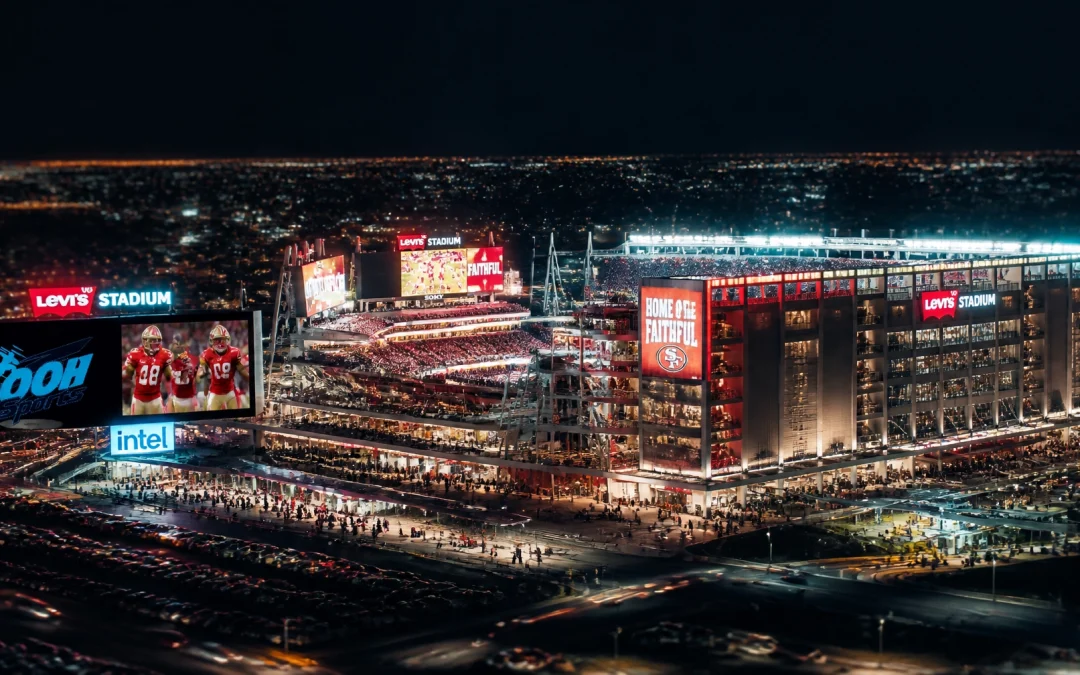
Super Bowl LX is set to transform the advertising landscape on February 8, 2026, at Levi’s Stadium in Santa Clara. For media buyers and brand managers, this event represents the pinnacle of sports marketing. While the game itself captures global attention, the real strategic advantage lies in how brands activate outside the stadium walls. OOH Sports is leading a shift in this arena by integrating a massive network of over 20,000 student-athlete voices with premium Digital Out of Home (DOOH) assets.
This guide explores the mechanics of this omnichannel approach, focusing on how the Name, Image, and Likeness (NIL) platform creates a bridge between authentic social influence and high-impact physical advertising.
The Strategy: Merging Physical Presence with Digital Authenticity
The primary objective for any Super Bowl campaign is to cut through the noise. Traditional television spots are effective but high-priced and ephemeral. A more sustainable and targeted strategy involves owning the environment where the fans live, travel, and celebrate. OOH Sports achieves this by establishing a dominant presence within a 10-mile perimeter of the host venue and key surrounding areas.
By combining this physical "perimeter" strategy with the voices of 20,000 student-athletes, campaigns gain a dual layer of visibility. The digital boards provide the scale and repetition necessary for brand recall, while the NIL athletes provide the social proof and authenticity that modern consumers crave.
Why 20,000 Student-Athletes?
Student-athletes are not just influencers; they are trusted members of their communities. Their engagement rates often surpass those of professional athletes because their followers are more localized and personally invested.
- Authenticity: Student-athletes share behind-the-scenes content that feels real and unscripted.
- Scale: Accessing 20,000 voices allows a brand to achieve national reach with a grassroots feel.
- Micro-Targeting: Brands can select athletes based on specific sports, regions, or audience demographics.

Objective & Strategy: The 10-Mile Perimeter
The core of the OOH Sports methodology for Super Bowl 2026 is the "Event Zone" activation. Statistics show that hundreds of thousands of visitors flock to the host city during Super Bowl week, many of whom do not have tickets to the actual game. These fans congregate in "Live Zones," fan festivals, and local hospitality venues.
The strategy involves deploying brand messaging across all available digital video advertising boards within a 10-mile radius of Levi’s Stadium. This includes:
- Transport Hubs: Reaching fans as they arrive at airports and transit stations.
- Entertainment Districts: Engaging with audiences at bars, restaurants, and shopping centers.
- High-Traffic Arteries: Maintaining visibility on the roads leading to Santa Clara.
This geographical saturation ensures that the brand remains top-of-mind throughout the entire event lifecycle, from the arrival of the first fans to the post-game celebrations.
Technology Partners and Execution
Success in a high-stakes environment like the Super Bowl requires precise execution and reliable technology. OOH Sports utilizes a programmatic DOOH framework that allows for real-time adjustments and data-driven targeting.
The Programmatic Edge
Using programmatic technology, media buyers can trigger ads based on specific conditions, such as the time of day, current weather, or even the live score of the game. This level of flexibility ensures that the creative remains relevant to the moment. For instance, a beverage brand might increase its ad frequency during a particularly tense quarter or a celebratory post-game window.
Integrating the NIL Platform
The integration of the NIL platform is managed through a centralized dashboard that tracks engagement, content delivery, and audience demographics. Each of the 20,000 student-athletes is an "active node" in the campaign, pushing out synchronized content that mirrors the creative seen on the digital billboards. This creates a "surround-sound" effect where the fan sees the brand on a high-impact digital screen and then sees their favorite athlete talking about it on their phone moments later.

Content and Creative Logistics
For Super Bowl 2026, the creative must be as dynamic as the event itself. OOH Sports works with creative directors to ensure that the visual assets are optimized for both large-format digital screens and small-form mobile content.
- Syncing Messaging: The tagline on the Sportrons should be consistent with the captions used by the NIL athletes.
- Visual Impact: High-contrast visuals and bold typography are essential for DOOH to ensure readability from a distance.
- Mobile-First Social: NIL content is designed to be vertical, fast-paced, and interactive.
To understand the full scope of how these elements come together, viewing the campaign mechanics in action is helpful.
https://www.youtube.com/watch?v=l6J-0zileKE
Measuring Results: Data-Driven Impact
In the world of high-level sports marketing, data is the final word. Every campaign executed by OOH Sports is backed by rigorous measurement and attribution models.
Brand Lift Studies
To quantify the success of the Super Bowl NIL activation, brand lift studies are conducted to measure:
- Awareness: The increase in the number of people who recognize the brand.
- Favorability: Changes in the audience's perception of the brand.
- Purchase Intent: The likelihood of consumers choosing the brand over competitors after being exposed to the campaign.
Attribution and Device IDs
By tracking exposed device IDs, the campaign can determine how many people saw a digital billboard and subsequently visited a retail location or a website. This "pixels to pavement" measurement is crucial for media planners who need to prove ROI to their stakeholders. Previous campaigns in the sports media space have shown significant lifts, such as a 74% increase in purchase consideration in similar programmatic DOOH executions. You can read more about these outcomes in our case studies.

Why This Matters for Media Buyers
The sheer volume of content during the Super Bowl can make it difficult for brands to maintain a clear voice. By leveraging the NIL platform's 20,000 voices, a brand doesn't just join the conversation; it drives it. This approach moves away from "one-to-many" broadcasting toward a "many-to-many" network of influence.
Key Benefits for Brands:
- Efficiency: Reach a massive audience without the price tag of a national TV spot.
- Engagement: Social content from athletes generates likes, shares, and comments that static ads cannot.
- Domination: Owning the physical space around the stadium creates a sense of "being everywhere."
Final Logistics: Planning for February 2026
The lead time for a Super Bowl campaign is extensive. Brands and media planners are already looking at inventory for the Santa Clara market. The 10-mile perimeter around Levi’s Stadium is limited, and the most influential student-athletes are often booked months in advance.
The process of onboarding 20,000 voices involves detailed contract management, compliance checks, and creative Briefings. Starting early ensures that the brand can secure the best digital boards and the most relevant athlete partners for their specific industry.

Conclusion
The future of sports marketing is not just on the field or on the screen; it is in the hands of the athletes and the streets of the host city. By combining the massive reach of the OOH Sports digital network with the authentic influence of 20,000 student-athletes, brands can create a Super Bowl 2026 campaign that is both unmissable and unforgettable.
The integration of programmatic DOOH and social NIL represents the next evolution of sports advertising, offering a level of precision and impact that was previously unattainable. For those looking to make a mark in Santa Clara, the path to success is built on these 20,000 voices.