
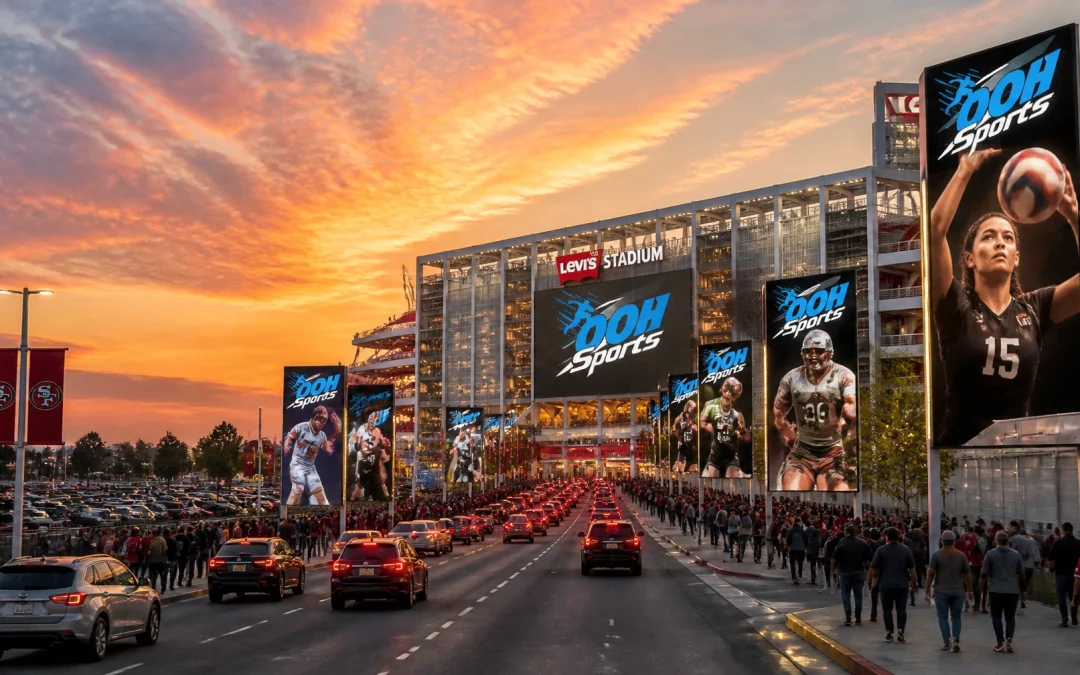
Super Bowl LX is set to take over Santa Clara in February 2026. For media buyers and brand managers, this is the most significant opportunity of the decade to connect with a captive audience. However, the traditional playbook for the Big Game is changing. While television spots remain prestigious, the real battle for attention is happening on the ground and on the second screen. The convergence of Digital Out-of-Home (DOOH) advertising and Name, Image, and Likeness (NIL) rights for student-athletes has created a new frontier. Brands can now deploy over 20,000 authentic student-athlete voices to amplify their message within a 10-mile perimeter of the stadium and beyond.
Objective & Strategy
The primary goal for any 2026 campaign is to break through the noise of a saturated market. The strategy revolves around a two-pronged approach: hyper-local saturation and authentic digital amplification. By using the OOH Sports network, brands can dominate the visual landscape around Levi’s Stadium. The 10-mile radius around the venue becomes a high-intensity brand zone where every digital screen serves as a touchpoint.
The strategy focuses on:
- Dominating the physical perimeter around Santa Clara and the broader Bay Area.
- Integrating NIL talent into DOOH creative to build immediate trust.
- Synchronizing physical ads with mobile retargeting to capture the "second-screen" audience.
- Utilizing programmatic buying to stay flexible as game-day storylines evolve.
This approach ensures that a brand is not just a logo on a screen, but a part of the local sports culture. It moves the needle from simple awareness to genuine engagement.
The Power of 20,000 Voices: NIL as a Core Pillar
In 2026, student-athletes are the most valuable assets in the marketing ecosystem. Unlike professional athletes who may feel distant or over-exposed, student-athletes offer a level of authenticity that resonates with Gen Z and millennial demographics. The current NIL landscape allows brands to tap into a pool of over 20,000 eligible influencers. These athletes are not just names on a roster, they are creators with dedicated, niche followings.

Using a massive roster of micro-influencers allows for a "creator graph" strategy. Instead of putting all resources into one celebrity, a campaign can distribute its message through hundreds of local heroes. In the context of the Santa Clara Super Bowl, this means leveraging athletes from Bay Area universities to act as "host city ambassadors." These voices provide a localized feel to national campaigns, making the brand feel relevant to the specific community hosting the event.
Technology Partners and Platform Logistics
Success in a high-stakes environment like the Super Bowl requires seamless technological integration. The process begins with a data-driven matching platform. This technology pairs brands with student-athletes based on audience demographics, engagement rates, and geographic relevance. Once the roster is set, the OOH Sports platform takes over the physical distribution.
The logistics involve:
- Audience Mapping: Identifying the travel paths of fans from San Francisco International Airport (SFO) and San Jose Mineta International Airport (SJC) to Santa Clara.
- Asset Selection: Choosing specific digital billboards, transit shelters, and street furniture that fall within the peak fan-traffic zones.
- Programmatic Integration: Using Demand-Side Platforms (DSPs) to bid on inventory in real-time, allowing for dynamic creative updates.
- Creative Synchronization: Ensuring the NIL content on social media matches the visual aesthetic of the DOOH displays.
This synchronized effort is critical for maintaining brand consistency. When a fan sees a student-athlete on a billboard near Levi’s Stadium and then sees a post from that same athlete on their Instagram feed ten minutes later, the marketing impact is multiplied.
Campaign Execution: Hyper-Local Content and Real-Time Engagement
Execution during the Super Bowl week must be dynamic. Static ads are no longer sufficient when the cultural conversation is moving at the speed of social media. Campaigns in 2026 will use "dayparting" to change messages based on the time of day and the status of the game.

Pre-game content might feature student-athletes sharing their predictions or "get ready with me" videos. During the game, DOOH screens can display real-time reactions or highlights powered by the NIL roster. Post-game creative can pivot instantly to celebration or recovery themes.
Another key execution tactic is the use of QR codes. By placing a QR code on a digital billboard, brands can bridge the gap between the physical and digital worlds. A fan waiting for a light in Santa Clara can scan the board to unlock exclusive content from an athlete, enter a contest, or even purchase co-branded merchandise. This turns every OOH placement into a measurable point of sale.
Quantifying Success: Metrics, Results, and Attribution
In the past, out-of-home advertising was often criticized for a lack of precise measurement. In 2026, that is no longer the case. By combining DOOH location data with mobile device IDs, brands can track exactly how many people were exposed to an ad and what they did next.

Key performance indicators for a Super Bowl NIL campaign include:
- Brand Lift: Measuring the increase in brand awareness and favorability through pre- and post-campaign surveys.
- Foot Traffic Attribution: Tracking how many exposed users visited a specific retail location or fan-zone event.
- Social Engagement: Monitoring the volume of mentions, shares, and hashtag usage driven by the NIL roster.
- Conversion Rates: Calculating the ROI from QR code scans and affiliate links provided by the student-athletes.
Research into similar programmatic DOOH campaigns has shown significant results. For instance, campaigns in other major sports categories have seen a 74 percent lift in purchase consideration and a 119 percent lift in positive brand image. Applying these methodologies to the 2026 Super Bowl NIL strategy provides a clear path to measurable success.
The Future of Sports Marketing
The 2026 Super Bowl represents a tipping point. The era of passive, one-way advertising is over. To win in this environment, brands must embrace the authenticity of student-athlete influencers and the precision of digital out-of-home technology. With a network that covers the most critical perimeters in sports, the opportunity to dominate the conversation is within reach.
By leveraging 20,000 voices and a robust programmatic infrastructure, media buyers can ensure their message is seen, heard, and acted upon. The road to Santa Clara is paved with digital innovation and authentic storytelling.
For a deeper look into the evolving world of NIL and how it is reshaping the advertising landscape, watch this detailed breakdown:
https://www.youtube.com/watch?v=l6J-0zileKE
The sports advertising industry is projected to reach massive heights in the coming years. Staying ahead of these trends is essential for any brand looking to maintain a competitive edge. To learn more about the future of this sector, read about how DOOH sports advertising will hit 50 billion by 2030. For more insights and strategies, visit the OOH Sports blog.