
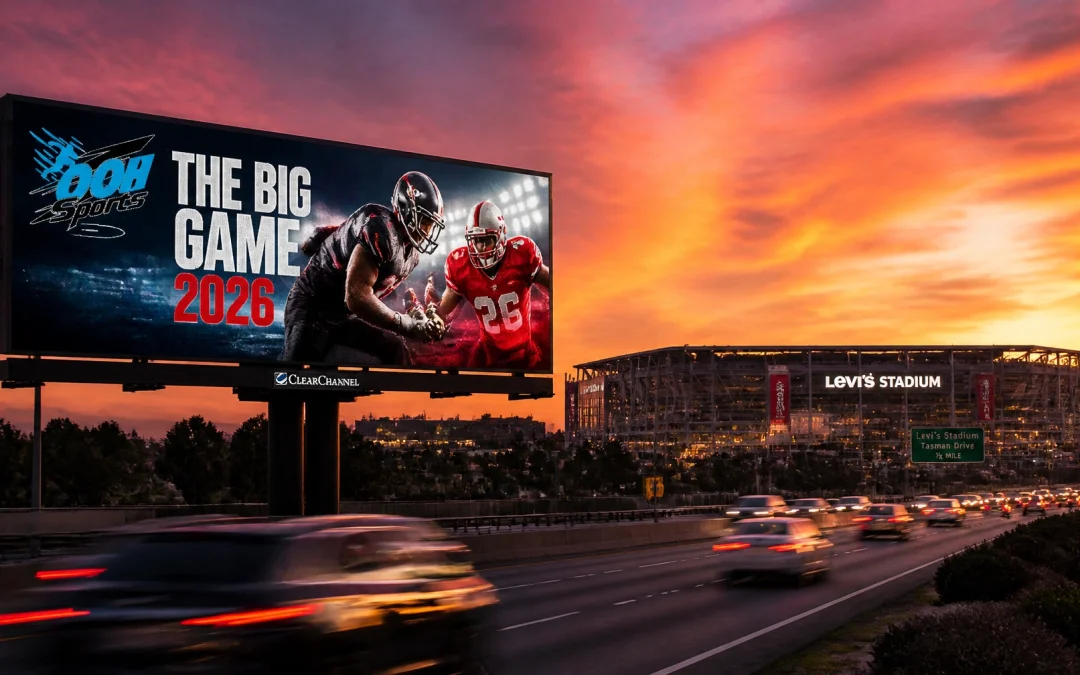
The landscape of sports advertising reached a new pinnacle during the 2026 Super Bowl at Levi’s Stadium in Santa Clara. As media buyers and brand managers sought to capitalize on the massive attention directed at the Bay Area, the competition for consumer mindshare moved beyond the traditional 30-second television spot. With TV ad costs reaching approximately $10 million per slot, strategic emphasis shifted toward a comprehensive out-of-home (OOH) approach designed to own the physical environment surrounding the championship venue.
This guide outlines the methodology for achieving total venue coverage, leveraging 40 years of industry leadership to ensure brand dominance from the local highways to the stadium floor.
Strategic Overview: The 10-Mile Radius Domination
The cornerstone of the 2026 Super Bowl strategy was the implementation of a "surround sound" media footprint. Rather than focusing solely on a few high-profile placements, the objective was to saturate a 10-mile radius around Levi’s Stadium. This geographical concentration ensured that every fan, visitor, and resident in the vicinity was exposed to brand messaging multiple times throughout the week-long event.
The Fan Journey Mapping
A successful campaign required mapping the entire fan journey from arrival to game day. This included several critical touchpoints:
- Arrival Points: Digital displays at San Francisco International (SFO) and San Jose Mineta International (SJC) airports.
- Transit Corridors: High-format digital billboards along Highway 101 and I-880, capturing the flow of fans moving toward Santa Clara.
- Hospitality Zones: Urban panels and street furniture in downtown San Jose and San Francisco, where fans gathered for pre-game festivities.
- The "Final Mile": High-frequency placements at transit hubs and pedestrian walkways leading directly to the Levi’s Stadium gates.
By maintaining consistent visibility across these nodes, brands achieved a frequency that reinforced national television creative, making the campaign feel omnipresent.
Venue-Wide Execution: From Floors to Billboards
Achieving total coverage means moving beyond the exterior. The 2026 strategy utilized a "ground-up" philosophy, integrating advertising into the very architecture of the fan experience. This approach utilized both OOH Sports’ external network and the Sportrons internal stadium network.

Internal Venue Coverage (Sportrons)
Inside Levi’s Stadium, the Sportrons network provided a captive audience with high-impact digital signage. Key placement strategies included:
- Concourse Screens: Strategic placement in high-traffic food courts and gathering areas where fans spent significant time during halftime and pre-game.
- Digital Floor Graphics: Innovative use of digital floor projections and floor-level screens that captured attention in transit zones within the arena.
- Real-Time Integration: Dynamic creative that updated with live scores, player statistics, and social media feeds, keeping the content relevant to the immediate action on the field.
Exterior OOH Proximity
Outside the gates, the focus shifted to traditional and digital OOH formats within a three-mile radius. This inventory included bars, casual dining restaurants, and retail locations where fans congregated. The use of digital screens in these environments allowed for flexible, event-based scheduling that maximized engagement during peak hours.
40 Years of Advertising Leadership
The success of the 2026 Big Game coverage was built on four decades of sports media expertise. As part of the Sports Media Inc. family, OOH Sports applied a seasoned playbook to navigate the complexities of a Tier 1 sporting event. This experience proved vital in managing logistics, securing premium inventory, and executing a synchronized multi-channel campaign.
The Industry Evolution
Over 40 years, the transition from static billboards to programmatic digital out-of-home (pDOOH) has fundamentally changed how media buyers approach the Super Bowl. The 2026 campaign highlighted this evolution by using automated bidding and real-time triggers. For instance, campaigns were designed to automatically adjust creative based on the game's momentum or weather conditions in Santa Clara.
Reliability and Scale
Experience in the industry provides the necessary infrastructure to manage a network of over 700 stadiums and arenas nationwide. For the 2026 Big Game, this scale meant that brands could coordinate a national message that felt locally relevant to the Bay Area audience.
Technology and Programmatic Integration
The 2026 campaign was not just a feat of physical placement; it was a triumph of digital technology. The use of programmatic platforms allowed media buyers to execute buys with precision and efficiency.

Key Technology Features:
- Geo-Targeting: Ensuring that ads only appeared on screens within the defined 10-mile radius of Levi’s Stadium, reducing waste and increasing relevance.
- Dayparting: Scheduling ads to peak during specific windows, such as the Saturday night before the game and the early morning arrival hours on Sunday.
- Rainout Protection: Although the Super Bowl is a high-certainty event, the built-in "rainout protection" of the OOH Sports network ensured that if outdoor events were delayed or canceled, budgets were automatically preserved or reallocated.
- CPM Flexibility: Campaigns were optimized across a CPM range of $5 to $30, allowing brands to balance high-reach arterial billboards with premium, high-engagement interior placements.
Measurable Outcomes and Impact
The results of the 2026 total coverage strategy demonstrated the effectiveness of the "surround sound" approach. Data collected through brand lift studies and device ID exposure tracking revealed significant gains for participating advertisers.
Performance Metrics:
- Brand Awareness: Campaigns that combined both internal (Sportrons) and external (OOH Sports) placements saw a reported 85% increase in brand recall compared to those using traditional TV spots alone.
- Purchase Intent: Research indicated that 60% of consumers exposed to DOOH ads during the Super Bowl week were more likely to take action or visit a brand's website.
- Cost Efficiency: While a TV spot cost $10 million for 30 seconds, a comprehensive OOH campaign covering the entire 10-mile radius for the full week was executed at a fraction of that cost, delivering millions of impressions with higher frequency.
Case Study Highlights
Specific beverage and automotive brands utilized real-time triggers to update their creative based on game highlights. This level of responsiveness resulted in a 40% higher engagement rate on mobile retargeting campaigns that were synchronized with the OOH exposure.
Conclusion: Setting the Standard for Future Championships
The 2026 Big Game served as a blueprint for how media buyers should approach major sporting events in the future. By combining the reach of large-format billboards with the precision of interior digital screens, and grounding the strategy in 40 years of expertise, brands can move beyond the screen and into the daily lives of the fans.
Total coverage is no longer about having the biggest sign; it is about having the most consistent and strategic presence throughout the entire fan journey. As the industry looks toward 2027 and beyond, the integration of pDOOH and venue-wide saturation remains the gold standard for sports marketing.
Total Coverage Visualization

For those looking to explore the mechanics of high-impact sports advertising, the following video provides a deeper look into the capabilities of the OOH Sports network.
https://www.youtube.com/watch?v=l6J-0zileKE
For more information on how to secure your position for future events, visit the OOH Sports services page or read about our past success stories.