
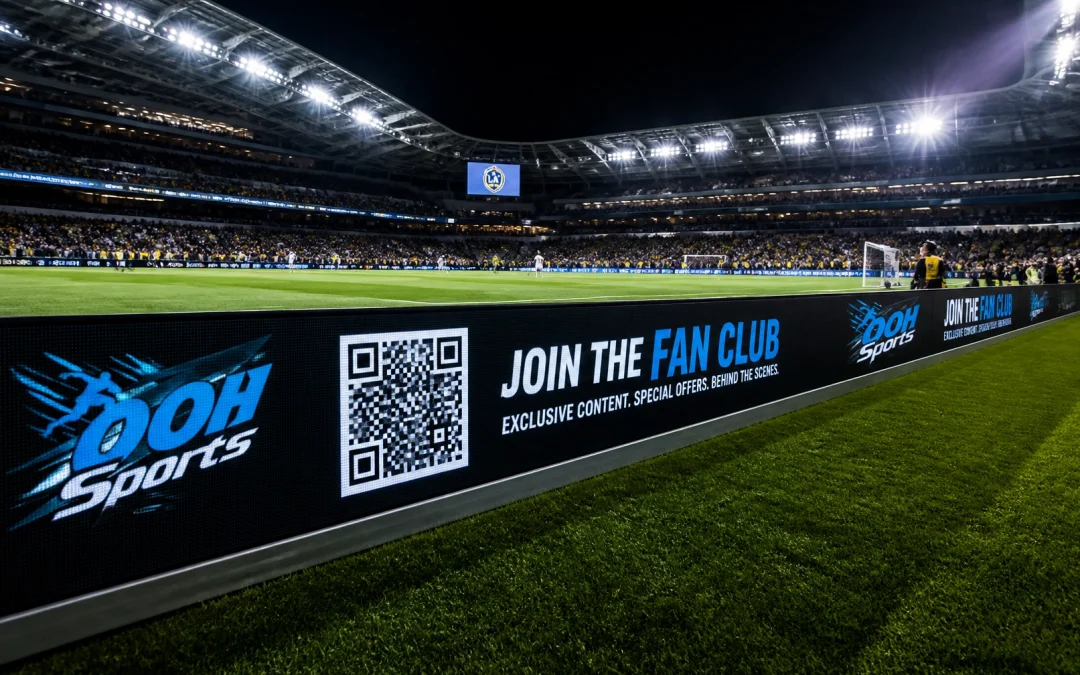
The atmosphere of a professional sports stadium is a unique environment for advertising. It is a space where emotional arousal is at its peak and the audience remains captive for hours. While traditional static signage has long been a staple of sports marketing, the advent of Digital Out-Of-Home (DOOH) technology has shifted the landscape. Specifically, stadium perimeter DOOH provides a high impact gateway to move fans beyond passive observation. The objective is no longer just visibility. It is about transforming a spectator into a superfan through strategic, real-time engagement.
Objective & Strategy
The primary goal of stadium perimeter advertising is to leverage the intense focus of the crowd to build deep brand affinity. A spectator watches the game, but a superfan interacts with the culture surrounding the team. The strategy involves using high-resolution LED boards to deliver messages that resonate with the immediate emotional state of the audience. By integrating these displays with mobile technology and programmatic buying, brands can create a seamless experience that begins in the stadium and extends into the fan’s digital life.
This approach requires a shift from static brand logos to dynamic, action-oriented creative. The strategy focuses on three pillars: proximity, timing, and interactivity. By being present at the field level, brands capture attention during the most critical moments of play. By using programmatic triggers, they ensure the message is relevant to the score or the weather. Finally, by incorporating digital calls to action, they turn a visual impression into a measurable interaction.
The Stadium Perimeter Advantage
Stadium perimeter DOOH offers a dual reach that few other mediums can match. It services the tens of thousands of fans in the seats while simultaneously appearing in the broadcast frames for millions of viewers at home. During a typical professional match, the perimeter boards are visible for a significant percentage of the total broadcast time. This creates a massive volume of contacts across multiple touchpoints, including live play, slow-motion replays, and social media highlights.
The emotional context of the stadium also enhances brand recall. Fans are in a state of high attention, and messages delivered during moments of peak excitement, such as a goal or a game-winning play, become anchored to those positive memories. Research indicates that consumers are more likely to remember and trust brands that appear to support their favorite teams and communities. This psychological alignment is a powerful tool for driving long-term loyalty.

Expanding the Radius: The 3-Mile Strategy
Engagement does not begin or end at the stadium gates. To truly capture the fan journey, advertising must exist in the spaces where fans congregate before and after the event. The OOH Sports network specializes in this extended reach, providing digital inventory within a three-mile radius of major stadiums and arenas.
This network includes high-traffic locations such as:
- Sports bars and casual dining restaurants
- Gyms and fitness centers
- Transportation hubs and urban panels
- Quick Service Restaurants (QSRs)
- Highways and major entry points
By running campaigns in these peripheral locations, brands can reinforce the message seen inside the stadium. A fan might see a beverage brand on the perimeter board during the second quarter, then encounter a promotional offer for that same brand on a digital screen at a nearby bar immediately after the game. This repetition across different environments hardens the brand’s presence in the consumer's mind.
Technology Partners and Programmatic Execution
The execution of these campaigns relies on sophisticated technology partners. Platforms like StackAdapt allow media buyers to purchase DOOH inventory programmatically. This means that instead of buying a static spot for a full season, brands can bid on specific impressions based on time, location, and even live game data.
Campaigns are typically managed on a Cost Per Thousand (CPM) basis, with rates often ranging from $5 to $30 depending on the location and visibility. The use of programmatic DOOH also allows for "game-day only" scheduling. This ensures that the budget is concentrated during the hours when fan density is highest. If an outdoor event is canceled due to weather, the campaigns can be automatically paused to prevent wasted spend. This level of control is essential for CMOs and creative directors who need to maximize ROI in a volatile live-event environment.

Tactics for Real-Time Engagement
To turn spectators into superfans, the creative content must be more than a static image. Modern DOOH technology supports video and dynamic messaging that can react to the game in real-time.
Effective tactics include:
- Live Score Integration: Displaying current scores or player statistics alongside the brand message to maintain relevance.
- Triggered Content: Changing the creative based on specific events, such as a "Power Play" or a "Home Run," to align with the crowd’s energy.
- QR Code Deployment: Using large, scannable codes on the perimeter boards to drive fans to exclusive content, contest entries, or limited-time discounts.
- Social Proof: Integrating fan-generated content or social media polls onto the big screens to encourage community participation.
When a fan scans a QR code on a perimeter board, they move from being an anonymous spectator to a known digital lead. This transition is the key to building a "superfan" relationship that persists long after the final whistle.
Results and Measurement
The success of a stadium perimeter campaign is measured through a combination of brand lift studies and digital attribution. Unlike traditional OOH, programmatic DOOH allows for the collection of device ID data. By identifying the mobile devices exposed to a specific digital sign, marketers can track whether those individuals later visited a website, downloaded an app, or made a purchase.
In a recent study involving Mike’s Hard Iced Tea, the use of programmatic DOOH resulted in a 119% lift in positive brand image. Another campaign for White Claw saw a 74% increase in purchase consideration. These results demonstrate that the high-arousal environment of sports, combined with the precision of digital targeting, produces measurable shifts in consumer behavior.

Building the Omnichannel Fan Journey
The final step in the strategy is the integration of DOOH into a broader omnichannel campaign. The perimeter board acts as the top-of-funnel discovery point. The 3-mile radius network provides mid-funnel reinforcement. Finally, the mobile interaction (driven by QR codes or geo-fencing) serves as the conversion point.
For creative directors, this means designing assets that are visually consistent across all sizes. A message that looks impactful on a 100-foot stadium LED board must also be legible and engaging on a 55-inch screen in a casual dining restaurant. The use of clear, bold typography and high-contrast colors is critical for maintaining visibility in busy, high-energy environments.

Conclusion
The evolution of stadium advertising from static to digital has provided brands with unprecedented opportunities to connect with fans. By leveraging the emotional intensity of the game and the technical precision of the Sportrons network, marketers can move beyond mere impressions. Turning spectators into superfans requires a strategic commitment to proximity, real-time relevance, and digital integration. In the competitive landscape of sports marketing, the brands that win are the ones that successfully bridge the gap between the physical stadium experience and the digital world of the fan.