
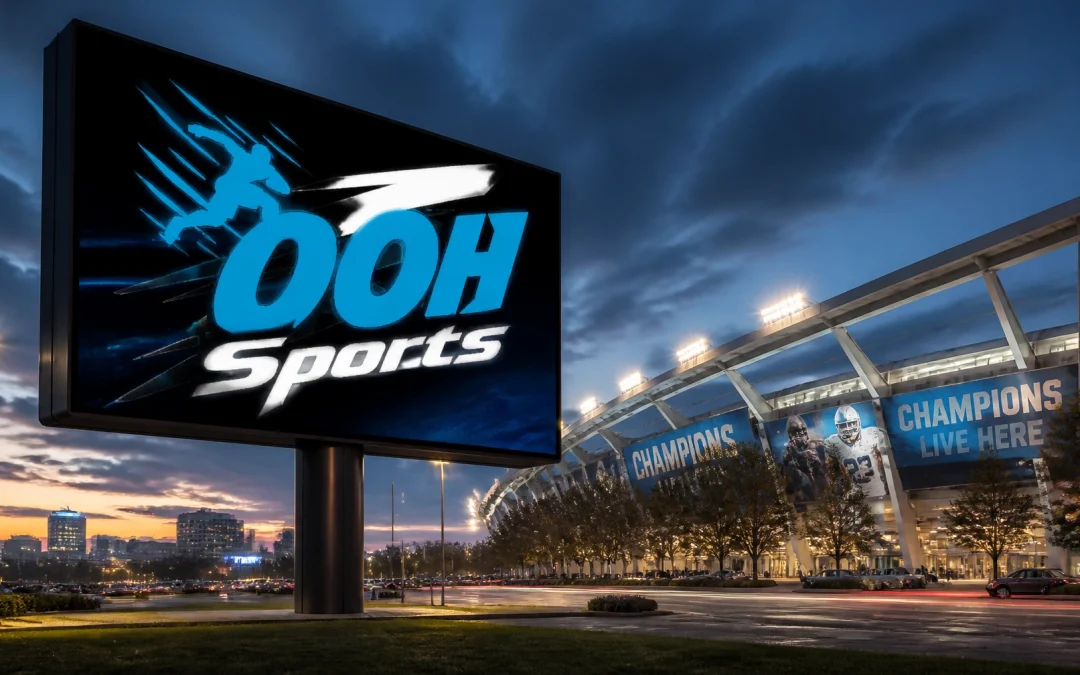
The landscape of sports media buying is undergoing a significant transformation. Traditionally, out-of-home (OOH) advertising was a manual, static, and often fragmented process. However, the emergence of programmatic digital out-of-home (pDOOH) has introduced a level of precision and automation that was previously reserved for online channels. For media buyers and brand managers, this shift represents more than just a new way to purchase inventory. It is a strategic evolution that allows for real-time adjustments, hyper-local targeting, and measurable impact in the most competitive sports environments.
Global programmatic DOOH spend is projected to reach approximately $4.8 billion by the conclusion of 2026. This growth is fueled by the demand for transparency and the ability to integrate outdoor screens into broader omnichannel strategies. In the sports sector, where fan engagement is dictated by the rhythm of seasons and the outcome of games, pDOOH provides the necessary agility to reach audiences at the most opportune moments.
Objective and Strategy: The 10-Mile Perimeter
The primary objective of a sports-focused pDOOH campaign is often to maximize brand presence within the "fan zone." This involves targeting digital video advertising boards in every category, with a specific focus on the perimeter up to 10 miles around major sports venues. This geographic strategy ensures that messaging reaches fans during the most critical stages of their journey: the pre-game commute, the arrival at the arena, and the post-game celebration.
By concentrating media spend within this radius, brands can dominate the local visual environment. This approach is not limited to large-format billboards. It encompasses a diverse network of digital screens, including those in transit hubs, street furniture, and retail locations. The goal is to create a seamless brand narrative that follows the fan from their neighborhood to the stadium gates.

Technology Partners and the Programmatic Stack
Executing a successful pDOOH campaign requires a robust technological foundation. The "programmatic stack" typically involves a Demand Side Platform (DSP) and a Supply Side Platform (SSP). The DSP allows media buyers to access inventory from multiple networks through a single interface, while the SSP manages the digital screens and facilitates the automated bidding process.
Partnerships with specialized platforms, such as the StackAdapt DSP, have become essential for driving adoption in omnichannel campaigns. These platforms provide the tools necessary to layer complex data sets over location-based buys. This includes audience demographics, foot traffic patterns, and even real-time weather or score data. By leveraging these technology partners, brands can ensure that their ads are served only when certain conditions are met, maximizing efficiency and reducing wasted impressions.

Tactical Execution: Triggers and Dynamic Creative
One of the most powerful features of pDOOH is the ability to use dynamic creative optimization (DCO) and real-time triggers. In sports marketing, the narrative can change in a matter of seconds. A last-minute goal, a weather delay, or a championship win provides a unique opportunity for brands to connect with fans emotionally.
- Score Triggers: Creatives can be programmed to update automatically based on the live score of a game. For example, a beverage brand might display a celebratory message immediately after a home team victory.
- Weather Triggers: Advertisements can be adjusted based on local conditions. A rain delay might trigger an ad for a streaming service or a delivery app, while a heatwave could trigger a promotion for a cold drink.
- Time-of-Day Triggers: Messaging can shift to reflect the fan journey. Pre-game ads might focus on "getting game-ready," while late-night ads could focus on post-game dining or transportation options.
- Audience Density: Campaigns can be scaled up or down based on the actual number of people detected in the vicinity of a screen, ensuring that high-impact moments are captured when the crowd is at its peak.
These tactics move the industry away from "set-it-and-forget-it" advertising toward a model of constant relevance. Data indicates that trigger-based DOOH delivers 48 percent higher ad recall on average compared to non-triggered content.
Strategy: Case Studies and Measurable Outcomes
The effectiveness of programmatic DOOH in sports media buying is evidenced by several recent high-profile campaigns. By focusing on precision targeting and strategic placement, brands have achieved significant lifts in key performance indicators.
White Claw: Vodka Launch Success
In a campaign designed to launch a new vodka product, programmatic DOOH was used to target high-traffic areas near relevant sports and entertainment venues. The strategy resulted in a 74 percent lift in purchase consideration. By appearing on sportrons and other digital boards when fans were already in a social mindset, the brand effectively moved consumers down the funnel.
AB InBev: Mike’s Hard Iced Tea
Aligning brand messaging with high-energy social environments around sports events allowed Mike’s Hard Iced Tea to see a 119 percent lift in positive brand image. This campaign utilized pDOOH to maintain a consistent presence in bars and near stadiums, reinforcing the brand's association with "smooove" social moments.
Sea-Doo: Consideration Growth
Sea-Doo’s first digital OOH campaign focused on contextually relevant locations near outdoor activity hubs and sports retailers. This targeted approach led to a 144 percent increase in purchase consideration. These results demonstrate that when DOOH is integrated into a data-driven strategy, it can outperform traditional digital channels in terms of brand intent.

Measurement and Attribution Models
A common misconception is that OOH advertising is difficult to measure. In the programmatic era, this is no longer the case. Media buyers now have access to a variety of measurement frameworks to quantify the success of their campaigns.
- Brand Lift Studies: By using control and exposed groups, brands can measure changes in awareness, favorability, and consideration directly attributable to DOOH exposure.
- Footfall Attribution: Using privacy-compliant mobile location data, it is possible to track how many people visited a specific retail location or stadium after being exposed to a digital billboard.
- Digital Conversion Tracking: By syncing DOOH exposure with device IDs, marketers can track subsequent online actions, such as app installs, website visits, or promo code redemptions.
- Sales Lift Analysis: For CPG and retail brands, comparing sales data in exposed geographic areas versus control areas provides a clear picture of ROI.
The ability to provide these metrics is what is driving the pDOOH market toward an estimated $50 billion by 2030. It allows media planners to justify budgets with the same level of data-backed confidence as social or search advertising.
Navigating the Future of Sports Media Buying
As the industry moves forward, the integration of DOOH into the broader media mix will continue to deepen. The successful media buyer of the future will be one who treats outdoor screens not as isolated assets, but as dynamic components of an omnichannel strategy. This requires a shift in mindset from buying "locations" to buying "audiences and moments."
By leveraging the automated nature of programmatic platforms, brands can remain nimble. They can scale up presence during the playoffs, pivot messaging based on team performance, and ensure that every impression is delivered in a brand-safe, high-impact environment. The ultimate guide to scaling sports media buying is simple: follow the fan journey, utilize the 10-mile perimeter, and let the data guide the creative execution.
For brands looking to explore these strategies further, viewing a detailed case study provides additional insight into the logistics and execution of successful pDOOH campaigns. The tools and technology are now available to turn every stadium visit into a powerful brand experience.