
The landscape of sports advertising is shifting toward a more integrated and persistent presence that extends far beyond the traditional broadcast window. As Super Bowl LX approaches in February 2026 at Levi’s Stadium in Santa Clara, California, the industry is preparing for a transformation in how brands engage with fans. With four decades of leadership in sports media, OOH Sports provides a blueprint for navigating this high-stakes environment. Success in 2026 will not be defined by a single 30-second television spot. Instead, it will be determined by the ability of a brand to dominate the physical and digital ecosystem surrounding the event.
The Evolution of the Super Bowl Cultural Ecosystem
Historically, the Super Bowl was viewed as a singular media event. However, for 2026, it is being treated as a week-long cultural marketplace. This shift requires a "before, during, and after" strategy that captures attention across physical activations, social media, and out-of-home (OOH) media. The San Francisco Bay Area is expected to become a rotating backdrop for media nights, sponsor concerts, and NFL experiences, creating a continuous loop of advertising opportunities.
For brands looking to establish a presence, the objective is to become a part of the "tangible fan experience." Data indicates that fans now prioritize participation over passive viewing. This demand for interaction has led to the rise of physical-digital hybrids, where on-site activations are tied to digital hooks for social sharing and retargeting.
Strategy: Total Venue and Perimeter Domination
Effective sports marketing in 2026 requires a strategy that blankets the path to the stadium and the interior of the venue itself. The methodology focuses on three primary pillars of exposure.
- Path to Stadium Coverage: This involves dominating billboards and digital screens along major transit arteries leading to Santa Clara and San Francisco.
- Venue-Wide Media: Utilizing every available surface within the stadium complex, from traditional signage to high-impact floor graphics.
- Hyper-Local Targeting: Deploying programmatic digital out-of-home (DOOH) advertising within a 10-mile perimeter of the host venue and key fan hubs like the Ferry Building or Moscone Center.

Objective and Strategy: Leveraging 40 Years of Expertise
The strategy for Super Bowl 2026 is rooted in 40 years of experience through the Sports Media Inc. family. This history provides a unique perspective on fan behavior and the logistical requirements of large-scale event marketing. The core objective is to ensure that a brand's message is unavoidable during the entire week of festivities.
To achieve this, the execution plan includes the following tactical steps:
- Geofencing Key Locations: Identifying high-traffic zones in San Francisco where foot traffic historically spikes up to 479% above nightly averages during Super Bowl week.
- Sequential Storytelling: Using a series of digital boards to tell a brand story as fans move from the airport to their hotels and finally to the stadium.
- Format Diversification: Integrating large-format billboards with smaller, more intimate screens in sports bars and restaurants where secondary engagement occurs.
Technology Partners and Programmatic Integration
The use of advanced technology is a defining characteristic of the 2026 advertising landscape. Programmatic DOOH allows media buyers to purchase inventory in real-time based on specific triggers such as time of day, weather, or live game scores. Collaboration with specialized platforms, such as StackAdapt, enables OOH Sports to drive programmatic adoption across omnichannel campaigns.
This technological fluency allows for precision targeting that was once impossible. By utilizing device IDs exposed to outdoor advertisements, brands can retarget those same individuals on their mobile devices later in the day. This creates a closed-loop marketing system that significantly increases purchase consideration.
Results and Measured Impact
The effectiveness of these strategies is not theoretical. Recent campaigns executed by OOH Sports and its partners demonstrate the magnitude of impact that a well-executed DOOH strategy can deliver.
- AB InBev’s Mike’s Hard Iced Tea: A programmatic DOOH campaign resulted in a 119% lift in positive brand image. This success was attributed to the ability to target specific demographics at high-intent moments. More details on this campaign can be found at the Mike's Hard Iced Tea case study.
- White Claw Vodka Launch: By leveraging programmatic digital out-of-home assets, the brand achieved a 74% lift in purchase consideration. The campaign focused on urban centers with high concentrations of the target audience. The full analysis is available in the White Claw case study.
- Sea-Doo First DOOH Campaign: This campaign saw a 144% increase in purchase consideration by aligning media placements with recreational locations. Read more about the Sea-Doo campaign results.
These quantified results highlight the power of location-based media when supported by robust data and strategic placement.

Venue-Wide Execution: From Floors to the Sky
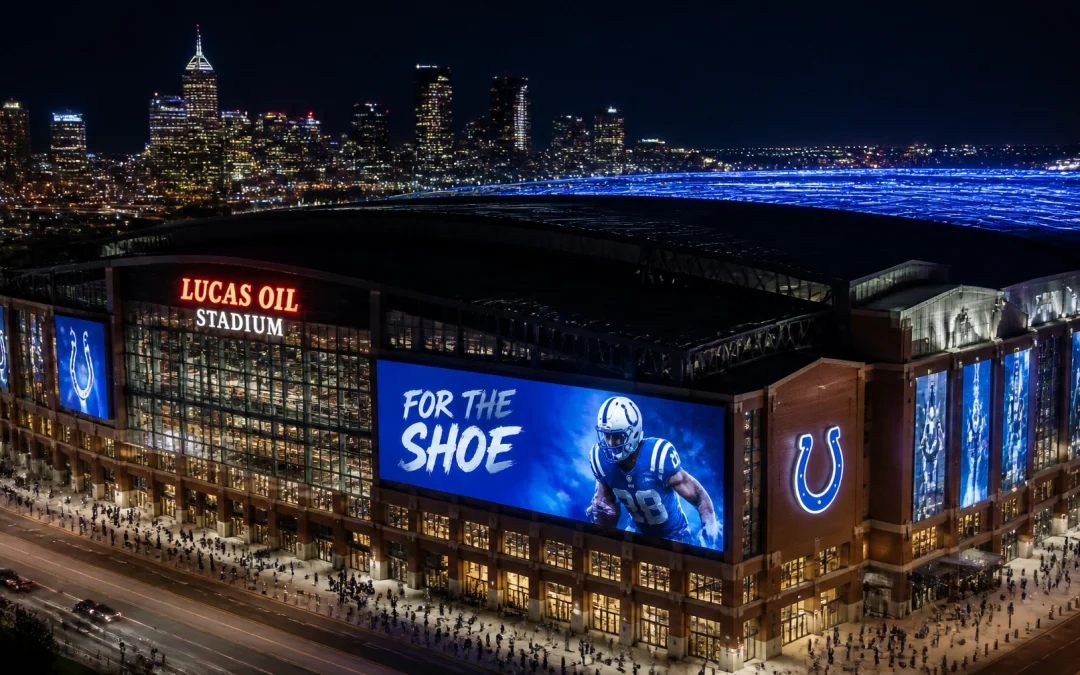
In the context of Super Bowl 2026, "venue-wide" is taken literally. OOH Sports specializes in transforming stadiums into immersive brand environments.
- Floor Graphics: Often overlooked, floor graphics in concourses and entryways provide high-frequency touchpoints. They are highly effective for directional signage or reinforcing brand taglines as fans navigate the stadium.
- Digital Perimeter Boards: These provide constant visibility during the game and are essential for capturing the attention of both in-person attendees and the millions watching through various media channels.
- Digital Video Boards: Strategically placed screens in high-dwell areas, such as food courts and luxury suites, allow for longer-form content and higher engagement.
Strategic Alignment and Local Precision
One of the most critical secrets to Super Bowl advertising success is understanding the local environment. While national TV reaches a broad audience, the most valuable consumers are often those physically present at the event. For Super Bowl LX, this means focusing on the entire San Francisco Bay Area.
Media planners are encouraged to leverage the local environment by dominating OOH space with precision. This includes transportation hubs, social centers, and the "last mile" surrounding Levi’s Stadium. Smaller and mid-market brands can find significant value by focusing on local bars and watch parties, which serve as the primary gathering spots for fans without tickets to the game.
The Role of Video in Modern Sports Marketing
Video content remains the most effective way to communicate a brand's narrative. In the modern era, this includes not just the professional commercials but also short-form, "snackable" content designed for social media. The following video illustrates the scale and energy that OOH Sports brings to the arena.
https://www.youtube.com/watch?v=l6J-0zileKE
Future Outlook: Toward 2030
As the industry looks toward the future, the valuation of DOOH sports advertising is projected to reach $50 billion by 2030. This growth is driven by the increasing integration of real-time data and the expansion of digital inventory in and around sports venues. Brands that establish a presence now, utilizing the experience of veteran media partners, will be best positioned to capture their share of this growing market. For more on these future trends, visit the 2030 industry outlook.

Conclusion
The secrets to Super Bowl 2026 advertising success lie in a combination of legacy experience and modern technology. By moving beyond the broadcast and focusing on the total fan journey, brands can create a lasting impact that resonates long after the final whistle. OOH Sports continues to lead this revolution, providing the tools and expertise necessary to turn every surface into a storyteller.
For organizations looking to plan their next major event campaign, the focus should remain on strategic alignment, technical precision, and measurable outcomes. The lessons learned over 40 years of sports media leadership provide a clear path forward in an increasingly fragmented but exciting media landscape.